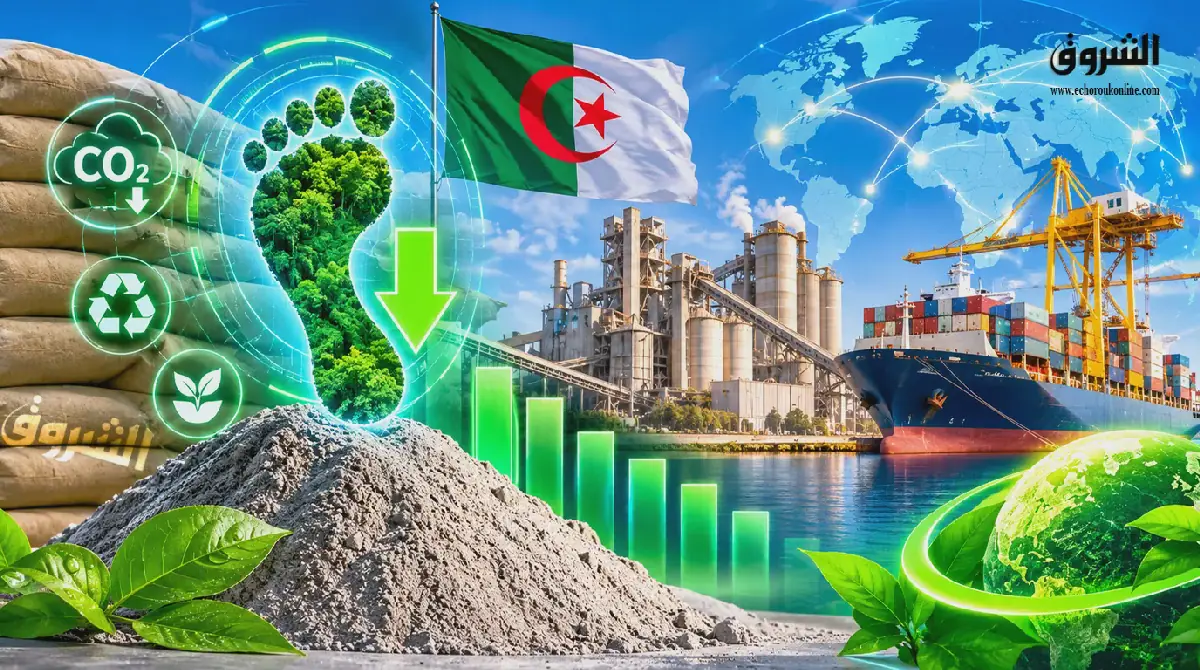
Algeria is considering implementing a national system to measure and verify carbon footprint, which could significantly reduce export fees for its cement industry. According to Samir Grimes, a professor of environment and climate change, this system could decrease fees from $50 to $4 per ton, a reduction of $46. This change could make Algerian cement more competitive in international markets.
Grimes emphasized the need for a comprehensive national legal and technical framework to measure carbon footprint, in order to comply with new environmental standards in international trade. This framework would involve adopting mechanisms to calculate and verify emission factors, which would allow Algerian exporters to prove the carbon content of their products and reduce financial burdens in foreign markets.
The expert highlighted the importance of this initiative for export-oriented sectors, particularly cement, iron, steel, and gas, given the growing trend of green trade protectionism. The European Union's Carbon Border Adjustment Mechanism, for example, is expected to impact Algerian exports. Grimes called for leveraging Algerian expertise to develop national standards and support economic institutions in obtaining necessary certifications.
Algeria has set a goal to reduce greenhouse gas emissions by 14% based on its national capacities, with the possibility of increasing this target to 31% by 2035 with international funding and support. Grimes stressed that achieving these goals is linked to the principle of conditional commitment, which ties progress in developing countries to the willingness of developed countries to provide financing and technical support.
The national climate plan, approved by the government on September 25, 2019, includes around 150 projects aimed at reducing greenhouse gas emissions. However, the pace of implementation varies across sectors. Grimes noted that the current phase is marked by increased political and institutional interest in climate change, with involvement from various sectors such as water, agriculture, and construction.
The Algerian government is working to enhance the country's resilience to climate-related risks. This includes promoting the reuse of treated wastewater, developing agricultural adaptation mechanisms, and strengthening the capacity of institutions to cope with climate-related hazards. These efforts aim to support sustainable development and reduce the country's vulnerability to climate change.
Grimes' proposal for a national carbon footprint measurement system has significant implications for Algeria's economy and environment. By adopting this system, Algeria can reduce its export fees, increase its competitiveness in international markets, and contribute to global efforts to mitigate climate change. The implementation of this system will require collaboration between government agencies, private sector entities, and international organizations.
Key points
- Algeria's adoption of a national carbon footprint measurement system could decrease cement export fees by 92%.
- The system would help Algerian exporters comply with new environmental standards in international trade.
- Algeria aims to reduce greenhouse gas emissions by 14% based on its national capacities, with the possibility of increasing this target to 31% by 2035 with international support.
Reporting sources
- خبير: قياس البصمة الكربونية قد يقلص رسوم الإسمنت الجزائري بـ 92 بالمائة · echoroukonline.com