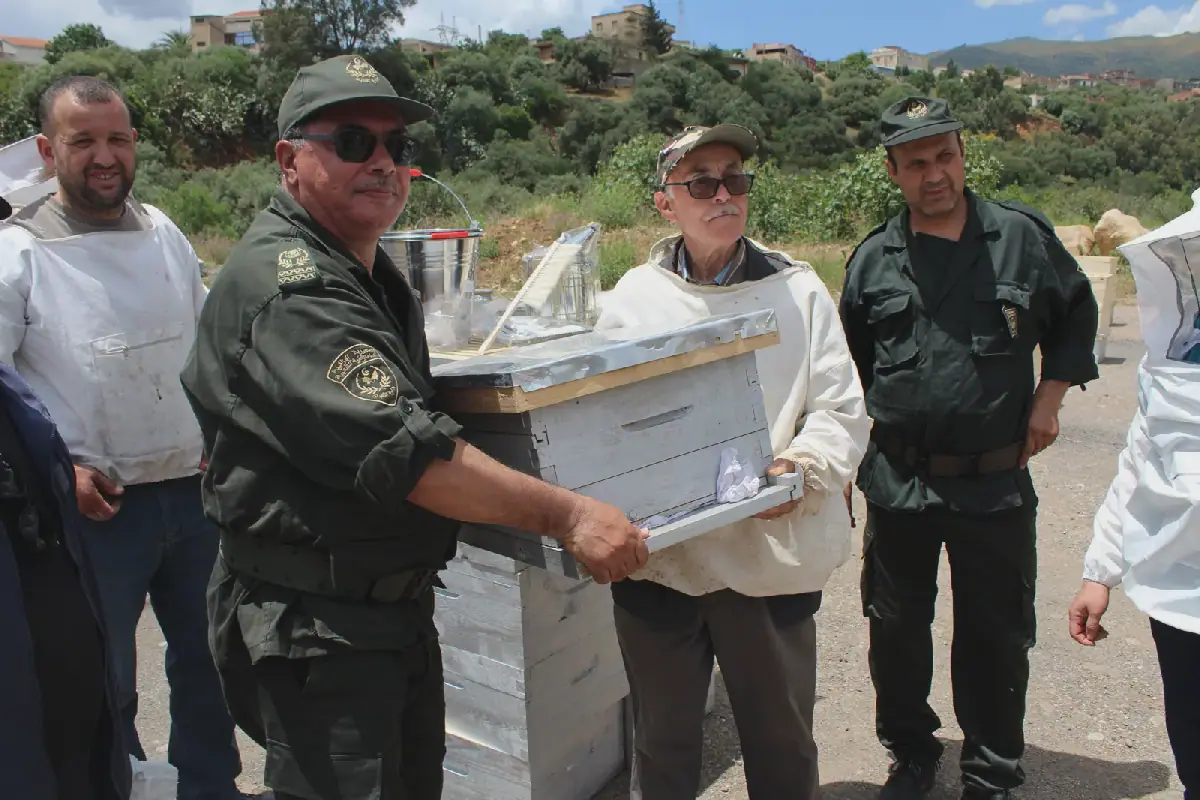
The Conservation des forêts de Béjaïa has started a large-scale operation to distribute beehives to beekeepers in the region, aiming to develop the apiculture sector. A total of 840 beekeepers have been selected for the program, which involves providing each with 10 beehives. The initiative is part of a broader effort to support agricultural development in the region.
The selection process for the program involved a commission that reviews applications and makes decisions on a weekly basis. To be eligible, beekeepers must have undergone training or be planning to do so. The program will cover 90% of the costs, with the beekeepers contributing around 54,000 Algerian dinars. The distribution of beehives is set to continue until August.
The program was initially scheduled to start in April but was delayed due to a lack of local suppliers of beehives and apiculture equipment. The Conservation des forêts will work with local authorities to deliver the beehives to the 25 communes where the selected beekeepers are based. Bejaia province is home to 2,755 beekeepers, but only 405 are affiliated with the local agricultural chamber.
The province's honey production is expected to reach 3,000 quintals this year, which is below the region's potential. However, the new program aims to increase production by supporting local beekeepers. An additional program has been proposed by the Chambre de l'agriculture to provide 3,500 beehives, primarily to women in rural areas, including widows.
The development of the apiculture sector in Bejaia province is closely linked to environmental preservation. In recent years, beekeepers in the region have reported issues with bee mortality and poor honey quality. The transformation of forests into illegal dumps has been identified as a major threat to the sector.
To address these challenges, a campaign was organized last year to clean up forests and promote environmental awareness. The initiative was led by the Conservation des forêts, in collaboration with local organizations. The effort aims to protect the apiculture sector, which is a significant contributor to the local economy.
The apiculture development program is expected to have a positive impact on the local economy and honey production in Bejaia province. With the support of the Conservation des forêts and other local organizations, beekeepers in the region are optimistic about the future of their sector. The program's success will depend on the continued collaboration between stakeholders and the effective management of environmental challenges.
Key points
- The program aims to distribute 8,400 beehives to 840 local beekeepers.
- The initiative is part of a broader effort to support agricultural development and environmental preservation in Bejaia province.
- The sector faces challenges, including bee mortality and poor honey quality due to environmental degradation.