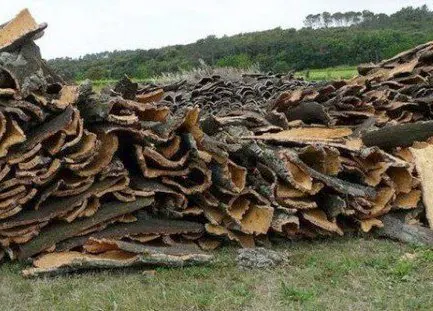
The Béjaïa region in Algeria, known for its vast cork oak forests, is struggling to collect its cork production due to a shortage of skilled labor. The region has a total of 54,000 hectares of suberaea, but the lack of qualified workers has hindered the harvesting process. According to the Groupe GGR, responsible for the cork harvesting and storage in the region, only 25% of the production, amounting to 6,000 quintals, has been collected so far.
The main constraint faced by the Groupe GGR is the scarcity of skilled labor, which is essential for the proper collection, preservation, and storage of cork. The company has had to rely on seasonal workers from other regions, but this has proven to be insufficient. Despite having a trained workforce in cork harvesting techniques, the region is struggling to train new workers to meet the demand. The cork harvesting season, which typically runs from June to September, is expected to yield lower results than anticipated.
The terrain of the suberaea is another challenge faced by the workers engaged in cork harvesting. The cork oak trees are often located in rugged mountainous areas, making the harvesting process difficult. The Groupe GGR has expressed concerns about the impact of this challenge on the overall production. The company is working to overcome these challenges, but it remains to be seen whether they will be able to collect the expected amount of cork.
The Béjaïa Liège company, a subsidiary of GGR, is a leading manufacturer of insulation panels made from expanded black cork. The company has become a reference in the field of energy efficiency in the building sector, providing materials for thermal and phonetic insulation. Béjaïa Liège exports its products to several countries, including Italy, France, Spain, Kuwait, and Saudi Arabia.
The products manufactured by Béjaïa Liège are entirely ecological and provide a significant advantage in terms of energy economy and efficiency in the building sector. In the first half of 2017, the company produced 1,600 cubic meters of insulation panels, valued at 22.206 million dinars. The company has a production capacity of 6,200 cubic meters per year and consumes 15,000 quintals of raw cork per year.
Béjaïa Liège has recently undergone a modernization process, which included the renovation of its equipment, such as autoclaves and crushers. The company has also acquired a new boiler and a more efficient cutting saw. This upgrade is expected to improve the company's productivity and efficiency.
The cork harvesting season in Béjaïa is expected to conclude soon, with the company hoping to collect the remaining 75% of the production. However, the challenges faced by the region, including the shortage of skilled labor and the difficult terrain, may impact the overall yield. The Groupe GGR and Béjaïa Liège will need to work together to address these challenges and ensure the long-term sustainability of the cork industry in the region.
Key points
- The Béjaïa region has collected only 25% of its cork production due to a shortage of skilled labor.
- The region's cork harvesting season typically runs from June to September.
- Béjaïa Liège is a leading manufacturer of insulation panels made from expanded black cork, exporting its products to several countries.