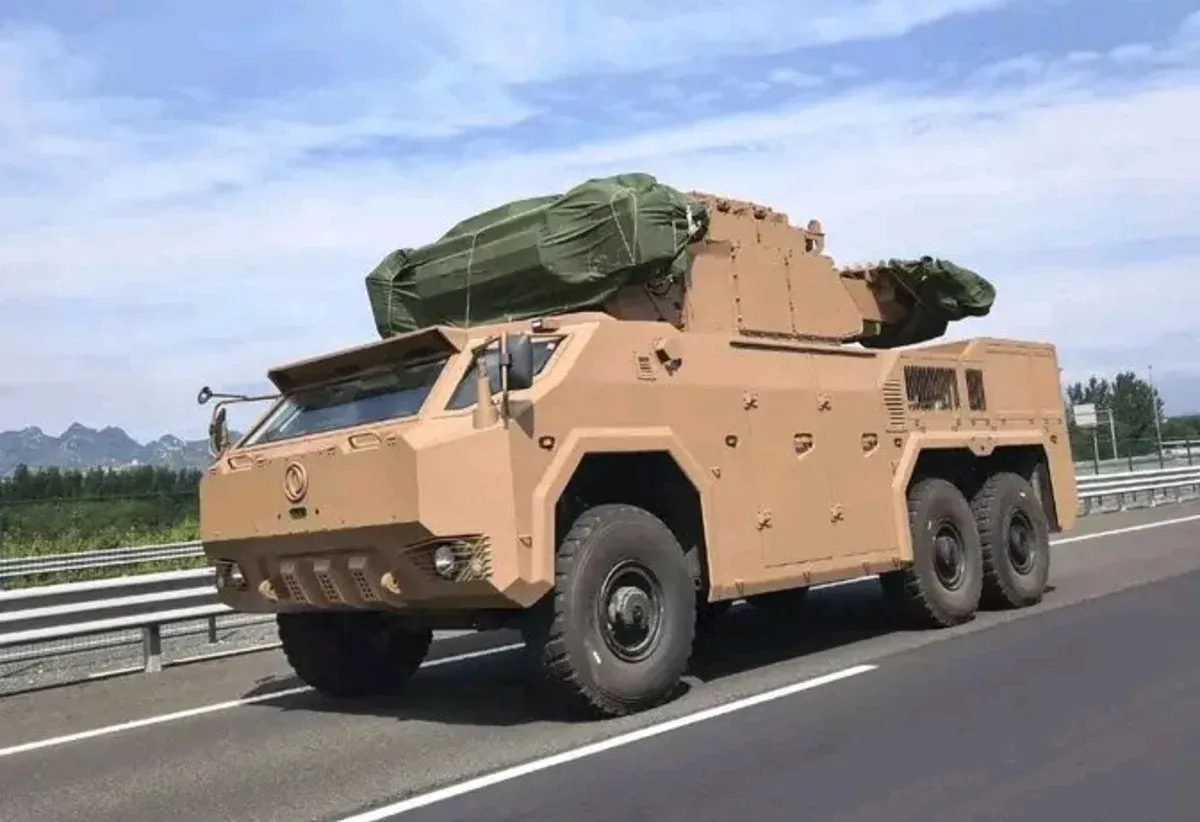
A recent report by Military Watch Magazine, a US-based publication specializing in military affairs, has revealed that Algeria is poised to acquire China's advanced HQ-17 short-range air defense system. The report, published on September 25, cited evidence from social media platforms showing the HQ-17 system being transported with camouflage patterns matching those used by Algerian military equipment. This development has sparked speculation about the potential enhancement of Algeria's air defense capabilities.
The HQ-17 system is designed to provide short-range air defense against low-flying threats such as aircraft, helicopters, and drones. Developed from the Russian Tor-M1 system, the HQ-17 features a mobile launcher with a radar, target tracking system, and fire control system, allowing for rapid response to airborne threats. The system can engage targets at ranges of 1.5 to 20 kilometers and altitudes of up to 10 kilometers. With a reported speed of Mach 3, the HQ-17's missile can effectively counter a range of aerial threats.
If confirmed, the acquisition of the HQ-17 system would represent a significant enhancement to Algeria's air defense network. The Algerian military currently operates a mix of Russian and Chinese air defense systems, including the S-300PMU-2, S-400, and HQ-9. The addition of the HQ-17 would provide a short-range capability to protect troops, installations, and sensitive military sites from low-flying threats. The system's mobility would also enable it to accompany ground units and defend against airborne threats in various environments.
The potential deployment of the HQ-17 system in Algeria would not be in isolation but as part of a broader air defense network. The system's role would focus on protecting against low-altitude threats that can evade longer-range air defense systems. By integrating the HQ-17 into its air defense architecture, Algeria aims to bolster its defenses against a range of aerial threats. The HQ-17's capabilities would complement existing systems, enhancing the overall effectiveness of Algeria's air defense posture.
While the report suggests that Algeria is acquiring the HQ-17 system, neither the Algerian government nor Chinese authorities have officially confirmed the deal. Details such as the number of systems to be delivered and the timeline for delivery remain undisclosed. The lack of official confirmation leaves room for speculation about the scope and timing of the acquisition.
The HQ-17 system has been touted for its mobility and rapid response capabilities, making it suitable for defending against short-range aerial threats. Its development from the Russian Tor-M1 system highlights China's efforts to expand its domestic air defense technology. The system's performance characteristics, including its speed and engagement range, position it as a capable short-range air defense solution for countries seeking to enhance their air defense capabilities.
The reported acquisition of the HQ-17 system by Algeria underscores the country's efforts to modernize its military and enhance its air defense capabilities. As the security landscape in North Africa continues to evolve, Algeria's investment in advanced air defense systems reflects its commitment to maintaining a robust defense posture. The integration of the HQ-17 into Algeria's air defense network would mark a significant step in the country's ongoing military modernization efforts.
Key points
- Algeria is set to acquire China's HQ-17 short-range air defense system.
- The HQ-17 system features a mobile launcher with a radar, target tracking system, and fire control system.
- The acquisition would enhance Algeria's air defense capabilities against low-flying threats.