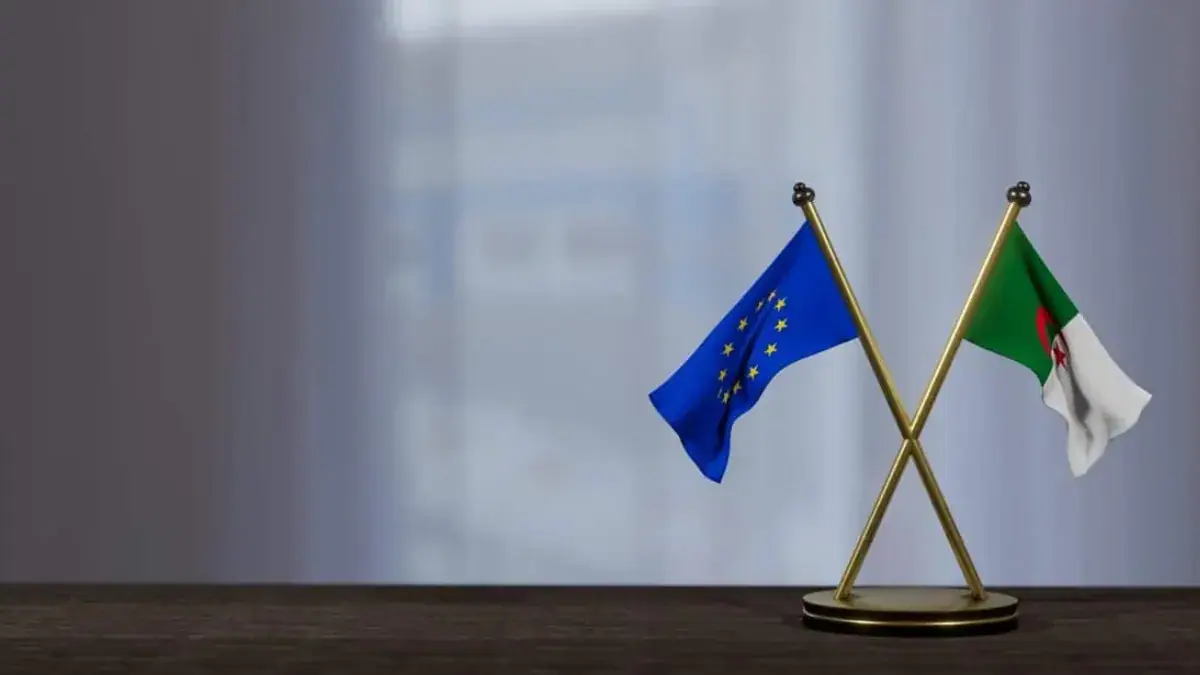
Algeria has reinitiated discussions with the European Union regarding the 2005 association agreement, which it claims has become unbalanced in favor of Brussels. The agreement, in effect for over 20 years, has not reflected the country's full potential, with trade exchanges representing nearly half of Algeria's external trade. However, Algerian Foreign Minister Ahmed Attaf argues that these exchanges have not been accompanied by significant investments, technology transfers, or strengthened industrial partnerships.
The Algerian government has formulated five key demands for revising the agreement. Firstly, Algeria seeks to address imbalances and divergences related to the agreement's implementation through institutional and contractual mechanisms. This includes reactivating the Algerian-European Partnership Council, which has not convened since 2020. Attaf emphasized that discussions should occur within institutional frameworks, rather than through media outlets or unilateral actions.
Algeria's second demand concerns the low volume of European investments in the country, which stands at $17 billion, despite trade exchanges exceeding $1 trillion since the agreement's inception. Attaf described this as "unacceptable" and "unreasonable." The third demand involves considering Algeria's economic transformations, which have led to a more diversified economy, and adjusting the agreement's provisions accordingly.
The fourth demand focuses on addressing obstacles and restrictions imposed on Algerian products accessing European markets. Attaf cited the recent example of EU restrictions on steel imports, which have resulted in an 80% decline in Algerian steel exports over the past four months. He argued that such measures raise concerns about their conformity with trade agreements between the two parties.
Algeria's fifth demand is related to the non-interference in its internal affairs. Attaf stressed that the country rejects any attempt to transform the partnership into an instrument of pressure, bargaining, or interference in its sovereign choices or relationships with other partners.
The European Union is Algeria's primary commercial partner, and the country seeks a more balanced partnership that serves mutual interests. Attaf emphasized that a genuine partnership should be measured not only by trade figures but also by the volume of productive investments, technology transfers, and respect for mutual interests.
The Algerian government remains committed to its relationships with the European Union, but on an equal and respectful basis. As Attaf stated, "A partnership based on equality and respect, allowing each party to draw real benefits from the advantages offered by the association agreement." The country's demands reflect its aspirations for a more equitable and mutually beneficial partnership with the EU.
Key points
- Algeria seeks a revision of the 2005 EU association agreement, citing imbalance and restrictions on steel exports.
Reporting sources
- Accord d’association avec l’UE : l’Algérie formule cinq exigences · tsa-algerie.com