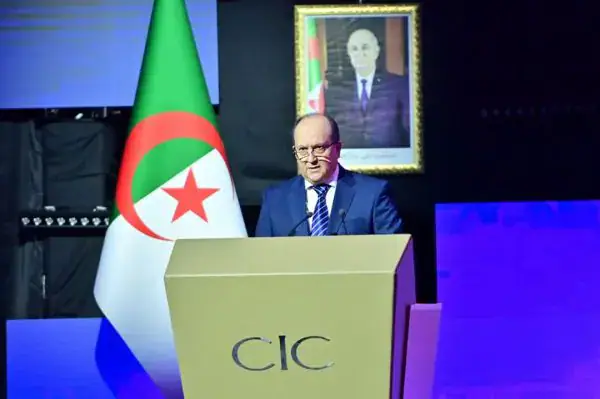
Algeria's Prime Minister, Sifi Ghrieb, chaired a national workshop in Algiers to develop an integrated national strategy for climate finance and carbon markets. The two-day meeting aims to establish a unified regulatory, institutional, and technical framework to mobilize financial resources for climate change mitigation and adaptation projects. The strategy seeks to translate climate commitments into operational actions, ensuring better alignment between mobilized funds and national development priorities.
Ghrieb reaffirmed Algeria's commitment to climate action, highlighting key steps such as incorporating climate change into the 2020 Constitution, adopting the National Hydrogen Strategy in 2023, and submitting an updated Nationally Determined Contribution to the UN. He emphasized Algeria's goal to reduce greenhouse gas emissions by 14% by 2035, potentially increasing to 31% with international support. The Prime Minister stressed the need to consider Algeria's economic and energy specifics, particularly its status as a hydrocarbon producer and exporter.
The workshop brings together government members, national and international institutions, experts, and specialists to discuss climate finance and carbon markets. Ghrieb highlighted the role of these markets in mobilizing investments, transferring technologies, creating value, and reducing emissions. He emphasized the need for a regulatory framework ensuring transparency, environmental integrity, and protection of national interests, particularly under the Paris Agreement's Article 6.
Ghrieb called for strengthening national capacities in measuring, reporting, and verifying greenhouse gas emissions, as well as creating a coherent portfolio of climate projects that align with national priorities. He encouraged coordination between sectors and institutions, involvement of universities and research centers, and participation from the private sector and national financial institutions.
The Prime Minister cited efforts by national companies, such as Sonatrach and Sonelgaz, in developing solar energy, reducing gas flaring, and promoting energy efficiency. He reaffirmed Algeria's commitment to common but differentiated responsibilities and advocated for enhanced international cooperation, including simplified access to climate finance, concessional funding, and technology transfer.
Minister of Hydrocarbons, Mohamed Arkab, emphasized the economic stakes of developing carbon markets, stressing the need to preserve national interests and valorize carbon assets. He called for accurate evaluation of opportunities and challenges to generate real added value for the national economy while reducing emissions. Arkab advocated for directing climate finance towards national priorities, such as sustainable hydrocarbon development and industrial competitiveness.
The workshop aims to establish a preliminary national roadmap with financing mechanisms, partnerships, and operational recommendations. Minister of Energy and Renewable Energies, Mourad Adjal, highlighted Algeria's ambitions in energy transition, including increasing renewable energy production to 15,000 MW by 2035 and developing the hydrogen sector. The success of this approach depends on mobilizing necessary financing and partnerships to transform climate ambitions into concrete, economically viable projects.
Key points
- Algeria aims to reduce greenhouse gas emissions by 14% by 2035, potentially increasing to 31% with international support.
- The country seeks to establish a unified regulatory framework for climate finance and carbon markets.
- Algeria's strategy focuses on mobilizing financial resources for climate change mitigation and adaptation projects.