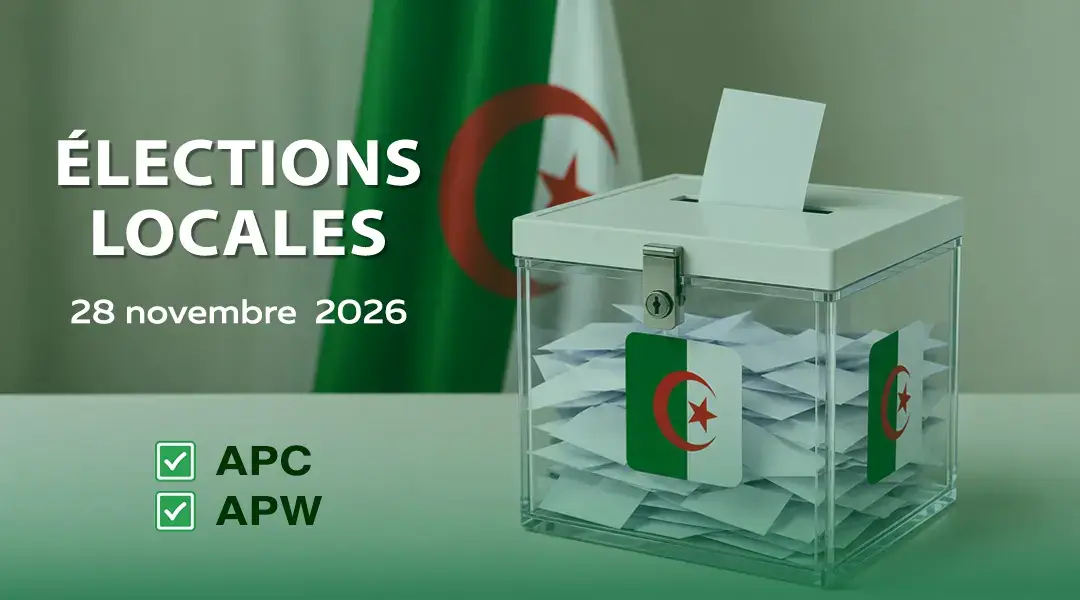
The President of Algeria's Independent National Election Authority (ANIE), Saad Arous, announced on November 28, 2026, that the participation rate for local elections had reached 9.16% for Communal People's Assemblies (APC) and 8.76% for Wilaya People's Assemblies (APW) by 12pm. The voting process began at 8am across the country and was set to end at 7pm, with the possibility of an extension to 10pm if necessary.
A total of 24,236,959 eligible voters were called to choose from 6,052 candidate lists, comprising 428 lists for APW and 5,624 lists for APC. These lists include 5,765 presented by political parties, 24 coalition lists, and 263 independent lists, according to ANIE data. The authority planned to announce preliminary participation rates at three intervals throughout the day: 1pm, 5pm, and 9pm.
President of the Republic Abdelmadjid Tebboune emphasized that a new approach would be worked out with the newly elected officials to revise laws related to communes and wilayas. After casting his vote, Tebboune stated that the new generation of candidates had reached a significant level of responsibility. He expressed optimism about the elections, citing the high level of education and university diplomas among the candidates.
Tebboune noted that the elected officials would be entrusted with greater responsibilities in communes and wilayas. The President highlighted the positive indicators of these elections, including the age and educational background of the candidates. This development is expected to bring about positive changes in local governance.
The voting process took place across Algeria, with citizens choosing representatives for APC and APW. The elections aimed to renew local representation and address various community concerns. ANIE worked to ensure a smooth and transparent electoral process.
The local elections are crucial for Algeria's administrative and political landscape. The outcome will likely influence policy implementation and service delivery at the local level. Citizens' participation and engagement in the electoral process are essential for a representative government.
As the voting concluded, attention turned to the final participation rates and the impact of the elections on Algeria's future. The elected representatives will play a significant role in shaping local policies and addressing citizens' needs. The government is expected to work closely with the newly elected officials to promote development and good governance.
Key points
- The local elections recorded a participation rate of 9.16% for APC and 8.76% for APW by 12pm.
- A total of 24,236,959 eligible voters participated in the elections, choosing from 6,052 candidate lists.
- The newly elected officials are expected to be entrusted with greater responsibilities in communes and wilayas.