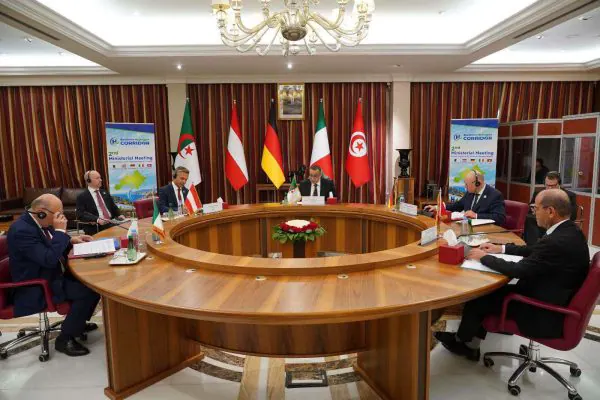
Algeria, Tunisia, Italy, Austria, and Germany have taken a significant step forward in the development of the SoutH2 Corridor, a project aimed at transporting green hydrogen from Algeria to Europe. The signing of the Algiers Ministerial Declaration marks a shared commitment to strengthening cooperation and advancing the project. The declaration was signed by ministers from the five countries, including Algeria's Minister of Energy and Renewable Energies, Mourad Adjal. This project is expected to enhance energy links between the two sides of the Mediterranean.
The SoutH2 Corridor project involves the creation of a 3,000-kilometer corridor to transport up to four million tons of green hydrogen per year from Algeria to Europe. The project partners aim to meet around 10% of Europe's expected green hydrogen demand by 2040. Algeria's Minister of State and Minister of Hydrocarbons, Mohamed Arkab, and Minister of Industry, Farid Kourtel, attended the second ministerial meeting. The presence of economic operators alongside political leaders highlights the project's industrial nature.
The development of the green hydrogen corridor is a strategic project for euro-Mediterranean energy cooperation. It relies on strengthening connections between North Africa's renewable energy production capacities and Europe's future needs for decarbonized hydrogen. Algeria plays a central role in this architecture due to its energy resources, significant renewable energy potential, and existing energy infrastructure linking it to Europe. The project is expected to open up new opportunities for energy cooperation between Algeria and Europe.
The Algiers Ministerial Declaration emphasizes the importance of a continued political commitment to the project. The signatory countries stress the need for a structured and regular dialogue to ensure the project's progression. The declaration also highlights the role of the United Nations Industrial Development Organization in providing technical support to partner countries. A dedicated secretariat will be established to facilitate coordination among stakeholders and provide technical support.
The creation of a coordination mechanism is crucial for the project's success, involving numerous stakeholders from producers and infrastructure managers to industrial operators and public authorities. The project's realization requires significant investments and planning over several years. The construction of a corridor linking several countries involves choices regarding infrastructure, technical standards, production capacities, financing, and hydrogen transportation conditions.
For Algeria, the project offers an opportunity to diversify its energy exports and stimulate investments in renewable energies. The development of green hydrogen could lead to the emergence of new industrial activities and allow the country to further diversify its energy exports. This orientation aligns with a broader evolution of the global energy landscape, driven by decarbonization policies and the search for new energy sources.
The signing of the Algiers Ministerial Declaration is a significant step towards the realization of the SoutH2 Corridor project. However, it does not mean that the corridor is already operational. The project still requires technical, industrial, and financial decisions to be made. The SoutH2 Corridor project represents an opportunity for producer and transit countries to develop new infrastructure and participate in the emergence of an industrial sector oriented towards international markets.
Key points
- Algeria, Tunisia, Italy, Austria, and Germany have signed a declaration to strengthen cooperation on the SoutH2 Corridor project, aimed at transporting green hydrogen from Algeria to Europe.
- The project involves the creation of a 3,000-kilometer corridor to transport up to four million tons of green hydrogen per year from Algeria to Europe.
- The development of the green hydrogen corridor is a strategic project for euro-Mediterranean energy cooperation, expected to enhance energy links between the two sides of the Mediterranean.