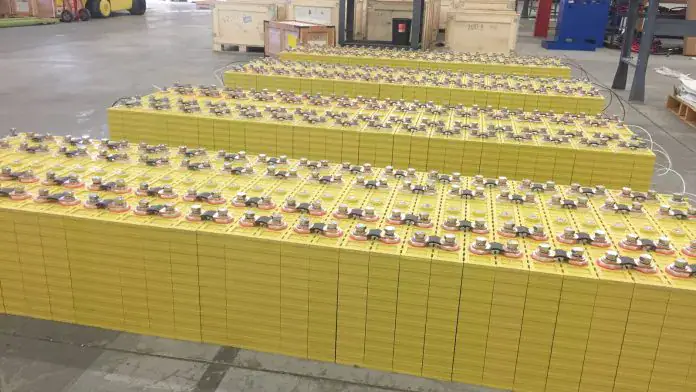
Algeria has taken a significant step towards industrial transformation with the official launch of a project to build a lithium battery factory. The project was announced by President Abdelmadjid Tebboune during a working meeting, where Professor Karim Zaghib was appointed as the project's head. The factory is expected to produce batteries with a capacity of 5 gigawatt-hours, using a mix of iron and phosphate to create the cathode used in lithium-ion batteries.
The lithium battery industry is considered a strategic lever for Algeria's industrial transformation and geo-economic positioning. The country's abundant mineral resources, including lithium, iron, and phosphate, make it an ideal location for such a project. The factory's products will cater to the needs of electric vehicles and energy storage, opening up promising prospects for the local market and exportation. Currently, Asian countries, particularly China, South Korea, and Japan, dominate the global lithium-ion battery market with a 90% share.
Consultant international in economic development, Abderrahmane Hadef, described the project as an "important advancement in Algeria's economic and industrial transformation process." He emphasized that the project opens up strategic perspectives in a future technological sector, combining several major stakes, including energy transition, mineral resource valorization, industrial development, and positioning in global value chains. Hadef highlighted the technical aspect of the project, which involves producing lithium-iron-phosphate (LFP) batteries using materials that offer opportunities for industrial valorization of lithium, iron, and phosphates.
The project's technical feasibility is built around the availability of raw materials in Algeria, particularly iron and phosphate. Hadef noted that the challenge lies in moving beyond the exploitation and exportation of raw materials to their local transformation and integration into high-value-added industrial products. The project's goal is to develop capacities in raw material treatment and refining, active material production for batteries, cell manufacturing, and storage system assembly.
The project aligns with global trends in energy transition and sustainable development. The growth of renewable energies, such as solar and wind power, requires efficient storage solutions to improve electrical network stability, manage production intermittency, and optimize energy use. Batteries are also crucial for the development of electric mobility and various industrial applications. Hadef emphasized that the project is part of Algeria's ambition to diversify its energy model by establishing a national storage industry.
The project's geo-strategic dimension is significant, given the growing global demand for batteries driven by transportation electrification, stationary storage systems, and increasing energy infrastructure needs. Major economies are seeking to secure their supplies of critical raw materials and diversify their industrial supply chains. Hadef noted that Algeria's advantages, including significant mineral resources, a strategic geographic position, competitive energy costs, and industrial development potential, enable it to emerge as a player in certain components of the international battery value chains.
However, Hadef stressed that achieving this ambition requires an integrated industrial vision based on technological mastery, investment attraction, international partnerships, and specialized skills development. It also involves strengthening national research and development capacities, promoting synergies between universities, research centers, and enterprises, and building an industrial ecosystem capable of meeting international market requirements. Hadef welcomed the appointment of Professor Karim Zaghib to lead the project, highlighting the importance of scientific and technological expertise in implementing major industrial projects.
Key points
- The project aims to produce 5 gigawatt-hours of lithium-ion batteries annually.
- The factory will use a mix of iron and phosphate to create the cathode used in lithium-ion batteries.
- The project is expected to open up promising prospects for the local market and exportation.