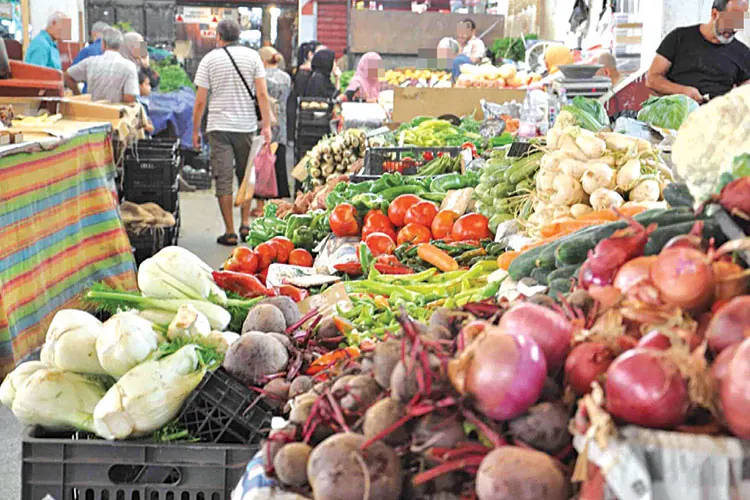
The Algerian government has launched a nationwide campaign to monitor markets and control prices, particularly for staple goods. The Ministry of Internal Trade and Market Regulation has deployed teams across various provinces to oversee the supply chain, from farms and production units to cold storage facilities, slaughterhouses, and wholesale and retail markets. These teams work in coordination with security forces, agricultural services, and health authorities to ensure the smooth distribution of essential products and prevent price manipulation.
The monitoring efforts focus on key products such as potatoes, onions, bananas, meat, dairy products, poultry, eggs, and legumes. In the province of Constantine, authorities inspected potato fields and cold storage facilities to assess the expected harvest and monitor the product's market path. Meanwhile, in Setif, teams tracked the storage of dry onions for the upcoming agricultural season, sealing off storage rooms after completion.
In Tizi Ouzou, officials visited the wholesale market for vegetables and fruits to check on cleanliness, price stability, and transparency in transactions. They also supervised the marketing of bananas at major commercial centers, priced at 410 Algerian dinars per kilogram. Similar inspections were conducted in Oran, where teams monitored vegetable and fruit prices and summoned violators for questioning.
The crackdown on market irregularities has yielded results, with authorities seizing and destroying 15.6 kilograms of expired chicken breast and 120 kilograms of unfit beef in Sour El-Ghozlane. In Tebessa, officials monitored a milk production unit during nighttime hours to oversee the production and distribution of pasteurized milk.
The government has also taken steps to engage with stakeholders, including consumer protection associations and professional organizations. In Blida, the regional trade inspection office in Boufarik held meetings with wholesale traders to discuss product safety and quality standards.
The nationwide effort aims to ensure a stable food supply and protect consumers from unfair practices. By monitoring the entire supply chain, authorities can identify and address potential bottlenecks, anticipate price fluctuations, and take proactive measures to maintain market stability.
As the campaign continues, traders and producers are expected to adhere to regulations and pricing guidelines. The authorities have warned that violators will face legal consequences, underscoring the government's commitment to maintaining a fair and transparent market environment.
Key points
- The Algerian government has launched a nationwide market monitoring campaign to control prices and ensure the availability of essential goods.
- The campaign covers the entire supply chain, from production and storage to wholesale and retail markets.
- Authorities have seized and destroyed large quantities of expired or unfit food products, and summoned violators for questioning.