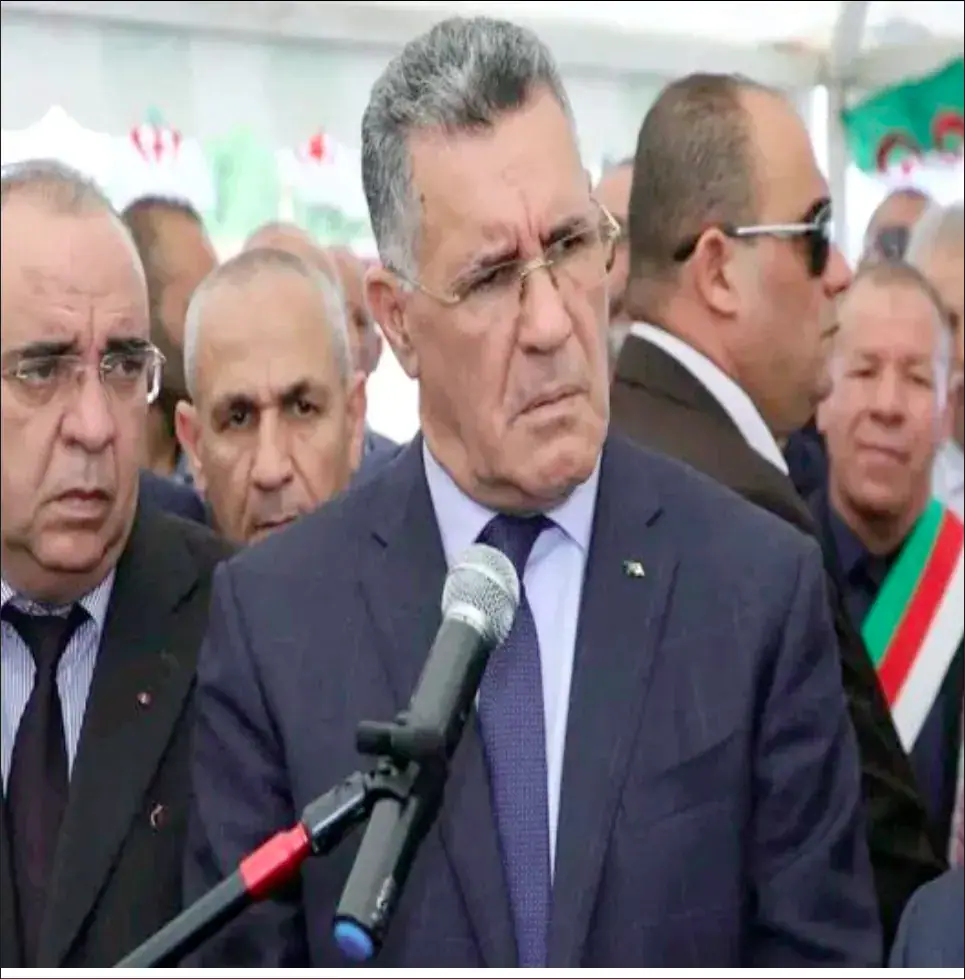
The Algerian government has established an intersectoral working group to develop national capacities for wastewater treatment and reuse. The group, installed by Minister of Hydraulics Lounès Bouzegza, aims to formulate proposals for expanding the reuse of treated wastewater in agriculture and industry. This move aligns with the instructions of President Abdelmadjid Tebboune and the conclusions of a government meeting held on October 15.
The working group comprises representatives from various sectors, including Hydraulics, Environment, Agriculture, Finance, Scientific Research, Professional Training, Industry, and Start-ups. This diverse composition will enable the group to propose corrective measures, technological solutions, and practical adaptations to enhance national wastewater treatment capacities. The goal is to increase the reuse of treated wastewater in agriculture and industry while adhering to existing norms.
Algeria currently has 237 wastewater treatment stations with a theoretical capacity of 1.12 billion cubic meters per year. The government plans to strengthen these capacities by completing a program that includes building 76 new treatment stations, rehabilitating 101 wastewater pumping stations, and constructing 802 kilometers of sanitation network pipelines. Additional projects aim to equip stations with tertiary treatment systems.
The installation of the working group is part of the Hydraulics sector's efforts to valorize non-conventional water resources, enhance national hydraulic security, and support sustainable development and environmental protection. By expanding wastewater reuse, Algeria aims to accompany the development needs of various sectors, particularly agriculture.
In late September, Minister Bouzegza chaired a meeting to study ways to increase wastewater recovery and reuse rates through treatment stations. The meeting examined the situation of treatment systems, their operational level, and their performance, as well as the quantities of treated and recovered water. The discussion also focused on ongoing projects and new programs.
The minister emphasized the need to implement the President's instructions to achieve a 60% wastewater recovery rate, which would mobilize additional water resources to support development needs, particularly in agriculture. He stressed the importance of precise monitoring of treatment station situations and ensuring their operation according to required norms.
The working group's establishment and the ongoing efforts to enhance wastewater treatment and reuse demonstrate Algeria's commitment to optimizing its water resources and supporting sustainable development. The country's water security and environmental protection will likely benefit from these initiatives, which aim to improve the efficiency of existing treatment systems and expand the reuse of treated wastewater.
Key points
- Algeria aims to achieve a 60% wastewater recovery rate to support development needs.
- The country plans to strengthen its wastewater treatment capacities with new stations and infrastructure projects.
- The intersectoral working group will propose measures to develop and expand wastewater reuse in agriculture and industry.