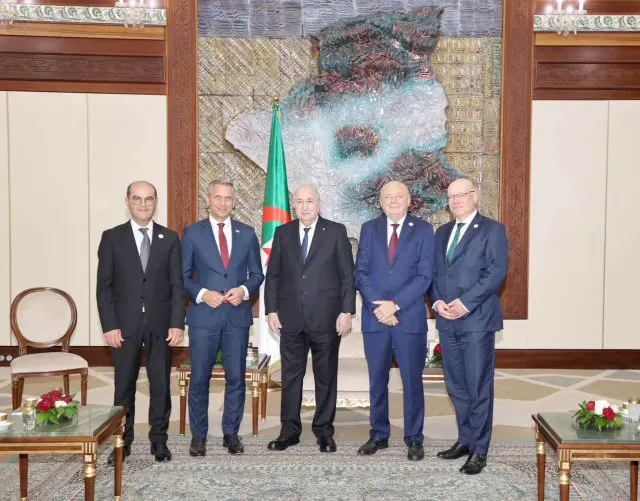
The second ministerial meeting on the SoutH2 Corridor took place in Algiers, Algeria, on October 3, 2026, with energy ministers from Algeria, Austria, Germany, Italy, and Tunisia in attendance. The meeting aimed to discuss the strategic importance of the initiative, which seeks to promote regional integration, energy cooperation, and industrial competitiveness through the joint development of green hydrogen production. The ministers signed a joint declaration of political intentions, reaffirming their commitment to strengthening regional and Euro-Mediterranean cooperation in the field of green hydrogen.
The SoutH2 Corridor project is considered a key lever for regional integration, energy cooperation, and industrial competitiveness. It aims to develop a green hydrogen production chain between North Africa and Europe. The project involves the transportation of 4 million tons of green hydrogen per year from Algeria to three European countries over a distance of 3,000 km, representing 10% of the expected European demand for this clean fuel by 2040. The ministers reviewed progress made on the integrated project of the Algeria-Europe Alliance for Hydrogen (ALTEH2A).
The meeting was attended by Algerian Minister of Energy and Renewable Energies Mourad Adjal, Minister of State and Minister of Hydrocarbons Mohamed Arkab, Minister of Industry Farid Kourtel, and President of the Algerian Economic Renewal Council Kamel Moula. Also present were ambassadors from countries involved in the project and representatives of companies engaged in the green hydrogen project. The ministers were received by Algerian President Abdelmadjid Tebboune, along with several high-ranking officials.
German Secretary of State for Economic Affairs and Energy Frank Wetzel emphasized the importance of the SoutH2 Corridor project for transporting hydrogen to Europe. He stated that the project would bring the five partner countries closer together and stressed the need for timely implementation, as European industry requires hydrogen supplies for industrial transformation and investment. Wetzel highlighted that Germany and Austria need to secure sufficient investments to preserve their industrial base.
Italian Minister of Environment and Energy Security Gilberto Pichetto Fratin praised President Tebboune's support for the SoutH2 Corridor project, highlighting its significance as a future energy infrastructure. He noted that the project aims to create conditions for a better future, not only in terms of energy but also for citizens' well-being. Fratin stressed the importance of this infrastructure for ensuring a sustainable energy future.
Tunisian Minister of Equipment and Housing Slah Zouari considered the SoutH2 Corridor project a strategic infrastructure for clean energy, connecting North Africa to Europe. He stated that studies conducted so far confirm the project's importance and that the second ministerial meeting allowed for an agreement on conducting additional studies to announce the project's implementation modalities in the near future.
The joint declaration signed by the ministers reaffirms their commitment to securing and diversifying energy supplies in the region. The project is expected to have a significant impact on regional integration, energy cooperation, and industrial development. The next steps will involve further studies and implementation planning for the SoutH2 Corridor project.
Key points
- The SoutH2 Corridor project aims to transport 4 million tons of green hydrogen per year from Algeria to three European countries.
- The project seeks to promote regional integration, energy cooperation, and industrial competitiveness between North Africa and Europe.
- The ministers signed a joint declaration reaffirming their commitment to strengthening regional and Euro-Mediterranean cooperation in the field of green hydrogen.