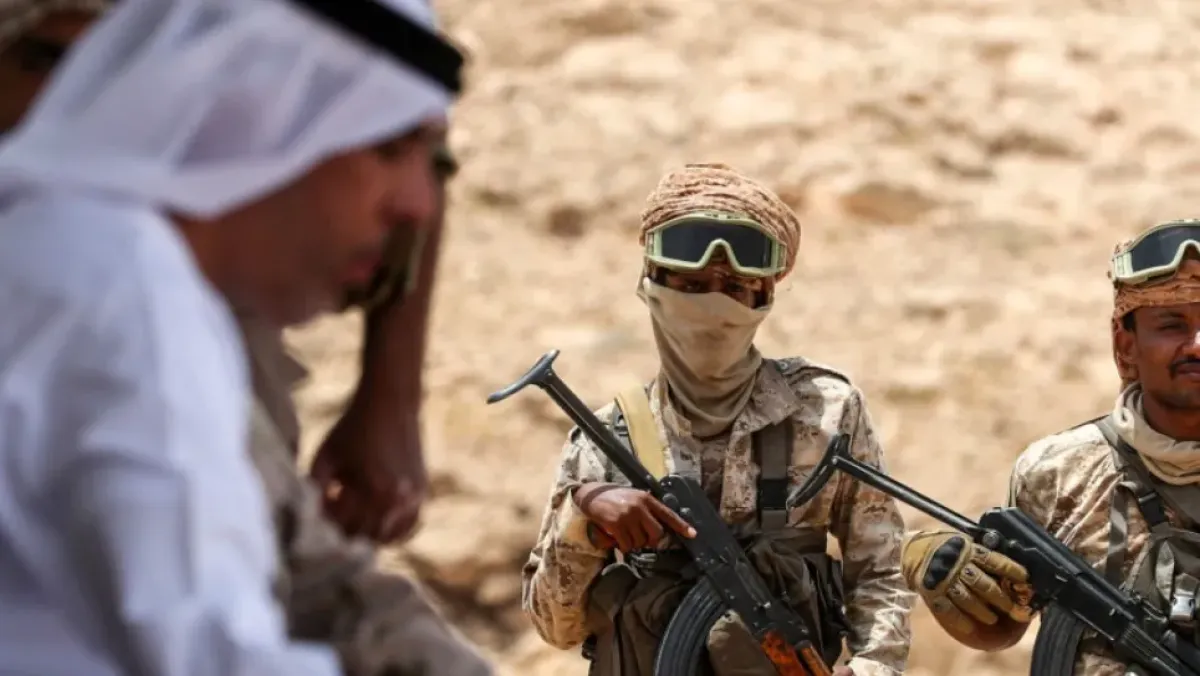
The Algerian public channel, AL24 News, reported that the United Arab Emirates is preparing to establish a large unit of mercenaries, known as a foreign legion, comprising multiple nationalities. According to the channel, the UAE's foreign legion will target various nationalities, including Algerians, although the source of this information was not specified. This revelation was made on October 11, with the channel claiming to have obtained the information from a reliable and well-informed source.
The planned foreign legion is expected to consist of 3,000 to 4,000 mercenaries in its initial phase, with recruitment set to begin in 2027 and the unit's establishment scheduled for 2028. The UAE's project aims to recruit mercenaries for a financial reward, raising questions about the role Abu Dhabi seeks to play in its regional environment. This development has sparked concerns in Algeria, with many questioning the nature of the UAE's involvement in regional conflicts.
The UAE's plan to establish a foreign legion has been viewed as part of its broader strategy to expand its influence in the region. Some analysts describe the UAE as a "functional state," whose external actions serve strategic agendas that go beyond its immediate national interests. This approach has led to accusations that the UAE is involved in various conflict zones, including Sudan and several African countries.
The UAE's involvement in Sudan has been particularly contentious, with Abu Dhabi facing allegations of supporting the Rapid Support Forces. Similarly, the UAE's actions in several African regions have raised concerns about its role in these conflicts. The planned foreign legion has been seen as a further escalation of the UAE's involvement in regional conflicts.
The development has also sparked debate about the UAE's alliances and partnerships. The UAE has strengthened its ties with Israel and Morocco in recent years, which has led to concerns that it is prioritizing its own interests over Arab interests. Critics argue that the UAE's actions are driven by a desire to expand its influence, rather than promoting regional stability.
Algeria's concerns about the UAE's planned foreign legion reflect broader anxieties about the region's security dynamics. The UAE's actions have been seen as part of a broader trend of external interference in regional conflicts, which has raised concerns about the long-term implications for stability and security.
The international community has not yet formally responded to the UAE's plans for a foreign legion. However, the development is likely to be closely watched by regional actors, who are concerned about the potential implications for regional security and stability. The UAE's actions will likely have significant implications for the region, and it remains to be seen how other countries will respond to this development.
Key points
- The UAE plans to establish a foreign legion comprising 3,000 to 4,000 mercenaries, targeting multiple nationalities including Algerians.
- The development has sparked concerns in Algeria and other regional actors about the UAE's role in regional conflicts.
- The UAE's actions have been seen as part of a broader trend of external interference in regional conflicts.