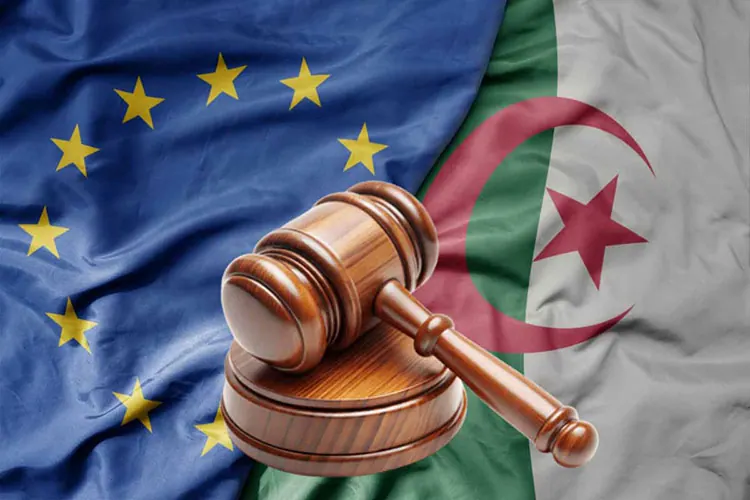
Algeria and the European Union are set to strengthen their judicial cooperation with a new agreement that aims to enhance information sharing and coordination in fighting terrorism and cross-border organized crime. The agreement, which was authorized by the Council of the European Union on September 22, will establish a more structured legal framework for cooperation between Algerian authorities and their European counterparts. This framework will enable the deployment of joint investigation teams and the exchange of data and evidence in international criminal cases of mutual concern.
The agreement, identified as 2026/0155(NLE), covers judicial information sharing, cooperation in criminal investigations and prosecutions, cross-border data transfers, and the protection of personal data. It has received the approval of the European Data Protection Supervisor on August 10. The agreement will provide Algeria with a permanent legal framework for exchanging information and personal data with Eurojust, particularly in the fight against serious cross-border crime. This will enable Algeria to cooperate with a central European agency representing the bloc's 27 member states.
The significance of the agreement for Algeria lies in its potential to bring criminal judicial cooperation to a more institutionalized level. Rather than dealing with individual European countries, Algeria will cooperate with a central European agency, facilitating cooperation concerning individuals accused of cybercrime, terrorism, and offenses against the country's territorial integrity. Many of these individuals are the subject of legal proceedings in several European countries, including France, Spain, Luxembourg, and Switzerland.
One issue of particular importance to Algeria is the possibility of recovering embezzled funds transferred to EU member states. The agreement places money laundering, corruption, cybercrime, and other serious related offenses among the areas in which the parties are expected to cooperate. For Algeria, which has made the recovery of funds illicitly transferred abroad a priority, the agreement could allow it to channel its efforts through a single institutional framework with the European Union.
The draft agreement will also enable Algeria to benefit from Eurojust's assistance in establishing and operating joint investigation teams with European countries, including technical and financial support. It will further facilitate cooperation in the recovery of evidence and cross-border prosecutions, helping coordinate investigations when a case spans Algeria and several European countries. This will help prevent each part of the case from being handled separately.
The offenses covered by the draft agreement include drug trafficking, migrant smuggling, human trafficking, crimes involving nuclear and radioactive materials, motor vehicle crime, murder, and grievous bodily harm. The draft also imposes restrictions on the onward transfer of information to third parties, with explicit safeguards for privacy and personal-data protection, as well as enhanced protection for sensitive data.
The agreement will enter into force on the first day of the second month following the month in which Algeria and the European Union notify each other that they have completed the required internal legal procedures. Under the proposed agreement, Algeria and the European Union will review its implementation one year after it enters into force and periodically thereafter, with a comprehensive assessment to be conducted after four years.
Key points
- Algeria and EU to enhance judicial cooperation in countering terrorism, organized crime
- Agreement to establish a more structured legal framework for cooperation between Algerian authorities and their European counterparts
- Algeria to benefit from Eurojust's assistance in establishing and operating joint investigation teams with European countries