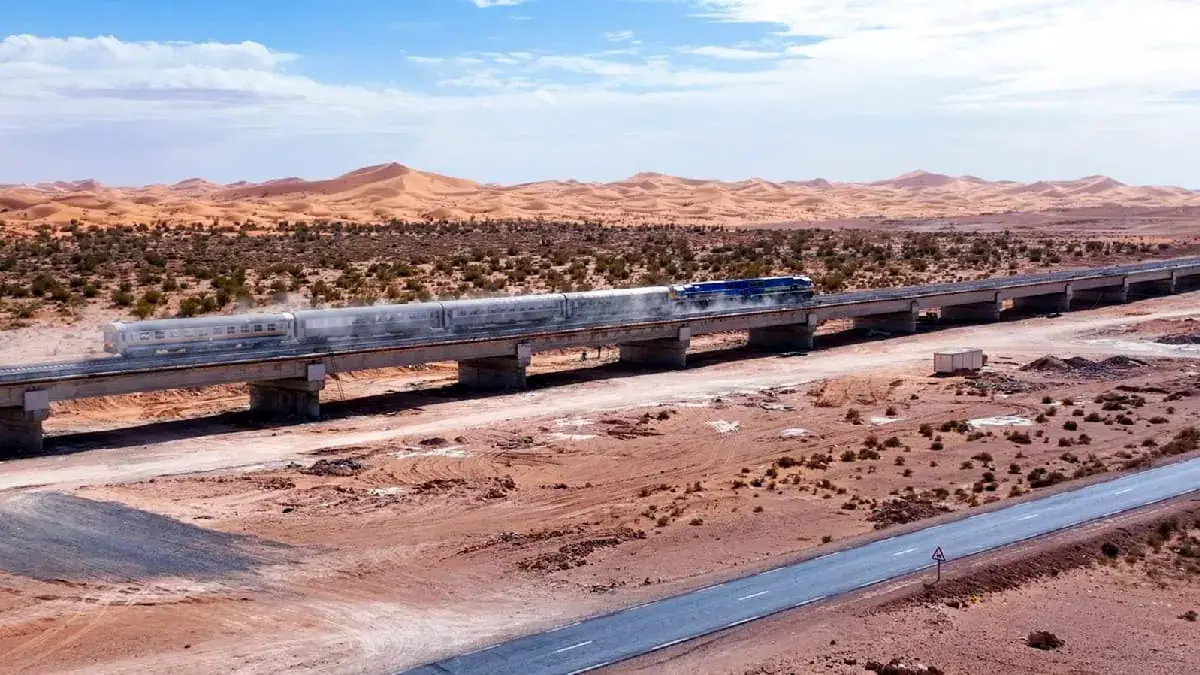
The Algerian government has initiated three massive projects valued at over $18 billion to transform the Sahara region into a more livable and productive area. These projects include the construction of giant farms, a long-distance railway line, and significant hydraulic infrastructure. The goal is to change the landscape of the Algerian Sahara, making it more hospitable and economically viable.
One of the most ambitious projects is the construction of a railway line connecting Algiers to Tamanrasset, spanning 2,036 kilometers. This project, valued at $14.6 billion, is considered the most significant due to its economic and human impact on the Grand South region of Algeria. The financing of this railway line is divided into two sections, with the first section, Laghouat – Ghardaïa – El Meniaa, being funded by the African Development Bank and the Asian Infrastructure Investment Bank.
The second section, El Meniaa – In Salah – Tamanrasset, is entirely funded by the Algerian state budget. The project aims to facilitate both passenger and freight transport, with a planned speed of 220 km/h for passenger trains and 100 km/h for freight trains. The Algerian National Agency for the Study and Monitoring of Railway Investments has opted for diesel-electric locomotives, with the project expected to be completed by the end of 2028.
Another significant project is the development of a giant farm in Adrar, valued at $3.5 billion. The Baladna El Djazair project, launched in 2024, is a partnership between the Qatari group Baladna and the Algerian Investment Fund. The project covers an area of 219,000 hectares and includes a comprehensive dairy chain, from fodder production to powder transformation. The farm will host 270,000 dairy cows, producing 1.7 billion liters of milk per year, which is expected to cover half of Algeria's powdered milk needs.
To support these projects, the Algerian government has also launched a water supply infrastructure project, valued at approximately $200 million. The project involves the construction of a 250-kilometer water transfer system from the Tanezrouft aquifer to the Tin Zaouatine region, near the Mali border. The project includes five 300-meter-deep boreholes, four pumping stations, and associated pipelines and reservoirs.
The water transfer project is expected to be completed by the end of 2027 and aims to address the local population's demands for access to potable water. These projects mark a significant step towards the development of the Sahara region in Algeria, with the potential to create jobs, stimulate economic growth, and improve living conditions for local communities.
The successful implementation of these projects could have a transformative impact on the region, making it more attractive for investment and habitation. The Algerian government's commitment to these initiatives demonstrates its dedication to regional development and improving the quality of life for its citizens.
Key points
- Algeria has launched three major projects worth over $18 billion to develop infrastructure, agriculture, and water supply in the Sahara region.
- The projects include a 2,036-kilometer railway line connecting Algiers to Tamanrasset, valued at $14.6 billion.
- The projects aim to create jobs, stimulate economic growth, and improve living conditions for local communities in the Sahara region.