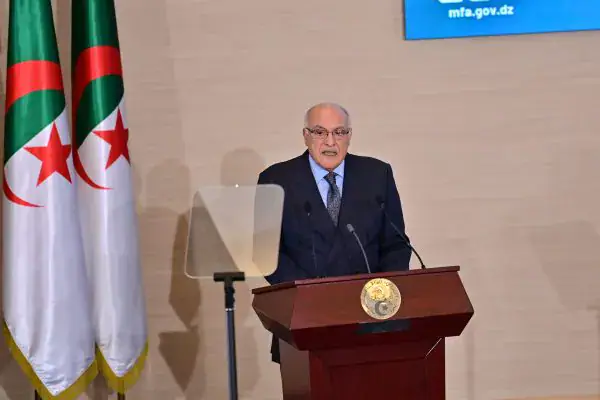
Algeria's Foreign Minister, Ahmed Attaf, has expressed concerns over the current state of the country's association agreement with the European Union, citing significant imbalances and restrictive trade practices. In a recent statement, Attaf emphasized the need for a fundamental revision of the agreement to establish a more equitable and mutually beneficial partnership. He noted that the agreement has been in place for 20 years, and its implementation has been marred by dysfunctionalities and disparities.
The Algerian government views the partnership with the EU as strategically important, particularly in the economic sphere. Attaf highlighted that the EU is Algeria's largest trading partner, accounting for nearly half of the country's total external trade. However, he lamented that this high level of trade has not been matched by corresponding investments, technology transfers, or strengthened industrial and development partnerships. As a result, Algeria is seeking to rebalance the partnership to ensure that it serves the interests of both parties.
Attaf outlined four key areas of concern regarding the implementation of the association agreement. Firstly, he stressed the need for the parties to address issues through established contractual mechanisms, such as the Algerian-European Association Council, which has not met since 2020. Secondly, he expressed disappointment over the low level of European investment in Algeria, which has not exceeded $17 billion since the agreement came into force in 2005. Thirdly, he noted that the structure of the Algerian economy has undergone significant changes, rendering some clauses of the agreement outdated.
The Algerian government is also concerned about restrictions imposed by the EU on the importation of certain Algerian products, such as steel, cement, and agricultural goods. Attaf cited the example of the EU's recent decision to impose a quota on Algerian steel imports, which has resulted in an 80% decline in Algerian exports to the European market over the past four months. He argued that such measures undermine the principles of a balanced and equitable partnership.
Attaf emphasized that Algeria will not accept a partnership that is used as an instrument of pressure, bargaining, or interference in the country's sovereign choices or its relations with other international partners. He questioned whether a genuine partnership can be measured solely by commercial figures or if it should also be evaluated based on investment, technology transfer, equal opportunities, and respect for shared interests.
The Algerian government is seeking to build a more balanced partnership with the EU, one that is based on parity, respect, and mutual benefit. Attaf reiterated that the current agreement must be revised to reflect the changes in the global economy and to address the concerns of both parties. He emphasized that the partnership should be based on a framework that serves the common interests of both sides, rather than one that prioritizes the interests of one party over the other.
The revision of the association agreement is a key priority for Algerian diplomacy, and Attaf's comments reflect the government's determination to address the current imbalances in the partnership. The outcome of these efforts will likely have significant implications for Algeria's economic relations with the EU and its future trade policies.
Key points
- Algeria's Foreign Minister, Ahmed Attaf, calls for a revision of the association agreement with the EU.
- The current partnership is criticized as unbalanced and restrictive.
- Algeria seeks a more equitable and mutually beneficial partnership with the EU.