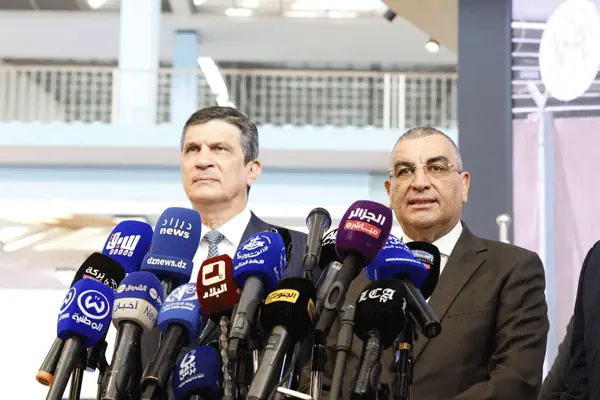
Algeria's Minister of Public Works and Basic Infrastructure, Abdelkader Jelali, has emphasized the country's commitment to developing its infrastructure through strategic projects. These projects, part of President Abdelmadjid Tebboune's program, focus on roads, railways, and ports. The goal is to update the national infrastructure, improve connectivity between regions, and support economic growth. The minister made these remarks at the 21st International Public Works Fair in Algiers.
The projects aim to enhance the country's transportation networks, including a 147,000-kilometer road network, with 32,073 kilometers of national roads, 27,946 kilometers of wilaya roads, and 60,688 kilometers of municipal roads. Additionally, Algeria has 24,908 kilometers of non-classified roads and 1,605 kilometers of highways. The government has also invested in railway expansion, increasing the network's length from 4,070 kilometers in 2020 to 5,738 kilometers in 2026.
The railway expansion project includes the development of new lines, such as the Annaba-Tebessa-Belad El Hadba railway, which spans 422 kilometers. Another significant project is the Bechar-Tindouf-Gara Djebilet railway, stretching 950 kilometers, which aims to facilitate the transportation of mining products. These projects are part of Algeria's efforts to boost economic development and improve connectivity with neighboring countries.
Algeria has also made significant progress in urban transportation, with 21 public transportation systems, including 19.5 kilometers of metro and 113.5 kilometers of tramway. The country has also invested in cable transportation, with 13 facilities. Recently, the city of Mostaganem launched a new tramway extension, while Constantine's tramway was also expanded.
The government has emphasized the importance of involving small and medium-sized enterprises in the development of these projects. Minister Jelali encouraged large companies to partner with these smaller firms, which can bring innovative solutions to the table. This approach aims to promote economic growth and create new opportunities for Algerian businesses.
The development of Algeria's infrastructure is crucial for the country's economic growth and social development. The projects undertaken by the government aim to improve the quality of life for Algerian citizens, enhance connectivity, and increase economic competitiveness. The minister highlighted the importance of human capital in the success of these projects, emphasizing the need for skilled engineers, technicians, and workers.
The International Public Works Fair, which took place in Algiers, provided a platform for Algerian and international companies to showcase their expertise and technologies in the field of public works. The event allowed for the exchange of experiences and ideas, promoting collaboration and innovation in the sector. Algeria's infrastructure development projects are expected to have a positive impact on the country's economy and society in the coming years.
Key points
- Algeria is investing in strategic infrastructure projects to modernize its transportation networks and enhance economic development.
- The country's road network spans 147,000 kilometers, while the railway network has expanded to 5,738 kilometers.
- The government is promoting partnerships between large companies and small and medium-sized enterprises to drive innovation and economic growth.