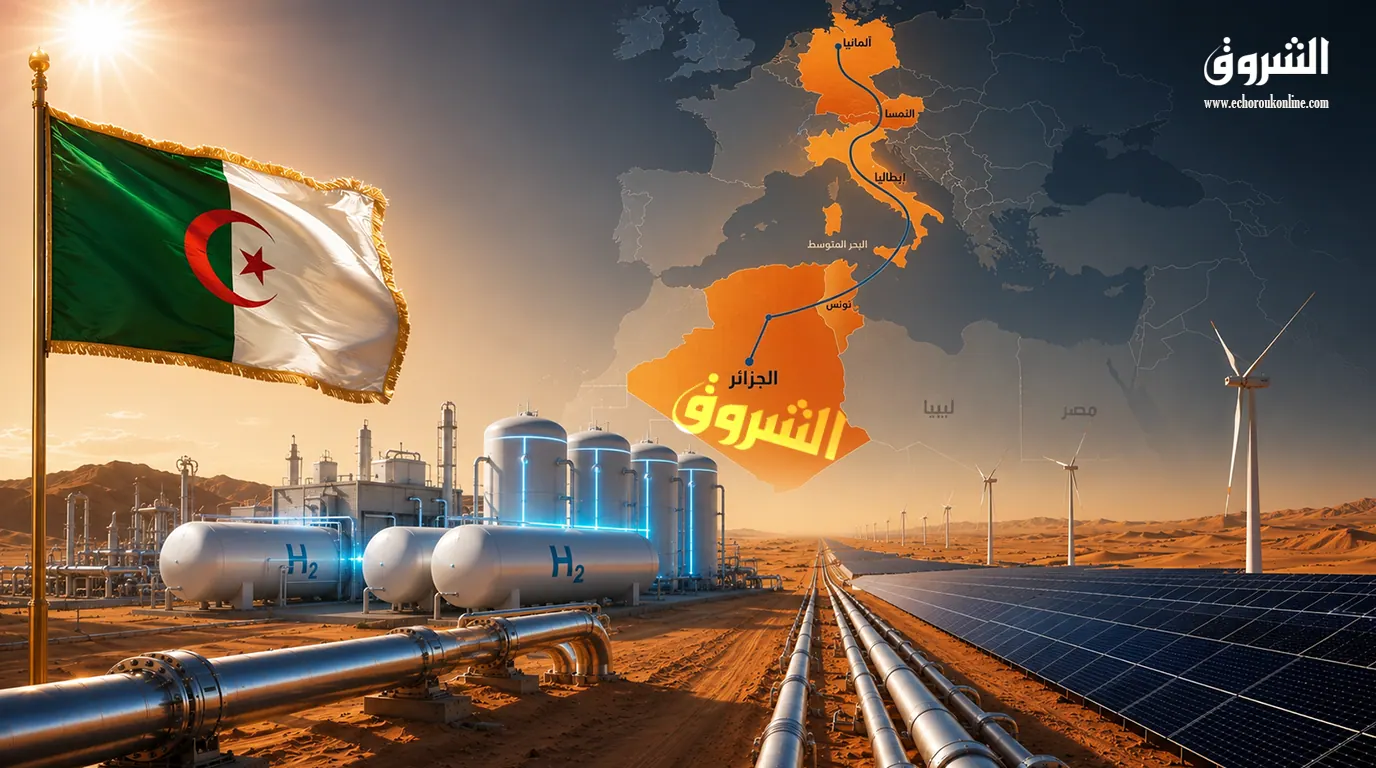
Algeria is set to host a new ministerial meeting with Italy, Germany, Austria, and Tunisia to discuss the technical and financial steps for the Southern Hydrogen Corridor project, SoutH2. The project aims to transport renewable hydrogen from North Africa to European industrial markets. The 3300-kilometer corridor could transport up to 4 million tons of renewable hydrogen annually and is expected to be operational in the early 2030s.
The SoutH2 project relies heavily on reusing existing gas infrastructure, with over 65% of the planned route utilizing existing pipelines after adaptation for hydrogen transport. This aspect is crucial to the project's economic and technical feasibility. Italy plays a pivotal role in the corridor, as hydrogen produced in North Africa will be transported via the Mediterranean to Italy and then to Austria and Germany through the Italian network.
The project aligns with Europe's goal of creating a continental hydrogen network and diversifying energy supply sources. The upcoming meeting follows the first ministerial meeting in Rome on January 21, 2025, where Algeria, Tunisia, Italy, Germany, and Austria signed a joint declaration of intent to develop the corridor. The countries aim to provide the necessary technical, economic, and financial conditions for the project's completion.
For Algeria, the project could add a new dimension to its traditional energy relationships with Europe, given its status as a major natural gas supplier to the continent. However, developing this new market requires parallel investments in renewable energy, electrolysis plants, storage facilities, and transport networks. Algeria's energy sector is expected to benefit from European technology and capital.
A German economic delegation visited Algeria and Tunisia from September 21 to 25 to explore cooperation opportunities in green hydrogen, storage systems, and technologies related to converting renewable electricity into fuel and industrial products. The visit highlighted the potential for collaboration between the countries in the hydrogen sector.
Several pilot projects are underway, including a partnership between Algeria's Sonatrach and German energy company, ENI, in Arzew to develop expertise and technologies for green hydrogen production. The economic viability of the hydrogen supply chain will depend on factors such as renewable electricity costs, water availability, and electrolyzer prices.
The European Union has provided funding for studies on parts of the future hydrogen network, and Italy's hydrogen network, developed by Snam, received 24 million euros in EU funding in 2025 for technical studies and preparatory activities. The SoutH2 project is a strategic initiative in the EU's plans to develop hydrogen infrastructure.
Key points
- Algeria and its partners aim to transport 4 million tons of renewable hydrogen annually through the SoutH2 corridor.
- The project relies on adapting over 65% of existing gas pipelines for hydrogen transport.
- The initiative is crucial to Europe's goal of creating a continental hydrogen network and diversifying energy supplies.