Algeria has contributed to offsetting the decline in Qatar's liquefied natural gas (LNG) supplies to the European Union (EU) by increasing its exports of LNG and pipeline gas by 1.1 billion cubic meters in the first eight months of 2026. According to data compiled by a research unit, the EU's imports of LNG from Qatar dropped by 5.1 billion cubic meters year-on-year during this period.
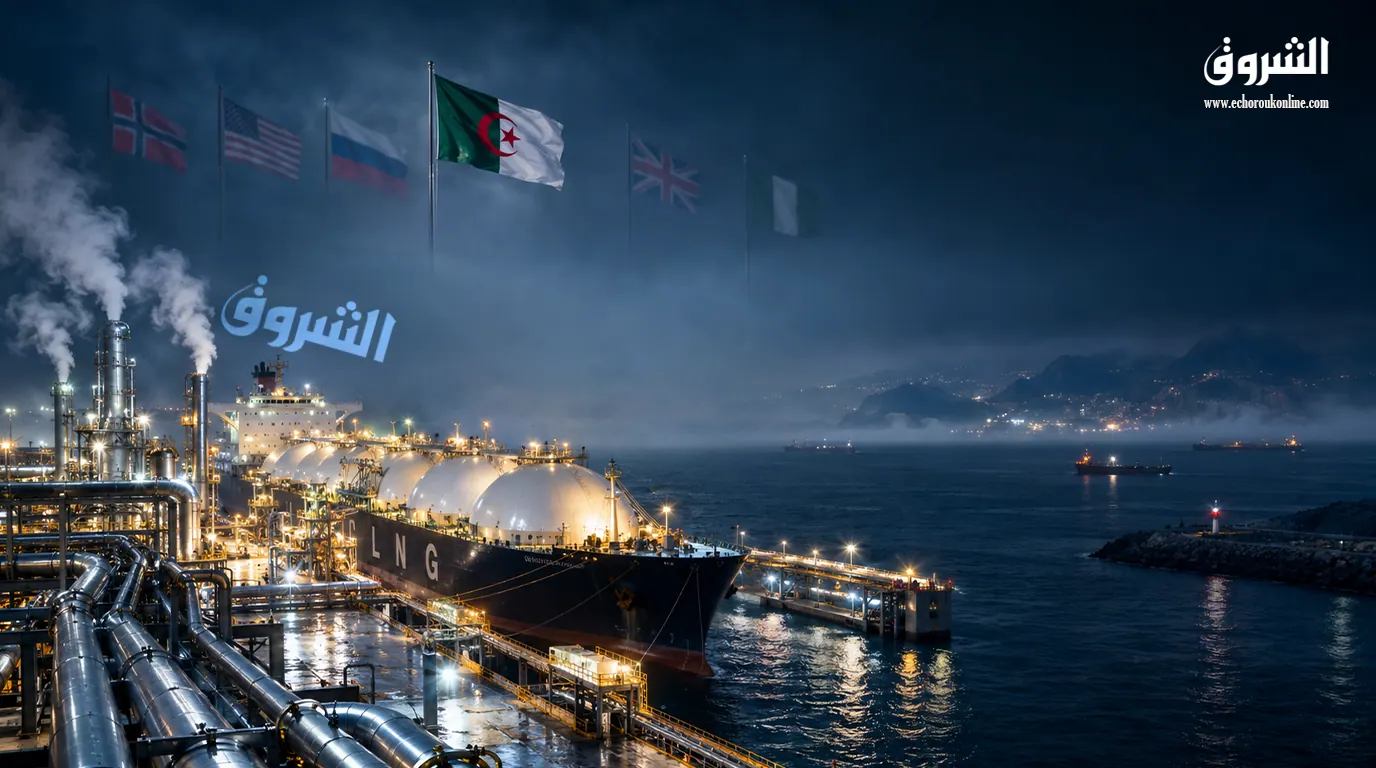
The decline in Qatar's LNG supplies to the EU was partially offset by increased imports from other suppliers, led by Norway with an increase of 3.2 billion cubic meters, followed by the United States with 1.8 billion cubic meters, Russia with 1.5 billion cubic meters, Algeria with 1.1 billion cubic meters, the United Kingdom with 1 billion cubic meters, and Nigeria with 500 million cubic meters.
Despite the decline in Qatar's LNG supplies, the EU's total gas imports, including LNG and pipeline gas, remained stable at around 200 billion cubic meters during the first eight months of 2026. This stability was achieved with a 3.5% decrease in LNG imports and a 2.5% increase in pipeline gas imports.
The EU's LNG imports experienced a gradual decline from April to July before rebounding in August as member states sought to boost their stockpiles ahead of winter. Algeria's increased exports included both LNG and pipeline gas, solidifying its position as a key gas supplier to the European market and helping to mitigate the shortage caused by Qatar's reduced supplies.
The United States emerged as a significant player in the EU's LNG market, with its LNG exports accounting for around 60% of the EU's total LNG imports during the first eight months of 2026. This proportion rose to 70% in August alone. The EU also increased its pipeline gas imports from Norway by 3.2 billion cubic meters, with Norway currently being the largest supplier of pipeline gas to the EU.
The EU's imports of Russian gas, both LNG and pipeline, increased by 1.5 billion cubic meters during the first eight months of 2026. This occurred despite the EU's implementation of a ban on spot LNG imports from Russia in April, with a comprehensive ban on long-term LNG flows set to take effect in January 2027.
The UK boosted its gas exports to the EU by 1 billion cubic meters during the same period, all through pipeline gas, while Nigeria increased its LNG exports to the EU by 500 million cubic meters. The EU currently relies on gas imports to cover around 85% of its consumption, with this figure expected to rise to 98% by 2050 if new investments in gas fields are not made and local production declines.
Key points
- Algeria increased its gas exports to the EU by 1.1 billion cubic meters in the first eight months of 2026.
- The EU's gas imports from Qatar dropped by 5.1 billion cubic meters year-on-year during this period.
- Norway was the largest supplier of pipeline gas to the EU, with a 3.2 billion cubic meter increase in exports.