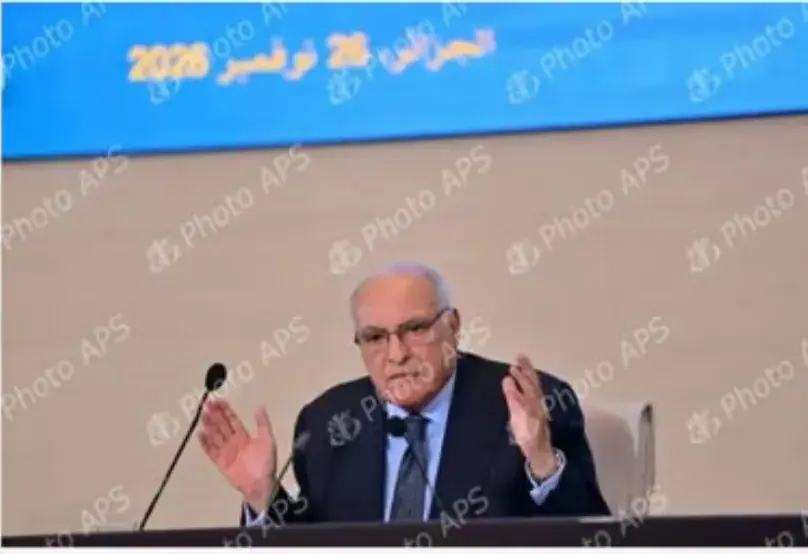
Algerian Minister of State for Foreign Affairs, Ahmed Attaf, has stated that his country favors a comprehensive and balanced approach to addressing the security and development challenges facing the Sahel region. In a press conference, Attaf emphasized that stability in the region cannot be achieved solely through security measures, but also requires addressing the root causes of instability through concerted actions. He highlighted Algeria's efforts to strengthen relations with neighboring countries, including Niger, Mali, Mauritania, Chad, and Burkina Faso.
Attaf outlined three complementary axes for Algeria's approach: development, security cooperation, and consolidation of social cohesion and national unity. He noted that Algeria is working to develop partnerships with its neighbors, focusing on mutually beneficial economic partnerships, particularly in the energy sector. This aims to create investment and development opportunities and strengthen economic integration among regional countries. Algeria is also pursuing projects to improve regional connectivity, including infrastructure, transportation networks, and communication systems.
The Algerian minister emphasized the importance of addressing the root causes of instability in the Sahel region. He warned against a narrow focus on security measures, which he believes would be insufficient to achieve lasting stability. Instead, Attaf advocated for a comprehensive approach that incorporates development, economic cooperation, and social cohesion. This approach, he argued, would help to address the underlying drivers of instability and promote sustainable peace in the region.
On the security front, Attaf highlighted the need for cooperation to combat terrorism and transnational organized crime, including drug and arms trafficking, and human trafficking. He stressed that these threats cannot be effectively countered through isolated or unilateral initiatives. Algeria's approach prioritizes cooperation and coordination with regional partners to address these security challenges.
Attaf also cautioned against ignoring the interconnectedness of crises in the region. He argued that a narrow focus on the Sahel, without considering the broader regional context, would be misguided. The minister identified foreign interference, arms flows, and the persistence of armed conflicts as factors that contribute to the expansion of terrorist groups and organized crime networks.
The Algerian minister specifically highlighted the situations in Libya and Sudan as examples of how instability in one country can have far-reaching consequences for regional security. He emphasized the need for urgent and sustainable political solutions in these countries, respecting their unity, sovereignty, and territorial integrity. This, he believes, is essential for achieving stability in the Sahel region.
In conclusion, Attaf reiterated Algeria's commitment to a comprehensive approach to Sahel stability, emphasizing the need for balanced development and security cooperation. He called for regional partners to work together to address the root causes of instability and promote sustainable peace. By adopting a cooperative and comprehensive approach, Algeria believes that the Sahel region can achieve lasting stability and prosperity.
Key points
- Algeria advocates for a comprehensive approach to Sahel stability, incorporating development, security cooperation, and social cohesion.
- The Algerian government prioritizes cooperation with regional partners to combat terrorism and transnational organized crime.
- Algeria emphasizes the need for urgent and sustainable political solutions in Libya and Sudan to address regional security challenges.
Reporting sources
- La Stabilité au Sahel : l’Algérie prône une approche globale axée sur le développement et la coopération sécuritaire · Agence Nigérienne de Presse