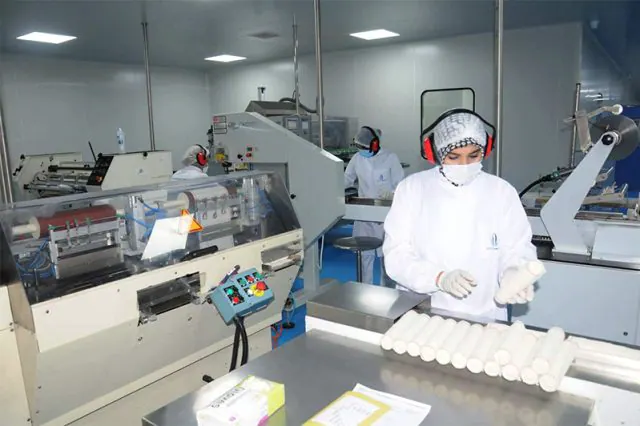
Algeria has reached a significant milestone in its pharmaceutical industry, with 11 manufacturing facilities, including the state-owned Saidal group, producing 172 cancer treatments. This development allows the country to provide its entire list of dry-form anticancer medications domestically for the first time. The announcement was made by Industry Minister Ouassim Kouidri at the 2nd International Cancer Patient Congress.
The 172 products manufactured locally mark a substantial increase in Algeria's production capacity, which is expected to improve patient care and enhance the country's healthcare security. Kouidri emphasized that this progress is a crucial step towards reducing reliance on imports, particularly for priority cancer treatments. The government aims to further integrate the pharmaceutical industry by investing in local production and encouraging national and international partnerships.
Several projects are underway to expand production capabilities, including the local production of pharmaceutical raw materials. This expansion is expected to strengthen the industry's integration and reduce dependence on external supplies. The Ministry of Pharmaceutical Industry plans to facilitate investor access, simplify procedures, and promote technology transfer to support this growth.
To accelerate the registration of locally manufactured anticancer medications, the government has established a "green corridor." This measure aims to streamline the process and ensure that patients have easier access to domestically produced treatments. Additionally, the ministry plans to promote clinical trials, providing regulatory and administrative support in line with international standards.
A new intersectoral committee will oversee the implementation of Algeria's National Cancer Prevention and Control Strategy 2035. The committee, comprising representatives from over 14 sectors, including Health, Industry, and Finance, will ensure the strategy's effective execution. The strategy focuses on prevention, screening, diagnosis, patient care, and research.
The National Cancer Prevention and Control Strategy 2035 was developed after national consultations and approved by the Council of Ministers in June. The strategy aims to address the growing number of cancer cases in Algeria, estimated to be between 60,000 and 65,000 annually. The World Health Organization predicts a global increase of over 50% in cancer cases by 2040.
Reducing mortality rates is a key priority, with the goal of achieving a 2% reduction as recommended by the WHO. Early detection and treatment are critical factors in improving survival rates and treatment efficacy. The government emphasizes the importance of prevention measures, such as vaccination against the human papillomavirus (HPV), to prevent cervical cancer.
Key points
- Algeria achieves 100% self-sufficiency in dry-form anticancer medication production.
- The country aims to reduce reliance on imports and strengthen its pharmaceutical industry through investment and partnerships.
- A new intersectoral committee will oversee the implementation of Algeria's National Cancer Prevention and Control Strategy 2035.