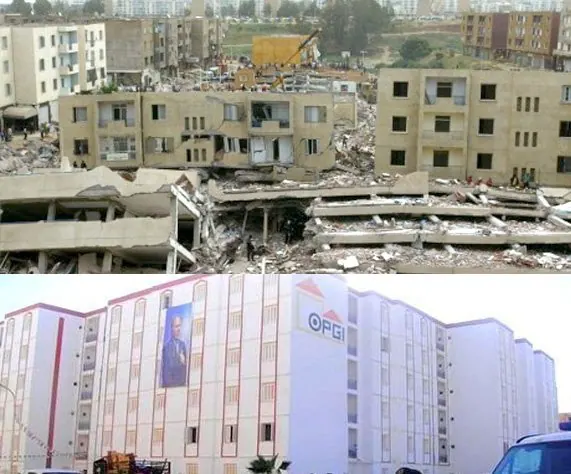
On May 21, 2003, a powerful earthquake struck Boumerdès, Algeria, leaving a trail of destruction and chaos in its wake. The 7.0 magnitude quake, centered off the coast of Zemmouri, resulted in the deaths of over 2,700 people and injured nearly 10,000 others. The disaster was felt across the region, with entire neighborhoods reduced to rubble and many residents left trapped under debris.
The earthquake had a profound impact on the region, with widespread destruction reported in several areas, including the city of Zemmouri, which was almost completely destroyed. Historic buildings, including the APC headquarters, collapsed, while other structures were partially damaged. In the aftermath of the disaster, a massive relief effort was launched, with citizens from across Algeria rallying to support those affected.
In the years following the earthquake, the Algerian government implemented new building codes and regulations, aimed at reducing the risk of similar disasters in the future. However, despite these efforts, concerns remain about the safety of new construction projects in the region, particularly in areas classified as high-risk seismic zones. Many new developments are being built in areas prone to earthquakes, raising concerns about the potential for future disasters.
One of the most significant challenges facing the region is the ongoing issue of temporary housing. In the aftermath of the earthquake, the government provided 15,000 chalets to accommodate displaced residents. However, many of these temporary dwellings remain in use today, with over 5,000 chalets still occupied in Boudouaou alone. Residents are growing increasingly frustrated with the lack of progress in relocating them to permanent housing.
Efforts to relocate residents to permanent housing have been ongoing, with over 9,000 families relocated to new homes since 2016. However, many more remain on waiting lists, and concerns about the quality of new housing developments have been raised. The issue of temporary housing has been further complicated by allegations of corruption and mismanagement, with several officials and business leaders implicated in a scandal involving the sale of chalets.
The new Wali of Boumerdès, Yahia Yahyaten, has pledged to prioritize the relocation of remaining families and to bring an end to the long-running saga of temporary housing. However, with many residents still living in difficult conditions, it remains to be seen whether these efforts will be successful. The region continues to face significant challenges in the aftermath of the earthquake, and it will likely take many more years for Boumerdès to fully recover.
As the people of Boumerdès reflect on the 16 years since the earthquake, they are reminded of the devastating impact of the disaster and the need for continued support and investment in the region. While progress has been made, much work remains to be done to ensure that the region is resilient to future seismic events and that residents have access to safe and secure housing.
Key points
- Over 2,700 people were killed in the 2003 earthquake, with nearly 10,000 others injured.
- The Algerian government has implemented new building codes and regulations to reduce the risk of similar disasters in the future.
- Over 5,000 temporary chalets remain in use in Boudouaou alone, with many residents still waiting for relocation to permanent housing.