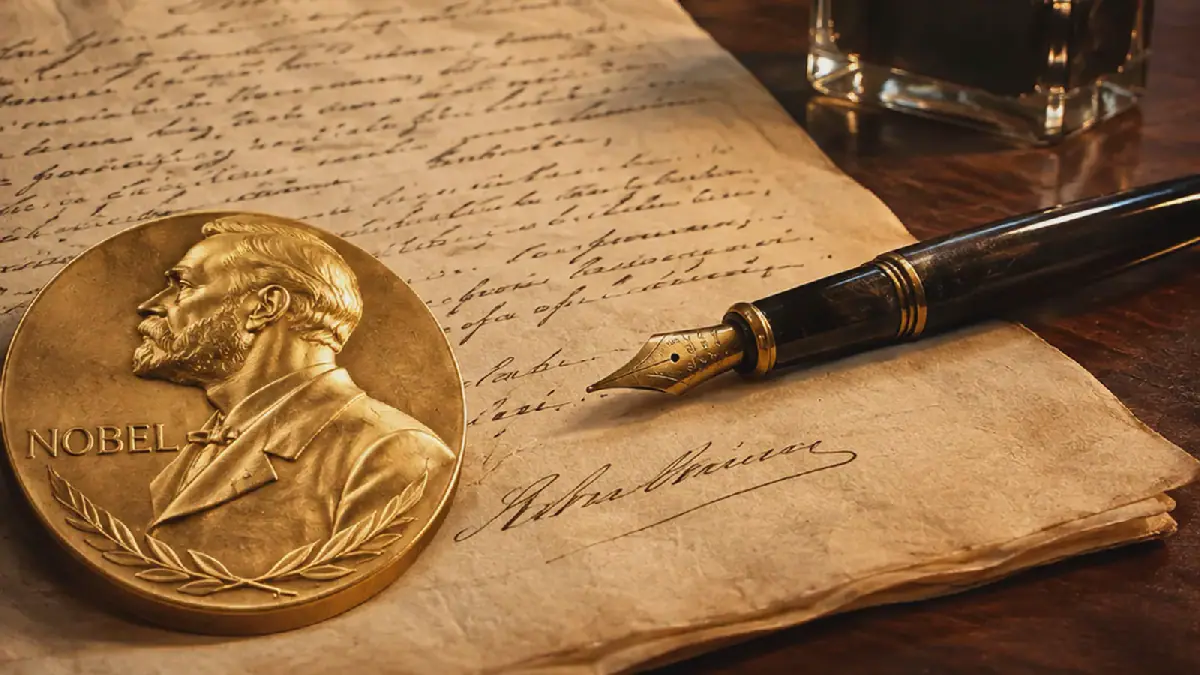
On November 27, 1895, Alfred Nobel, the Swedish inventor, signed his last will and testament in Paris at the Swedish-Norwegian Club. In the document, he stipulated that the majority of his fortune would be used to annually reward individuals who made significant contributions to humanity. This decision led to the establishment of the Nobel Prizes, a milestone in the history of scientific and intellectual distinctions. According to NobelPrize.org and the Nobel Peace Center, this date has become a landmark.
Alfred Nobel was known for his work on explosives and industrial activities. However, his testament surprised some of his acquaintances, as he chose not to bequeath his wealth to his family. Instead, he requested the creation of a fund to finance annual prizes in five fields: physics, chemistry, physiology or medicine, literature, and peace. Notably, the economics prize, often associated with the Nobel Prizes, was not part of the original testament and was established much later by the Swedish central bank.
The signing of the testament did not immediately lead to the current ceremonies. Alfred Nobel passed away in 1896, and it took several years to administer his estate, establish the foundation, and define the selection rules. The first Nobel Prizes were awarded in 1901, with different institutions responsible for choosing the laureates. The Norwegian Parliament designated a committee to award the Peace Prize, as per Nobel's stipulations.
Each year, the Nobel Prizes draw attention to scientific research, literary works, and peace initiatives. They also spark debates about jury choices, recognition of research teams, and representation of scientists from countries with limited resources. For Mauritius, the significance of this story lies in the importance of investing in research, education, and scientific collaborations. A small island economy can contribute to global knowledge if researchers have the means to publish, network, and train new generations.
The legacy of Alfred Nobel's will continues to influence the world. The Nobel Prizes have become a benchmark for excellence in various fields, promoting innovation and progress. The prizes have also facilitated international cooperation and recognition of outstanding achievements. As a result, November 27, 1895, marks not the awarding of a prize but the decision to establish a sustainable funding mechanism for knowledge.
The impact of the Nobel Prizes extends beyond the scientific community. They have become a cultural phenomenon, symbolizing the pursuit of excellence and the advancement of human knowledge. The prizes have also inspired numerous initiatives and programs aimed at promoting scientific research, education, and peace. As the world continues to evolve, the Nobel Prizes remain a testament to Alfred Nobel's vision and generosity.
Today, the Nobel Prizes continue to be a significant event in the scientific and intellectual calendar. The prizes serve as a reminder of the importance of investing in research, education, and collaborations. As Mauritius and other countries strive to contribute to global knowledge, the legacy of Alfred Nobel's will serves as a powerful inspiration. The story of the Nobel Prizes is a remarkable example of how one person's vision can have a lasting impact on humanity.
Key points
- The Nobel Prizes were established based on Alfred Nobel's last will and testament, signed on November 27, 1895.
- The prizes were initially awarded in five fields: physics, chemistry, physiology or medicine, literature, and peace.
- The Nobel Prizes have become a benchmark for excellence, promoting innovation and progress in various fields.