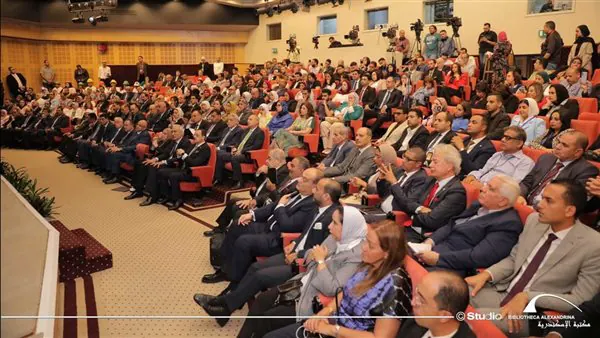
The Alexandria Library recently concluded its conference on "National Identity: Rooted and Renewed Vision" under the auspices of Egyptian President Abdel Fattah El-Sisi. The conference resulted in the issuance of the "Alexandria Library National Identity Document." The closing session was attended by high-ranking officials, including Dr. Abdel Aziz Kansoua, Minister of Higher Education and Scientific Research, and Governor of Alexandria, Ayman Attia.
The conference aimed to provide a platform for discussing Egypt's national identity, its roots, and the challenges it faces. The sessions, which spanned three days, brought together ministers, professors, scholars, and youth to exchange views and explore ways to preserve and present national identity to new generations. The attendees emphasized that national identity is a collective responsibility, requiring the collaboration of the entire society.
The Alexandria Library's National Identity Document outlines the essential components of Egyptian identity, including its historical, cultural, and social aspects. The document aims to promote a unified and inclusive national identity that respects Egypt's diversity. It addresses various stakeholders, including families, educational institutions, media outlets, and civil society organizations, to foster a sense of belonging and ownership.
Dr. Ahmed Zayed, Director of the Alexandria Library, presented the document's key components, which include the definition of Egyptian identity, its theoretical foundations, and strategic objectives. The document seeks to enhance national identity by promoting awareness of Egypt's history, preserving cultural heritage, and encouraging social cohesion. It also emphasizes the importance of the Arabic language, cultural diversity, and the role of families and educational institutions in shaping national identity.
The document highlights the challenges facing national identity, including social changes, technological advancements, and the impact of globalization. It calls for a collective effort to address these challenges and promote a sense of national belonging. The document's objectives include fostering a culture of tolerance, solidarity, and citizenship, as well as preserving Egypt's cultural heritage and promoting its creative industries.
The Alexandria Library plans to implement the document's recommendations through partnerships with various stakeholders, including government agencies, civil society organizations, and the private sector. The library aims to promote national identity through educational programs, cultural events, and community outreach initiatives. The conference's outcomes and the document's recommendations are expected to contribute to a renewed sense of national identity and unity in Egypt.
Key aspects of the document include the importance of preserving Egypt's cultural heritage, promoting social cohesion, and fostering a sense of national belonging. The document also emphasizes the need for collective action to address the challenges facing national identity. By working together, Egyptians can build a stronger, more inclusive sense of national identity that reflects the country's rich history and cultural diversity.
Key points
- The Alexandria Library's National Identity Document aims to promote a unified and inclusive national identity that respects Egypt's diversity.
- The document emphasizes the importance of preserving Egypt's cultural heritage and promoting social cohesion.
- The library plans to implement the document's recommendations through partnerships with various stakeholders.