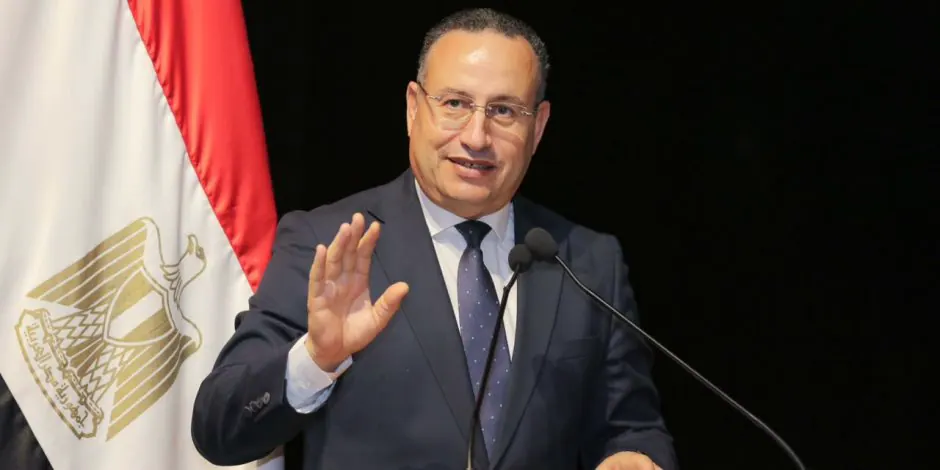
The Alexandria Library concluded the "National Identity: Rooted and Renewed" conference, which was held under the auspices of Egyptian President Abdel Fattah El-Sisi. The conference resulted in the issuance of the "Alexandria Library Charter on National Identity." The closing session was attended by several high-ranking officials, including Dr. Abdel Aziz Kanswa, Minister of Higher Education and Scientific Research, and Acting Minister of Culture; Lieutenant General Dr. Khaled Foda, Advisor to the President for Local Development; and Dr. Ahmed Zayed, Director of the Alexandria Library.
Lieutenant General Dr. Khaled Foda emphasized that the "National Identity" conference represents a genuine platform for dialogue on the issue of Egyptian identity and its related components and challenges. He noted that the conference sessions, which took place over three days, went beyond exchanging views and discussed ways to preserve national identity and present it to new generations in a way that keeps pace with changes while adhering to the constants of Egyptian character.
Dr. Ahmed Zayed reviewed the axes of the Alexandria Library Charter on National Identity, which deals with the definition of Egyptian identity, the theoretical premises of the charter, the pillars of national identity, and the drivers of issuing the charter. He stated that the charter is the result of a wide societal dialogue and participatory efforts between various government, civil, and private institutions to enhance Egyptian identity.
The charter addresses multiple parties within the framework of societal partnership, including families, education, media, religious institutions, cultural institutions, civil society, and entities that communicate with Egyptians abroad. It aims to enhance a comprehensive and renewed national identity based on the common cultural pillars of Egyptians, accommodating their diversity.
Dr. Zayed clarified that the charter identifies the risks facing national identity and the role it plays in building and sustaining societies. It seeks to enhance the state's ability to face these challenges by consolidating awareness of the risks threatening societal cohesion and preserving the common pillars of national identity.
The charter aims to support families and enable them to perform their role in upbringing, promote intergenerational dialogue, and integrate their role with educational, cultural, and media institutions in shaping and enhancing Egyptian identity. It also seeks to support institutional work in educating young people, who are the cornerstone of the future and most affected by the risks threatening social cohesion.
Key points from the conference and charter include: enhancing Egyptian identity through societal partnership; preserving the common pillars of national identity; and promoting awareness of the risks threatening social cohesion. The charter also aims to support the presence of the Arabic language in education, science, media, and culture, and to foster a culture of innovation and creativity among young people.
Key points
- The Alexandria Library Charter on National Identity was issued as a result of a wide societal dialogue and participatory efforts between various institutions.
- The charter aims to enhance a comprehensive and renewed national identity based on the common cultural pillars of Egyptians.
- The charter seeks to support families, education, and institutional work in educating young people and promoting intergenerational dialogue.