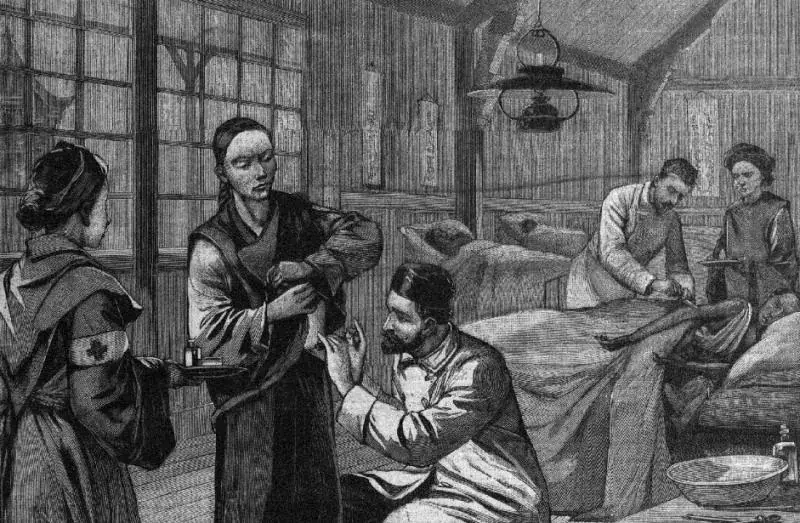
In 1894, French bacteriologist Alexandre Yersin, a student of Louis Pasteur, made a groundbreaking discovery in Hong Kong, China. He isolated, described, and identified the plague bacterium, later named Yersinia pestis, for the first time. This major scientific breakthrough led to the development of serums to combat the disease, which was a significant concern for Europe due to its rapid spread. Yersin's discovery was widely reported in the press, highlighting the importance of his findings.
The plague outbreak in southern China, which originated in Mongolia, had severe effects, with 90-94% of patients succumbing to the disease. The French government and Pasteur Institute sent Yersin to investigate the pandemic in Hong Kong. He conducted autopsies on plague victims and isolated the unknown microbe from the bodies of English soldiers. On June 20, 1894, Yersin discovered the plague bacterium, marking a significant turning point in the fight against the disease.
Yersin's research not only identified the bacterium but also implicated rats as primary carriers of the disease. He demonstrated the persistence of the germ in soil, contributing to the high contagion rate of the bacteria. The French press hailed Yersin as "Le maître de la peste" (The Master of the Plague). His findings were published in the Annales de l'Institut Pasteur, and he received the Legion of Honor for his contributions.
Yersin's analysis of the disease determined an incubation period of 4-6 days and described symptoms, including the appearance of a bubo in the groin, thigh, or neck. He observed that death often occurred within 24 hours. Although Yersin couldn't elucidate the mechanism of transmission from rats to humans, his discovery enabled the development of a serum. With Émile Roux and Albert Calmette, Yersin created a vaccine and serum against the plague in 1895.
The serum was tested on horses, which, when immunized, provided a serum that could cure infected mice and rats. The serum was later used to treat a young Chinese patient and was tested during a new outbreak in Canton and India in 1896. Its use in Bombay resulted in a 40% reduction in mortality. The press played a significant role in disseminating information about the plague and Yersin's discoveries, highlighting the importance of scientific progress in combating the disease.
As the plague spread globally, the risk of contagion in Europe became a growing concern. The press highlighted the need for precautions, and an international conference was held in Venice in 1897 to determine measures to prevent the spread of the disease. France implemented strict controls, banning products from infected areas. Despite these efforts, the plague reached European territories, including Porto, Portugal, and Algeria.
By the turn of the 20th century, the press had become more reassuring about the plague, citing progress in scientific understanding and treatment. Jules Hoche, in L'Ouest-Éclair, noted that while the plague was a significant threat, it would ultimately cause more fear than harm. Yersin's discovery marked a crucial milestone in the fight against the plague, and his work paved the way for further research and developments in the field.
Key points
- Alexandre Yersin discovered the plague bacterium, Yersinia pestis, in Hong Kong in 1894.
- Yersin's research implicated rats as primary carriers of the disease and led to the development of a serum and vaccine.
- The plague spread globally, prompting international efforts to prevent its spread and leading to significant advances in scientific understanding and treatment.