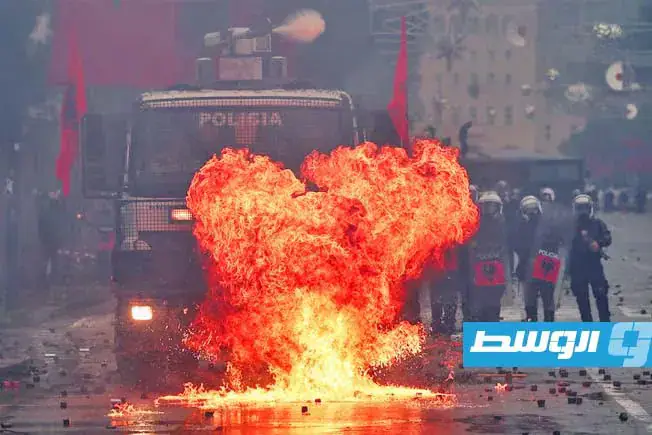
Violent protests broke out in Albania's capital, Tirana, on Saturday, November 28, as thousands of students and citizens took to the streets to demand the resignation of Prime Minister Edi Rama. The demonstrations, which began in October, have been sparked by widespread discontent with corruption, unemployment, and the country's education system. Protesters hurled stones and Molotov cocktails at police, who responded with water cannons and tear gas.
The protests, which coincided with Albania's Independence Day, saw clashes between police and demonstrators, with some protesters donning masks and attempting to storm government buildings. The police managed to disperse the crowds, but not before several buildings, including government offices and banks, had been set on fire. Riot police were deployed to maintain order, and several protesters were reportedly injured.
Prime Minister Edi Rama has been in power since 2013 and was re-elected for a fourth term last year. His government has been accused of corruption and cronyism, which has fueled public discontent. The protests have also been driven by concerns over the country's economic situation, including high unemployment and a lack of opportunities for young people.
The Albanian government has denied allegations of corruption and called for dialogue with protesters to address their concerns. In an effort to placate the protesters, the government has introduced measures such as reducing fuel prices and increasing financial support for poor families. However, these efforts appear to have had little impact, as protests have continued to spread across the country.
The protests have also been marked by concerns over a luxury coastal development project backed by Jared Kushner, a senior adviser to US President Donald Trump. The project has sparked fears that the country's natural beauty and resources are being exploited for the benefit of wealthy investors. Protesters have carried signs reading "Albania is not for sale," highlighting their concerns over the country's sovereignty.
The violence and unrest have raised concerns about the stability of the country and the government's ability to manage the crisis. The international community has called for calm and urged the government to engage in dialogue with protesters to address their concerns. The protests have also sparked fears of a wider destabilization of the region, which has already been affected by the ongoing conflict in neighboring countries.
As the situation in Albania continues to unfold, it remains to be seen how the government will respond to the protesters' demands and whether the violence will subside. The country's European Union and international partners are closely monitoring the situation, and there have been calls for the government to respect the rights of its citizens to peaceful assembly and expression.
Key points
- The protests in Albania have been driven by widespread discontent with corruption, unemployment, and the country's education system.
- The government has denied allegations of corruption and called for dialogue with protesters to address their concerns.
- The protests have sparked fears of a wider destabilization of the region and raised concerns about the stability of the country.