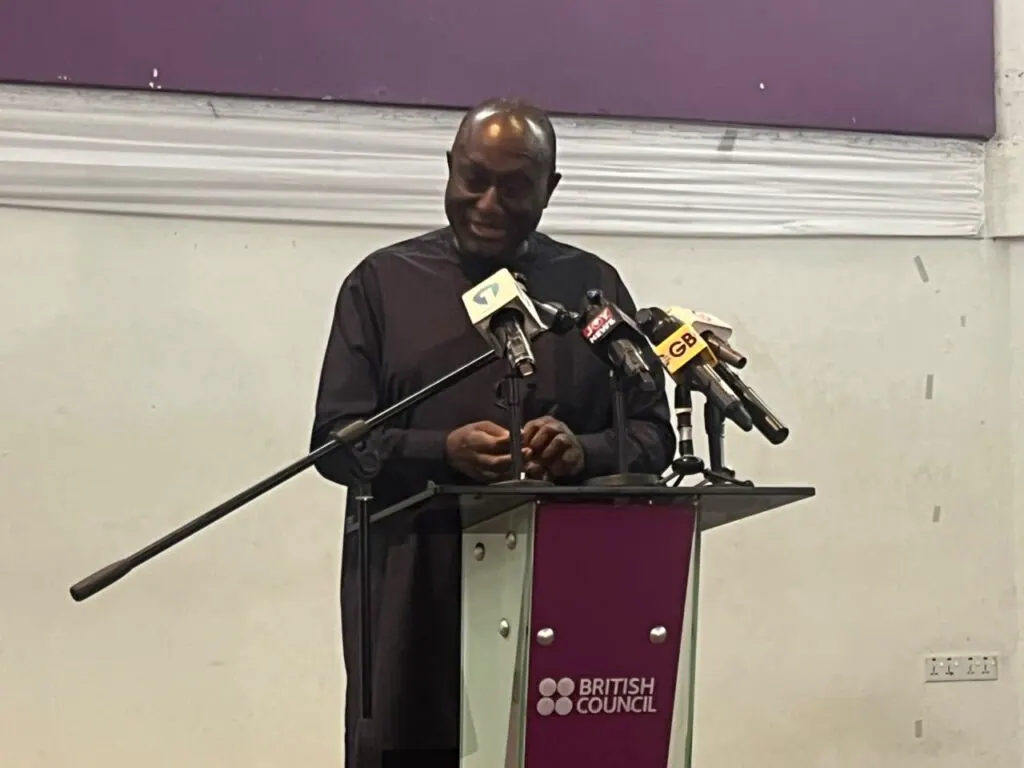
Former Trade and Industry Minister Alan Kwadwo Kyerematen has called for a significant reduction in the size of Ghana's government, arguing that it has grown too large and is consuming resources that could otherwise support businesses and create jobs. Speaking at a public lecture hosted by the British Council on the theme "Transformation of the Ghanaian Economy: From Stability to Prosperity," Kyerematen proposed a leaner state to free up cash for businesses as debt and the cedi come under pressure.
Kyerematen's proposal includes a reduction in the number of ministries, the consolidation of government departments, agencies, and public institutions, and a cut in the number of public sector employees. He also suggested limiting government spending on certain services to redirect more money toward development. Central to his pitch was a call for "golden handshakes" — exit packages designed to encourage some public servants to leave government employment and start their own businesses.
The "golden handshake" proposal aims to redeploy workers from the public system into private enterprise, rather than remaining in roles with little long-term prospect. Kyerematen further pressed for a more aggressive push toward privatising state-owned enterprises, arguing that government should make more room for private-sector participation in the economy. He believes that Ghana cannot achieve genuine economic transformation while a large share of public resources continues to go toward sustaining the size of the public sector itself.
Kyerematen's remarks come at a moment of mounting fiscal strain in Ghana. The country's public debt climbed to GH¢733.9 billion in July, marking its seventh consecutive monthly rise. At the same time, the cedi has depreciated by 9.5% so far in 2026, a sharp reversal from the currency's rally the previous year. This has significant implications for ordinary Ghanaians, as the debate over the size of government touches directly on how public money is spent and on the cost of servicing that debt.
The debate over public spending is critical in Ghana, as it competes with funding for essential services such as health, education, and infrastructure. A larger public-sector wage bill and administrative overhead are often cited as pressures that limit room for development spending. Kyerematen's proposal has added political weight, given his experience as a former Trade and Industry Minister and two-time presidential candidate.
While there is no formal government response to Kyerematen's proposal, nor a specified timeline for implementing ministry consolidation, workforce reductions, or an exit-package scheme, his intervention is likely to contribute to ongoing debates over public spending. A "golden handshake" typically refers to a severance package offered to an employee to encourage voluntary departure from a job, a mechanism Kyerematen suggests could ease public servants into private enterprise.
The implementation of Kyerematen's proposal could have significant implications for Ghana's economy and public sector. If successful, it could lead to a more efficient allocation of resources, reduced debt burden, and increased private-sector participation in the economy. However, the specifics of the proposal, including the potential costs and benefits, will require further discussion and analysis.
Key points
- Former Trade Minister Alan Kyerematen proposes reducing Ghana's ministries and offering exit packages to public servants.
- Kyerematen's proposal aims to create a leaner state and free up cash for businesses amid mounting fiscal strain.
- The proposal has significant implications for Ghana's economy, public sector, and ordinary citizens.