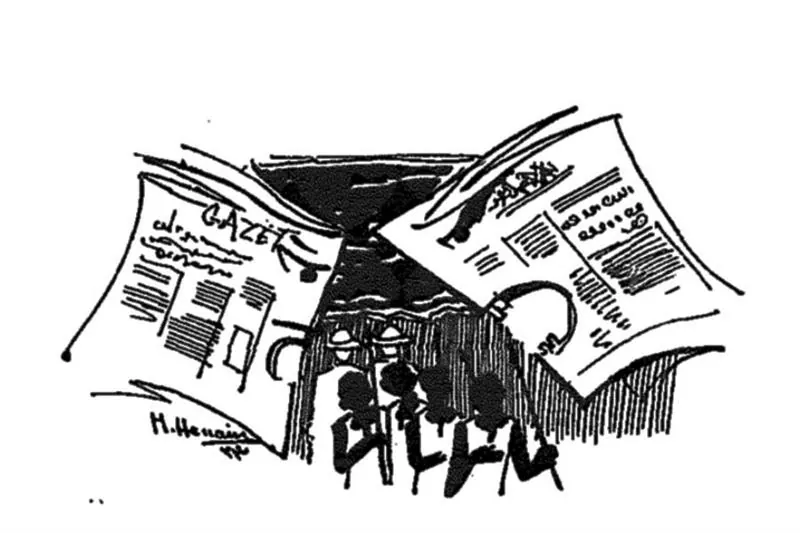
In 1884, a significant resignation took place in the Egyptian government. Sherif Pasha stepped down in opposition to British policy of withdrawing Egyptian forces from Sudan. This move sparked a heated debate between those who supported Sherif's stance and those who favored British occupation policies. Al-Ahram, a prominent Egyptian newspaper, chose to be at the center of this dispute. The newspaper took a firm stance against the British policy, criticizing their decision to withdraw Egyptian forces from Sudan.
Al-Ahram's editors, particularly Bishara Taqla, argued that withdrawing from Sudan would have severe consequences. They refuted the British claim that Egypt's treasury couldn't afford to maintain its presence in Sudan, stating that it would cost only a quarter of a million Egyptian pounds to stay, whereas withdrawal would result in losses of over three million pounds. Al-Ahram also disputed the argument that withdrawal would reduce the fizya, a poll tax paid to the Ottoman caliph, citing that it was pledged under a loan guaranteed by France and England.
The Egyptian Gazette, an English-language newspaper representing British interests, responded to Al-Ahram's criticism by accusing it of publishing "news that erodes confidence" and "inflammatory and alarmist" coverage. Al-Ahram stood firm, stating it had no fear of such accusations and was committed to serving the country and upholding its principles. The Gazette continued to defend British policies, while Al-Ahram proposed an alternative solution: dispatching Ottoman forces to quell the rebellion in Sudan.
Al-Ahram suggested that the Ottoman government send troops to Sudan, citing the principle of sovereignty and the fact that Sudan was still a province of the Ottoman empire. They argued that this solution would ensure Egypt's security and be more cost-effective, requiring only 20,000 Ottoman troops compared to 40,000 British soldiers. The Gazette seized on this point, accusing Al-Ahram of demeaning the courage of English soldiers.
The debate between Al-Ahram and The Egyptian Gazette continued, with Al-Ahram asserting that withdrawing Egyptian forces would abandon thousands of non-commissioned soldiers in Sudan. The Gazette questioned the whereabouts of these soldiers, putting Al-Ahram's editors in an embarrassing position. Despite this, Al-Ahram maintained its stance, accusing The Gazette of being unable to comprehend its point of view.
Throughout 1884, Al-Ahram continued to criticize British policy towards Sudan, assigning significant space to the position of the British Conservative Party. The newspaper highlighted a motion proposed by Lord Salisbury in the House of Lords, condemning the government's policy on Sudan. This coverage brought Al-Ahram and The Gazette to loggerheads again, as the Egyptian newspaper refused to back down in its criticism of British occupation policies.
The conflict between Al-Ahram and The Egyptian Gazette exemplified the struggle for Egyptian independence and self-determination during the British occupation. Al-Ahram's unwavering stance against British policies in Sudan demonstrated its commitment to serving the Egyptian people and upholding national interests. The newspaper's courage in the face of criticism from The Egyptian Gazette and British authorities cemented its reputation as a champion of Egyptian sovereignty.
Key points
- Al-Ahram's editors opposed the British decision to withdraw Egyptian forces from Sudan, citing economic and strategic concerns.
- The Egyptian Gazette accused Al-Ahram of publishing "inflammatory and alarmist" coverage, while Al-Ahram stood firm in its criticism of British policies.
- Al-Ahram proposed dispatching Ottoman forces to quell the rebellion in Sudan as an alternative to British military intervention.