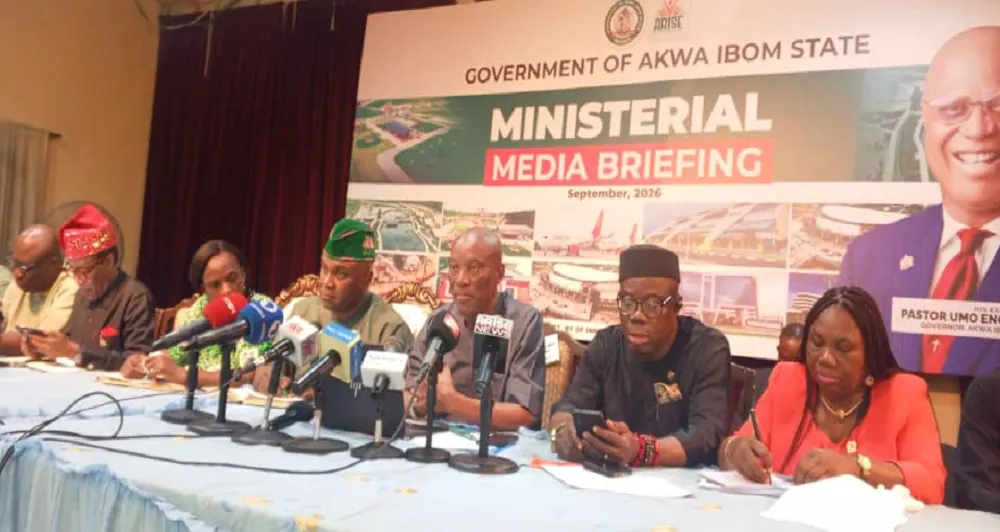
The Akwa Ibom State Government has announced plans to transform 700,000 metric tonnes of solid waste generated annually in the state into energy and other economic resources. This initiative is part of the state's environmental sustainability drive under the ARISE 2.0 Strategy. The Commissioner for Environment and Mineral Resources, Rt. Hon. Nsikak Ekong, disclosed this during a ministerial briefing organised by the Ministry of Information at Akpan Isemin Hall, Uyo.
The initiative aims to move the state beyond conventional waste disposal by transforming solid waste into electricity, organic fertiliser, and recyclable products, while creating employment and revenue opportunities. Consultants from India and the United States have already presented proposals on how the state's waste stream could be converted into electricity and other useful products. Effective segregation of waste at source will be required, with households to be profiled to facilitate efficient collection, sorting, and processing.
The Commissioner said organic waste would be processed into fertiliser, while plastics and other recyclable materials would be converted into reusable products. This will turn what is currently considered waste into an economic resource. The initiative forms part of the environmental protection and remediation component of the ARISE 2.0 Strategy. The administration of Governor Umo Eno is committed to developing a sustainable environmental management system.
The Governor has directed the review of the Uyo Urban Flood Control Master Plan to provide a long-term solution to flooding arising from rapid urbanisation, changing drainage patterns, and other environmental factors. Pending completion of the reviewed master plan, the ministry has intensified the desilting of drains and waterways across the state to improve water flow and reduce flooding. Indiscriminate dumping of refuse in drainage channels has contributed to flooding, and effective waste management will complement the state's flood-control measures.
On illegal mining, the Commissioner said the state government has constituted a task force to identify, shut down, and prosecute operators engaging in illegal mining and activities capable of degrading the environment. The task force has carried out inspections across Local Government Areas, resulting in the closure of illegal mining sites and prosecution of offenders. Residents are urged to report illegal mining and environmental degradation to the ministry.
The state is implementing tree-planting programmes in collaboration with the Federal Government, including the planting of 6,250 trees on 10 hectares in Ikot Ekpene and another 12,500 trees on 20 hectares in Ini Local Government Area. The administration is promoting cleaner energy through the transition to solar-powered street lights, the deployment of CNG-powered buses, and the use of solar energy to power ARISE Compassionate Homes and Model Schools.
The Commissioner for Information, Aniekan Umanah, said the environmental initiatives should be viewed as part of the administration's broader development strategy. The government is exploring bankable environmental projects capable of generating carbon credits from areas such as tree planting, biomass, and other climate-related interventions. The emerging environmental economy could provide additional opportunities for investment and sustainable development while complementing the administration's infrastructure and human-capital initiatives.
Key points
- Akwa Ibom State targets 700,000 tonnes of waste for energy conversion
- The state plans to convert waste into electricity, fertiliser, and recyclable products
- The initiative aims to create employment and revenue opportunities while promoting environmental sustainability