Akwa Ibom State emerged on September 23, 1987, from the old Cross River State, gaining the opportunity to define its own political and developmental destiny. Thirty-nine years later, the state has evolved, passing through military administration, democratic transitions, infrastructure expansion, and industrial ambitions. The anniversary presents two stories: the familiar tale of physical assets and the less visible but more consequential story of whether investments are producing a more diversified economy, better opportunities, and a higher quality of life for the people.
The state government has chosen "Gratitude" as the theme of this year's anniversary and has scheduled the commissioning of 39 projects between September 1 and 30. The projects cut across roads, education, healthcare, aviation, youth development, public infrastructure, and social intervention. President Bola Ahmed Tinubu was expected to visit the state to commission some of the projects. The symbolism is clear: 39 years of statehood, 39 projects placed before the public as part of the anniversary program.
The early years of Akwa Ibom State were about establishing the machinery of a new state. Tunde Ogbeha, Godwin Abbe, and Idongesit Nkanga successively administered the state before Akpan Isemin became the first civilian governor in 1992. The turbulent years that followed saw Yakubu Bako, Joseph Adeusi, and John Ebiye at the helm before the return of sustained democratic government in 1999. The official state record lists Victor Attah, Godswill Akpabio, and Udom Emmanuel as successive elected governors before Umo Eno assumed office in 2023.
Each era left a different imprint on the state. Attah's years were associated with the state's struggle over resource control and the onshore-offshore revenue controversy. Akpabio's administration became identified with an aggressive program of roads, public buildings, and urban infrastructure. Udom Emmanuel subsequently placed strong emphasis on industrialization, investment, and economic diversification, while continuing the infrastructure trajectory established before him.
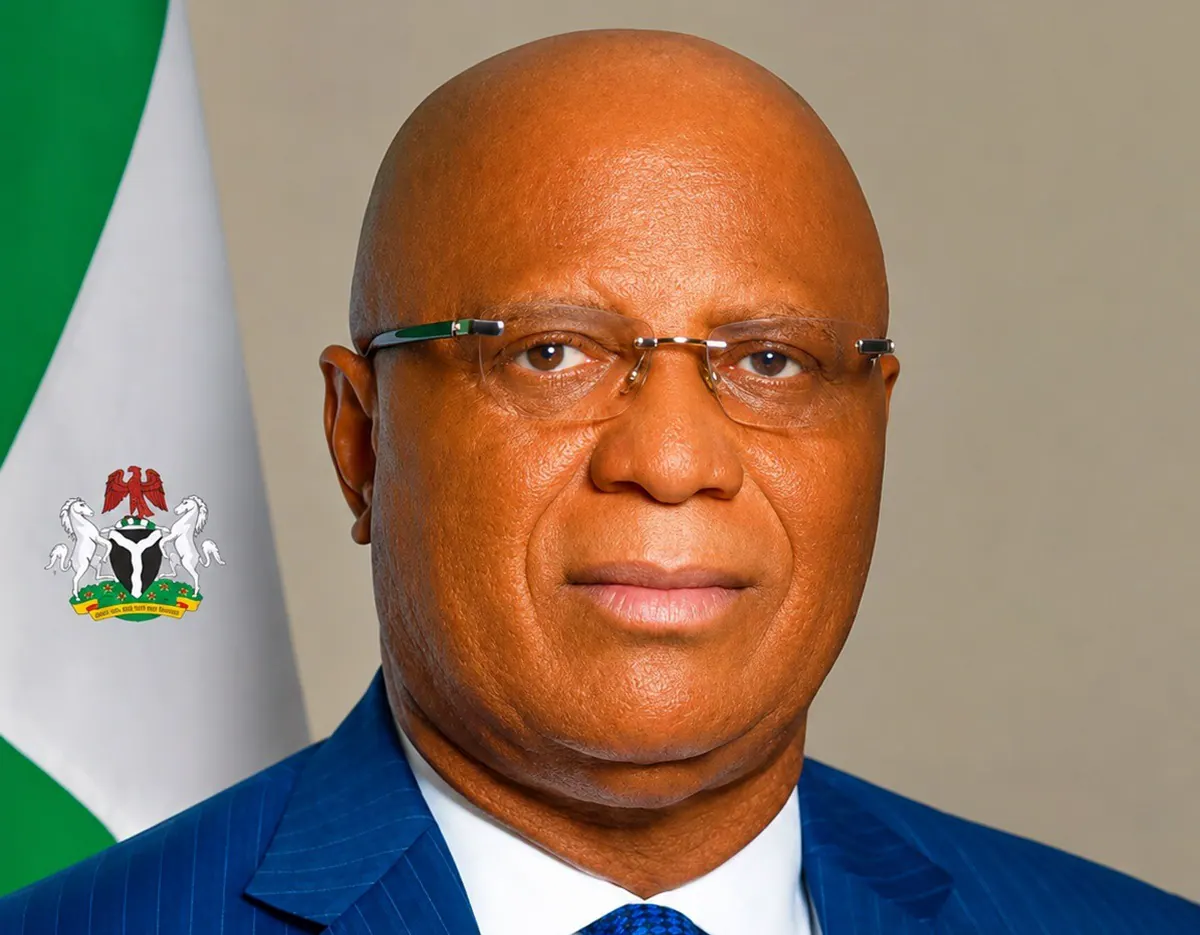
Governor Umo Eno inherited the accumulated foundation in May 2023 and framed the next stage around the ARISE Agenda: Agricultural Revolution, Rural Development, Infrastructural Maintenance and Advancement, Security Management, and Sound Education and Health Sector Management. The agenda has broader objectives that include poverty reduction, job creation, sustainable economic growth, improved living standards, and the development of a skilled and healthy population.
Infrastructure remains the most visible expression of the state's development. In his 2026 Easter broadcast, Eno said the administration had embarked on more than 1,300 kilometers of roads since taking office, including inherited roads that were completed. The State Executive Council approved another 167 kilometers of roads across the state. The administration has stressed that road construction is not intended merely to beautify urban centers but to open up rural communities, connect farms to markets, and reduce the isolation of settlements.
A notable example of the state's development is the 2.07-kilometer Itu–Urua Ekpa Road, completed with a 1.4-kilometer underground discharge drainage system. The road project represents an unusual development story, one in which mobility and environmental intervention meet. For years, Urua Ekpa was synonymous with flooding, which submerged houses, disrupted businesses, and displaced hundreds of residents. The road project carries a meaning that cannot be captured by its 2.07-kilometer measurement, as it brings together rural development, infrastructure, and environmental management.
Key points
- The state has commissioned 39 projects as part of its 39th anniversary celebration, focusing on infrastructure development and human welfare.
- Governor Umo Eno's administration has embarked on over 1,300 kilometers of roads since taking office, aiming to open up rural communities and connect farms to markets.
- The Itu–Urua Ekpa Road project exemplifies the state's development philosophy, combining mobility and environmental intervention to address the long-standing issue of flooding in the area.