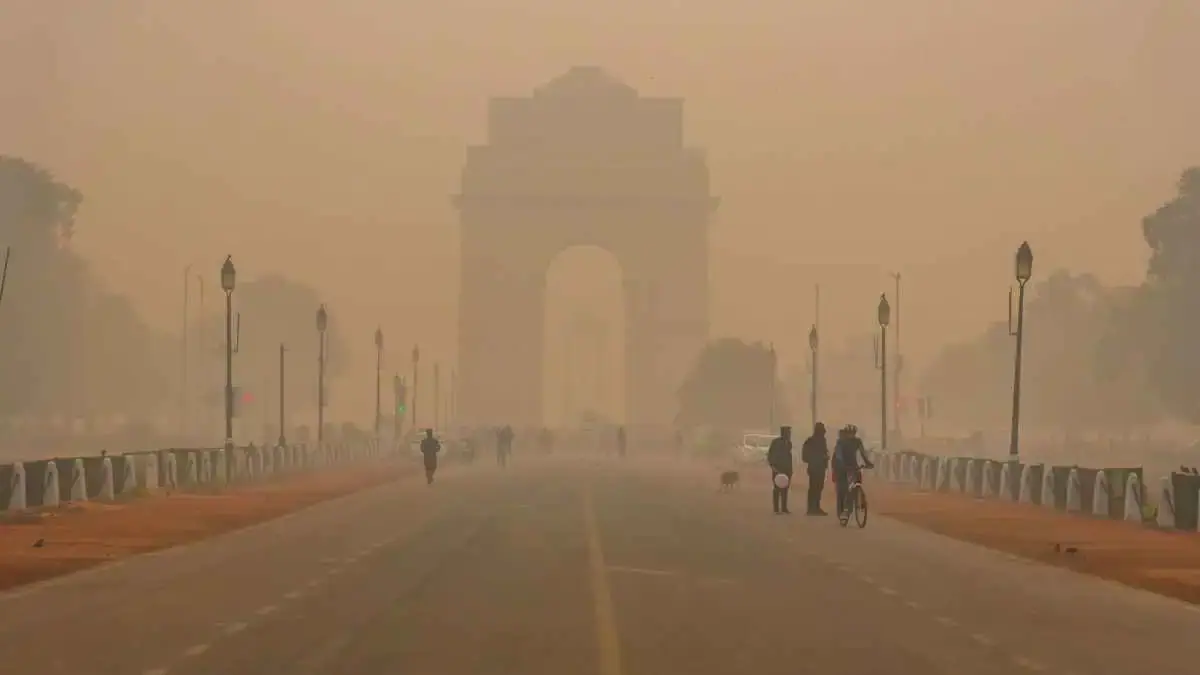
A recent report by the European Centre for Medium-Range Weather Forecasts' Copernicus Atmosphere Monitoring Service has found that air pollution has increased globally since the start of 2026. The report attributes this to heatwaves and forest fires, which have led to a rise in ground-level ozone, a major component of air pollution. Over half of the world's population has been exposed to very high or extremely high levels of ground-level ozone.
Ground-level ozone is formed when pollutants such as methane and nitrogen oxides, emitted by cars and power plants, react with sunlight and high temperatures. This can cause respiratory problems, asthma attacks, and lung infections. The report's authors warn that the increasing frequency of heatwaves, linked to climate change, makes it harder to reduce ozone levels, even when emissions are decreased.
In North America, data shows that over a quarter of the population was exposed to ozone levels classified as "very poor" or "extremely poor". Another 41% were exposed to poor levels, according to World Health Organization standards. The report also highlights the role of forest fires in worsening pollution, releasing pollutants that react in the atmosphere to form ozone and particulate matter that can harm the heart and lungs.
Forest fires have had a significant impact on air quality, with a study finding that global fire activity has more than doubled between 2003 and 2023. In Europe, forest fires in France and Spain coincided with smoke from North American fires, further degrading air quality during the summer. The report's findings have implications for policymakers, who must balance economic and environmental concerns.
In the United States, the easing of air pollution rules by the Trump administration has raised concerns among environmental advocates. The rollback of regulations has been justified as a way to reduce financial burdens on companies and taxpayers. However, critics argue that this could lead to increased pollution and threaten progress made in reducing ozone levels.
Asia has emerged as the region most affected by ozone pollution, with 60% of the population exposed to very high levels in 2026. This rises to 90% when including those exposed to poor or very poor levels. In contrast, Oceania and South America have recorded the best air quality globally, with most people exposed to good or acceptable ozone levels.
The report also notes that air pollution is a transboundary issue, with phenomena such as Saharan dust clouds traveling across the Atlantic to the Caribbean and severe haze in Southeast Asia caused by forest fires in Indonesia. Overall, only 5% of the global population breathed air that met World Health Organization guidelines for ozone levels, highlighting the scale of the challenge.
Key points
- Asia is the most affected region by ozone pollution, with 60% of the population exposed to very high levels.
- Forest fires have contributed significantly to worsening air pollution globally.
- Only 5% of the global population breathed air that met World Health Organization guidelines for ozone levels.