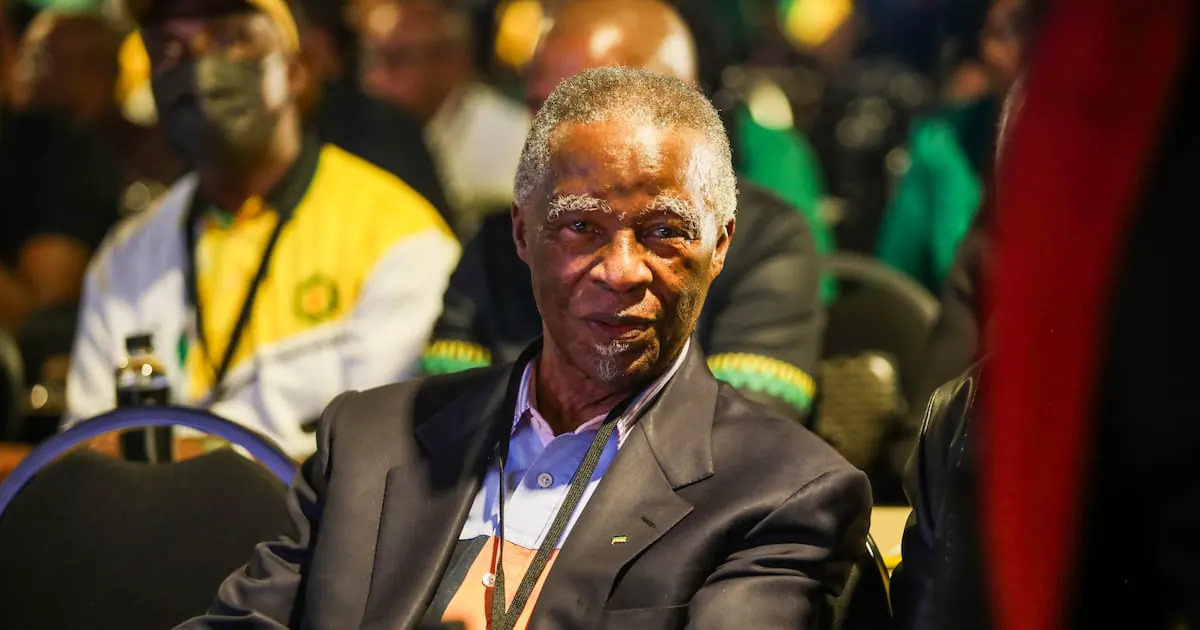
The Thabo Mbeki Foundation has released a report titled "The United States of America and the Future of Afrikaners in South Africa", which examines the disputes between the US and South Africa as a manifestation of the "national question" in both countries. This concept, as used by former President Thabo Mbeki, refers to resolving the legacy of colonial conquest by freeing the dispossessed indigenous majority and building a united, non-racial nation. The report draws parallels between the US's experience with slavery, segregation, and socioeconomic marginalization of black Americans, and South Africa's own struggles.
The report argues that it is historically inconsistent for the US to demand that South Africa abandon racial redress, given that the US continued to use affirmative action and other remedial policies long after emancipation. The foundation presents empirical material to contest American misconceptions about South Africa, citing analyses by notable Afrikaners Frans Cronje and Hermann Giliomee. Their research indicates that Afrikaner living standards rose faster between 1994 and 2004 than during any comparable 20-year period since 1945.
However, the report takes a concerning turn by equating the building of Afrikaner community institutions with a revival of apartheid-style "separate development". It also speculates that the US administration has aligned itself with a "white supremacist faction" in South Africa, citing connections to Solidarity and AfriForum, the US refugee programme, and opposition to land reform. While there is evidence for each element of this narrative, it does not amount to proof of such an alignment.
The report's author, Anthony Butler, suggests that former President Mbeki may have played a personal role in its preparation, given the text's tone and style. Butler notes that the report's perspective is reminiscent of Mbeki's interactions with IFP leader Mangosuthu Buthelezi and Constand Viljoen during transition era negotiations. The report's release has sparked concerns about the potential use of Mbeki's speeches and writings to train artificial intelligence models.
Butler argues that it is essential to prohibit the training of language models on archival materials gathered by the Mbeki Foundation. He warns that if AI models are trained on Mbeki's speeches, they may perpetuate his theoretical generalizations and paranoid views, potentially leading to alarming consequences. This concern is particularly relevant given the potential for AI to be used in future global interactions, including those with alien civilizations.
The report's findings and methodology have been questioned by some, who argue that they do not adequately account for the complexities of US-SA relations. Butler notes that a sophisticated language model would need to consider a broader range of factors, including President Donald Trump's domestic political coalition, US polarization over racial preferences, and South Africa's involvement in the International Court of Justice.
The debate surrounding the report and its potential implications for AI training highlights the need for careful consideration of the sources and materials used to develop artificial intelligence models. As AI technology continues to evolve, it is crucial to ensure that its development is guided by a nuanced understanding of the complexities of human history and politics.
Key points
- The Thabo Mbeki Foundation's report on US-SA relations has sparked concerns about the potential use of Mbeki's speeches and writings to train artificial intelligence models.
- The report's author, Anthony Butler, argues that it is essential to prohibit the training of language models on archival materials gathered by the Mbeki Foundation.
- The debate surrounding the report highlights the need for careful consideration of the sources and materials used to develop artificial intelligence models.