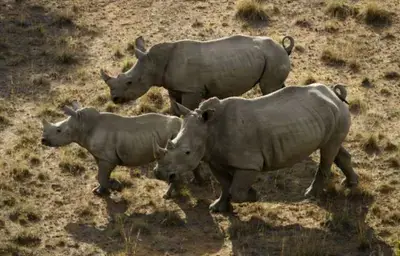
Conservation efforts in Kruger National Park are being bolstered by the use of artificial intelligence (AI) technology. AI models are being used to identify various animal species, with over 50 species expected to be recognised. The system operates in stages, starting with a detector model that marks potential animals in images. A classifier then reviews these images for any objects the first model may have overlooked, followed by a third model that assigns identification numbers and provides a total count.
The use of AI technology in Kruger National Park is part of a broader effort to enhance monitoring and management across South Africa's national parks. According to Greaver of SANParks, aerial surveys in Kruger National Park have been conducted since the 1960s, with methods evolving over the years. The latest initiative aims to improve aerial survey methods, with SANParks embracing technology as a significant opportunity to enhance monitoring.
The drone survey, which began in October, has covered nearly 600,000 hectares across more than 800 flights, totalling over 60,000km. The survey faced challenging conditions, including temperatures over 40°C and strong winds. Despite these conditions, the survey has provided valuable insights into the park's ecology, including the documentation of water resources following recent rainfall.
The digital mapping of the park could eventually assist SANParks in tracking individual trees, mapping river systems, and improving flood modelling. The imagery captured during the survey will enable researchers to identify large trees, such as marula, and return to those locations in future years to check their status. This detailed mapping could also fill gaps in the park's flood modelling.
Traditional wildlife surveys are typically held annually during winter when vegetation is sparse, using helicopters or fixed-wing aircraft. However, the drone survey has allowed for the documentation of the park's water resources during a unique time of year. Greaver noted that some areas still have a lot of water, which is not typically visible during traditional surveys.
The use of drones and AI technology is viewed as a significant opportunity for SANParks to improve aerial survey methods. Greaver emphasised SANParks' commitment to embracing technology, which will aid in understanding changes in wildlife populations and vegetation, as well as how water flows through the landscape and how ecological features evolve over time.
Each identified animal is backed by photographic evidence and precise GPS coordinates. The data collected will ultimately aid SANParks in making informed decisions about conservation efforts in Kruger National Park. The use of AI technology has the potential to revolutionise wildlife monitoring, providing a more accurate and efficient way of tracking animal populations.
Key points
- AI models identify over 50 animal species in Kruger National Park.
- The use of drones and AI technology is enhancing monitoring and management across South Africa's national parks.
- The digital mapping of the park could assist SANParks in tracking individual trees, mapping river systems, and improving flood modelling.
Reporting sources
- From Lions to Marula Trees: AI Offers a Fresh Perspective on Kruger’s Ecology · sierraleonetoday.co.com