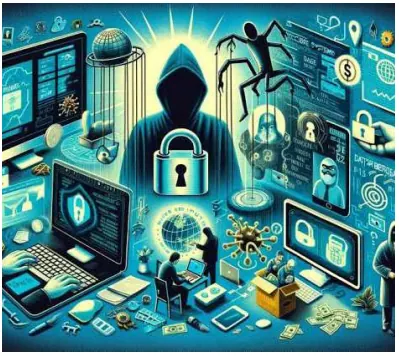
The use of artificial intelligence in money scams has become a growing concern, with AI-powered tools being used to clone voices, create deepfake videos, and write fluent messages. These scams are not new, but AI has changed the cost and quality of the cons, making them more convincing and difficult to detect. According to the FBI's Internet Crime Complaint Center, Americans filed over 22,000 complaints with an AI connection in 2025, reporting losses of around $893 million.
The majority of these losses, $632 million, were due to investment fraud, with people over 60 accounting for $352 million of the losses. However, these figures only include victims who reported to the FBI and only cases where AI's role could be identified. The actual hit from AI-powered scams is expected to be much bigger, with Deloitte projecting that U.S. fraud losses will reach $40 billion by 2027, up from $12.3 billion in 2023.
Experts warn that the most consequential AI security story right now is not unfolding in server rooms, but at kitchen tables. AI-powered scams are engineered around fear and urgency, using tactics such as a panicked grandchild or a boss demanding a same-day transfer. Stress narrows attention and pushes people toward fast, intuitive judgments, making them more vulnerable to scams.
Research in behavioral finance suggests that careful people can also fall victim to these scams. The smoothness of AI-generated communication leads people to trust it, making it more likely for them to fall for a scam. To protect themselves, households can borrow procedures from banks, such as checking by calling back and verifying the identity of the caller.
Experts recommend that households agree on a robust family code word for emergencies and treat any request for money that lacks it as fake. They also suggest requiring two people to sign off on any large transfer and building in a delay, such as a self-imposed 24-hour wait, before any big payment. Additionally, households should protect their accounts by turning on two-factor login and switching on transaction alerts.
Older people are particularly vulnerable to AI-powered scams, with $352 million of reported AI-related losses coming from Americans over 60. Conversations with older family members are key to protecting them, and experts recommend walking them through the callback rule and the code word, and asking their bank or brokerage about adding a trusted contact.
To combat AI-powered scams, experts stress the need for regulations to catch up with the technology. Federal law is supposed to protect consumers from unauthorized electronic transfers, but in practice, victims of instant-payment fraud often recover little. Experts argue that households need to take proactive steps to protect themselves, and that regulations should be put in place to prevent these scams.
Key points
- AI-powered scams are becoming increasingly sophisticated, using tactics such as voice cloning and deepfake videos to trick victims.
- Households can protect themselves by implementing procedures such as checking by calling back and verifying the identity of the caller.
- Regulations need to catch up with the technology to prevent AI-powered scams and protect consumers.