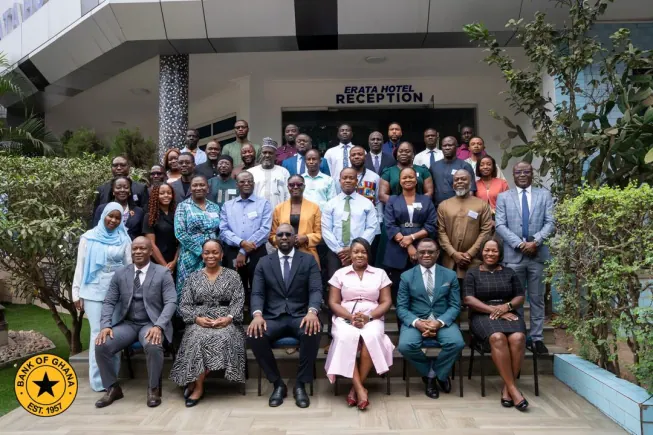
The Governor of the Bank of Ghana, Dr Johnson Pandit Asiama, has warned public institutions against relying solely on artificial intelligence to make decisions affecting public resources and citizens' welfare. He emphasized that AI should be used as a tool to support, rather than replace, human judgment. Dr Asiama's comments were made through an official representative, Peter Kwamena Baterls, at a regional workshop on AI monitoring and evaluation in Accra.
The five-day workshop, organized by the West African Institute for Financial and Economic Management, aims to promote the integration of AI and automated tools into project tracking, monitoring, and evaluation frameworks. Participants from central banks, economic ministries, and public and private institutions across the region are attending the workshop to build practical skills in using AI-driven metrics to improve project performance and strengthen results-based management.
Dr Asiama stressed the need for public institutions to ensure that AI-driven systems are underpinned by quality data, transparency, privacy, security, and accountability. He stated that human oversight must remain central to ensure that the use of AI in public-sector project management and monitoring translates into meaningful results and value for money.
The Governor emphasized that the focus of public institutions should shift from the amount spent on projects to the results, outcomes, and impact generated from such investments. He noted that effective monitoring and evaluation are critical to identifying implementation challenges, including delays, cost overruns, and procurement difficulties, early enough for corrective action to be taken.
Dr Asiama highlighted that AI-enabled tools can analyze large volumes of project data, identify patterns and anomalies, track performance against indicators, and flag emerging risks for managers and policymakers. He stated that such tools can transform project monitoring from a largely periodic and reactive exercise into a more continuous, data-informed, and forward-looking process.
The Governor noted that the effectiveness of AI-driven monitoring would depend on the quality of the data, the soundness of the models, and the capacity of people to interpret and apply the outputs responsibly. He added that AI-driven monitoring and evaluation could ultimately strengthen evidence-based policymaking, improve service delivery, enhance transparency and accountability, and promote institutional learning.
The workshop, being held from October 5 to 9, 2026, seeks to equip participants with the skills to effectively utilize AI-driven metrics in project monitoring and evaluation. By integrating AI into project management, public institutions can improve project performance, strengthen results-based management, and enhance transparency and accountability.
Key points
- AI should be used as a tool to support, rather than replace, human judgment in public spending decisions.
- Effective monitoring and evaluation are critical to identifying implementation challenges and taking corrective action.
- AI-driven monitoring and evaluation can strengthen evidence-based policymaking and improve service delivery.