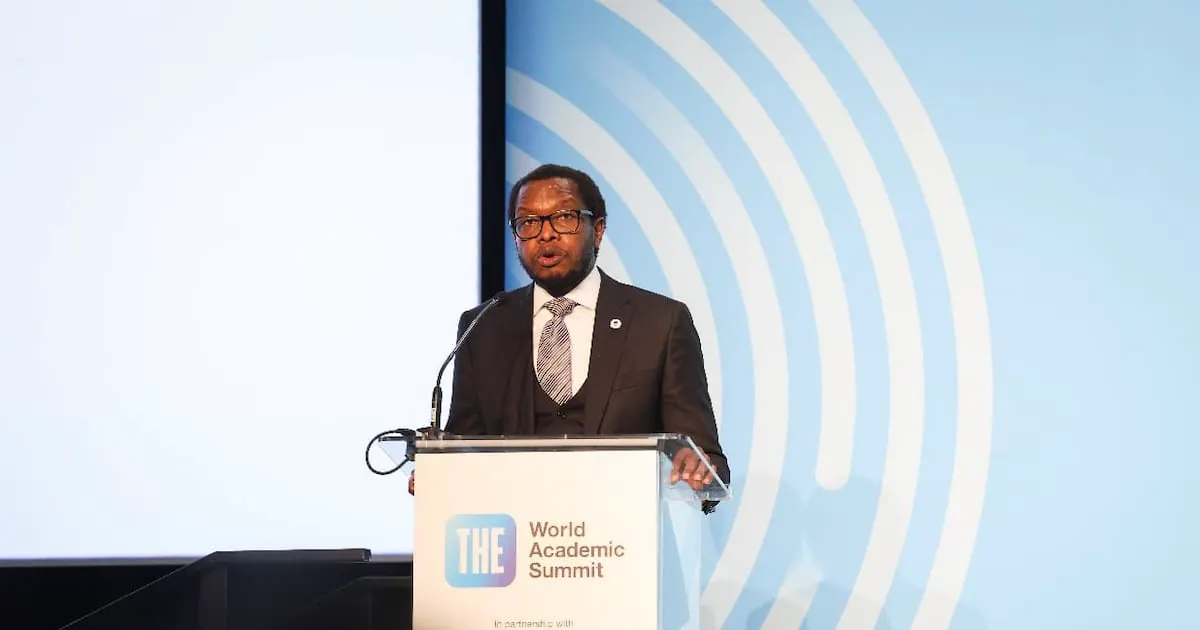
The Times Higher Education (THE) World Academic Summit, hosted by the University of Cape Town (UCT), has brought together about 600 higher education leaders, academics, policymakers, and stakeholders from over 60 countries to discuss the future of universities amid rapid technological and social change. The summit, being held in Africa for the first time, aims to address the challenges and opportunities presented by AI and other technological advancements. UCT vice-chancellor Prof Mosa Moshabela emphasized the need for universities to go beyond simply adopting new technologies and instead focus on cultivating essential skills and values.
Prof Moshabela highlighted Africa's young population, intellectual traditions, and capacity for creativity and innovation as important perspectives in the global conversation about the future of higher education. He noted that these realities offer opportunities for insight and compel universities to think differently about resilience, innovation, inclusion, and the relationship between knowledge and development. By hosting the summit in Africa, Moshabela said it provides a chance to shift the center of the conversation and ensure African experiences and perspectives are part of debates shaping universities worldwide.
University of Bristol president and vice-chancellor Prof Evelyn Welch reflected on the partnership between Bristol and UCT, which has developed over almost a decade through student and staff exchanges, shared PhD studentships, and collaborative research. The two universities have collaborated on issues including water scarcity, public health, inclusive innovation, and the implications of AI for higher education. Welch emphasized the value of the summit as an opportunity to present their collaborative work and learn from colleagues around the world about their responses to common challenges.
Higher education and training minister Buti Manamela stressed the crucial role universities play in national development through research, innovation, skills development, and international collaboration. He cited the COVID-19 pandemic as an example of what can be achieved when universities and researchers work together across institutional and national boundaries. Manamela also called for stronger links between universities, TVET colleges, and industry to connect education more directly with employment and entrepreneurship.
Manamela warned that the rapid growth of AI makes equitable access increasingly important and emphasized the need to harness AI to expand access to education. He advocated for broader AI literacy and improved access to technology to ensure that students and communities are not left behind as societies adapt to technological change. The minister's comments align with the summit's focus on ensuring AI becomes a tool for widening access to education rather than deepening inequality.
The summit provides a platform for higher education leaders to share their experiences and insights on navigating an AI-driven world. UCT's hosting of the event offers a unique opportunity for African perspectives to inform global discussions about the future of universities. As the summit continues, attendees will likely explore strategies for addressing the challenges and opportunities presented by AI and other technological advancements.
Ultimately, the summit aims to equip students with both the technology and skills needed to thrive in an AI-driven world. By fostering collaboration and knowledge-sharing among higher education leaders, the event seeks to promote a more inclusive and equitable approach to education in the face of rapid technological change. The outcome of the summit may have significant implications for the future of universities and the role of AI in shaping their trajectories.
Key points
- Universities must ensure students are equipped with both technology and skills to navigate an AI-driven world.
- AI must become a tool for widening access to education rather than deepening inequality.
- The summit provides a platform for African perspectives to inform global discussions about the future of universities.