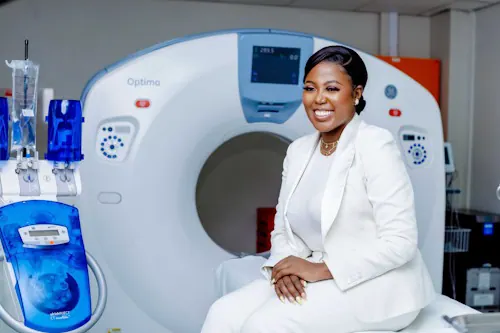
The integration of artificial intelligence in healthcare is revolutionizing the way doctors diagnose and treat diseases in South Africa. According to Dr. Aobakwe Segwe, a radiologist and co-founder of the Centre of Medical Imaging, AI is not replacing the expertise, empathy, and judgment that patients depend on. Instead, it is being used to support and enhance the work of healthcare professionals. AI can analyze thousands of medical images in seconds, detect subtle abnormalities, and assist specialists in identifying patterns that might otherwise take much longer to review.
The use of AI in healthcare has the potential to improve diagnosis and treatment, particularly in fields such as cardiac imaging. However, Dr. Segwe emphasizes that AI provides an additional layer of clinical support, but the final interpretation and responsibility always lies with a specialist. A scan is never just a picture; every image belongs to a person with a unique medical history, symptoms, and life circumstances. While AI may recognize a pattern, it cannot understand the bigger clinical picture, have difficult conversations, or help someone navigate the uncertainty that often comes with waiting for a diagnosis.
The moments patients remember are often those of waiting for test results and the anxiety that comes with it. Dr. Segwe believes that those moments remind us why compassion remains one of medicine's most powerful tools. The way someone explains the procedure, answers questions, and recognizes anxiety can stay with a patient long after the appointment is over. As technology takes over repetitive administrative and analytical tasks, it may actually give healthcare professionals something increasingly valuable: more time to connect with patients.
Across Africa, access to specialist healthcare remains one of the biggest challenges. Many communities have limited access to radiologists, creating delays in diagnosis and treatment. Digital imaging and connected healthcare systems are beginning to change that. Medical images can now be reviewed remotely by specialists in different cities or regions, while AI can help prioritize urgent cases so patients who need immediate attention are identified sooner.
However, Dr. Segwe cautions against believing that technology alone will solve the continent's healthcare challenges. She believes that Africa also needs to invest in research based on its own people, diseases, and healthcare realities. Research should reflect the people it serves, allowing for the development of medical knowledge that is relevant to African communities and ensuring better diagnosis and ultimately better patient outcomes.
In a world fascinated by the latest innovation, Dr. Segwe believes that healthcare should ask a different question before investing in expensive technology: Will it genuinely improve patient care? Sometimes the answer isn't buying an entirely new machine; upgrading software or improving existing equipment can often deliver meaningful clinical benefits while making healthcare more accessible and affordable.
The healthcare of tomorrow will undoubtedly look different, with AI, advanced imaging, and digital systems continuing to reshape how medicine is practiced. However, according to Dr. Segwe, the heart of healthcare should remain unchanged. The future isn't artificial; it's profoundly human, with technology working quietly in the background while skilled clinicians do what they've always done best: care for people with knowledge, empathy, and trust.
Key points
- AI is transforming healthcare in South Africa, but human care and empathy remain essential for patients.
- The use of AI in healthcare has the potential to improve diagnosis and treatment, particularly in fields such as cardiac imaging.
- Africa needs to invest in research based on its own people, diseases, and healthcare realities to solve its healthcare challenges.