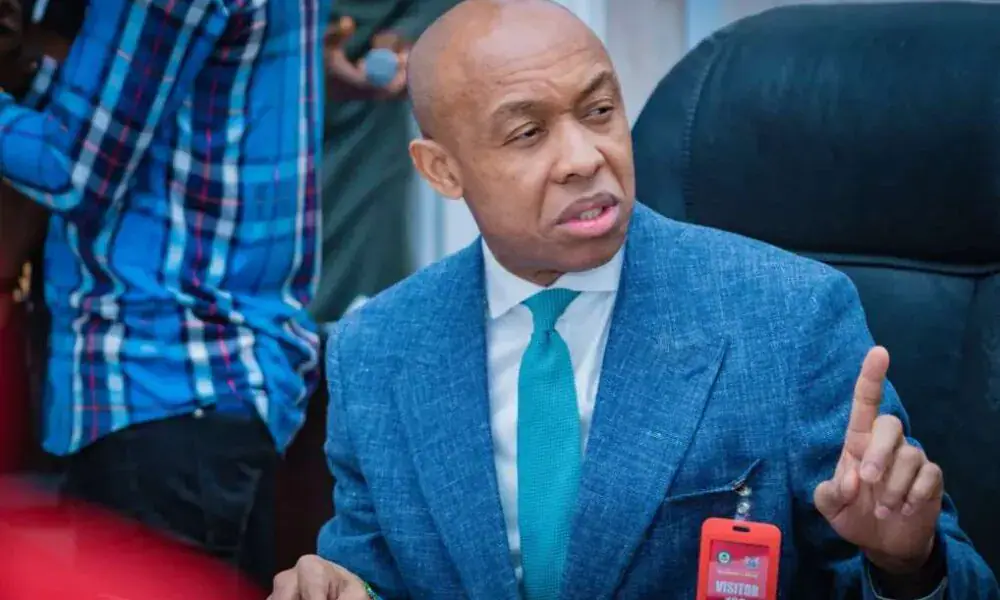
Former Chairman of the National Human Rights Commission (NHRC), Prof. Chidi Anselm Odinkalu, has accused the Independent National Electoral Commission (INEC) of attempting to cover up irregularities involving suspected artificial intelligence-generated photographs and other questionable entries in Nigeria’s preliminary voters’ register ahead of the 2027 general elections. Odinkalu alleged that the commission had chosen concealment and complicity over transparency and accountability in addressing concerns about the integrity of the voters’ register.
Odinkalu faulted INEC’s explanation that some registration officers across the country were responsible for introducing questionable records into the database, arguing that the commission had failed to provide sufficient details about the scope of the irregularities and the outcome of its investigation. He said INEC had initially announced that it was investigating the matter but failed to disclose the methodology adopted, the investigative process or the findings before announcing its conclusion.
According to Odinkalu, the commission had not explained the extent of the alleged manipulation, the locations affected, the number of suspicious entries identified or the measures being taken to ensure that those responsible would no longer participate in the voter registration process. Odinkalu wrote: “It seems quite clear that @inecnigeria has chosen #CoverUp & complicity over disclosure & transparency in this matter of the corruption of the voters register for #NigeriaDecides2027.”
The former NHRC chairman also expressed concern over what he described as the apparent indifference of political parties to the controversy, arguing that they had left citizens to demand accountability over an issue that could affect the credibility of the 2027 elections. “But the most concerning thing is really not the possibility that #INEC is acting with the insouciance of a criminal organisation. Rather it is the indifference of the political parties & their almost resigned lack of attention to this,” he said.
INEC’s Director of Information and Communication Technology, Dr Lawrence Bayode, attributed the questionable entries in the preliminary voters’ register to alleged misconduct by some registration officers. Bayode said some registration officers had allegedly abused their login credentials to introduce irregular records into the commission’s database. He explained that the commission discovered the anomalies through its Automated Biometric Identification System (ABIS), which was deployed to identify suspicious records.
According to Bayode, some of the photographs attached to the questionable voter profiles were AI-generated, while others resulted from poor registration practices. He said the officers involved had been identified and the commission had established how some of the irregularities were introduced, although he could not determine their motives. INEC’s explanation came amid public concerns over the credibility of the preliminary voters’ register following the publication of its online version on October 26.
The controversy gained attention after screenshots circulated on social media showing photographs suspected to have been generated using artificial intelligence attached to voter records in parts of Edo State. Other concerns included alleged duplicate entries and complaints by some registered voters that their details were missing from the online register. INEC acknowledged that questionable records had been identified and flagged during the physical display of the preliminary register at Registration Areas across the country between October 9 and 15.
Key points
- Odinkalu accuses INEC of attempting to cover up irregularities in Nigeria's preliminary voters' register.
- INEC attributes questionable entries to alleged misconduct by some registration officers.
- The controversy raises concerns over the credibility of the 2027 general elections.