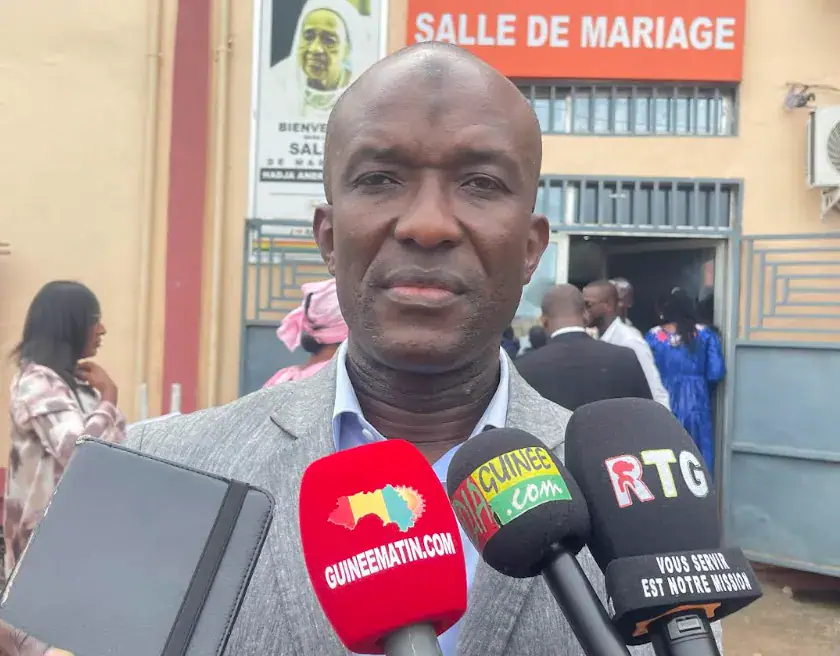
The trial of Ahmed Sékou Traoré, former president of the special delegation of Ratoma, began on November 2, 2026, at the Court for the Repression of Economic and Financial Offenses (CRIEF) in Guinea. Traoré is accused of embezzlement of public funds, corruption of public officials, forgery, and money laundering, totaling 32 billion francs. He appeared before the court alongside Mohamed Camara, a former communal receiver. Traoré has denied all charges, stating he does not recognize the facts attributed to him.
During his deposition, Traoré disclosed that his monthly salary ranged from 5 to 10 million francs guinéens during his 23 months as head of Ratoma commune. He claimed to own only one plot of land in Conakry, purchased in 2017 for 75 million francs. Traoré emphasized that he does not have a bank account, contrary to allegations of embezzlement. His statements were made in response to detailed accusations brought against him by the prosecution.
Traoré provided insights into the commune's revenue collection for 2024 and 2025. According to him, Ratoma commune collected 7 billion 578 million 079 thousand 586 francs in 2024 and 584 million 634 thousand francs in 2025. These figures were part of his defense, aiming to clarify the financial management during his tenure. The commune's financial records were scrutinized as part of the embezzlement allegations.
The former communal head explained the use of 14 billion 625 million francs received from the National Agency for Local Collectivity Financing (ANAFIC). He stated that these funds were utilized for various infrastructure projects in Ratoma, including the construction of an école à Hamdallaye 2, a health center in Kaporo, and the paving of the youth house in Taouyah. Additionally, funds were allocated for road construction, school infrastructure, and a market hangar.
When questioned about the remaining funds in the commune's accounts upon his departure, Traoré mentioned that over 800 million francs guinéens were left. This revelation was part of the court's inquiry into the financial status of the commune post-Traoré's tenure. The information provided by Traoré aims to counter allegations of financial mismanagement.
The trial has been adjourned to November 16, 2026, for further deliberations. The court's decision to delay the proceedings allows both the prosecution and defense additional time to prepare their cases. Traoré's denial of the charges and detailed explanations of his actions while in office are central to his defense strategy.
The case against Ahmed Sékou Traoré and Mohamed Camara highlights the ongoing efforts to combat corruption and financial malfeasance in Guinea. The trial's outcome will be closely watched, given its implications for governance and accountability in the country. Key points in the case include Traoré's denial of embezzlement charges, his disclosure of modest assets, and the commune's financial records.
Key points
- Ahmed Sékou Traoré denies embezzling 32 billion francs.
- Traoré claims to have no bank account and modest assets.
- The trial has been adjourned to November 16, 2026.