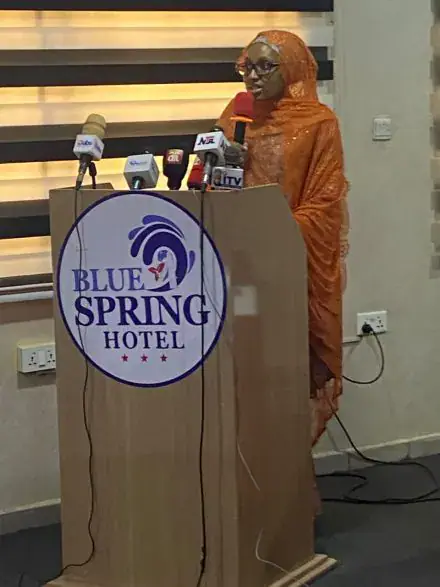
The Africa Health Budget Network (AHBN) is advocating for dedicated budget lines for adolescent health and well-being across Nigerian states, citing Kano State's N100 million allocation in 2025 as a model. AHBN's Health Systems and Business Development Lead, Khadija Bobboyi, emphasized that specific financing is critical to addressing adolescents' unique healthcare needs. This approach would help track government investments and ensure funds reach intended beneficiaries.
Bobboyi presented a Collaborative Advocacy Action Plan in Abuja, aiming to strengthen accountability and coordinated advocacy for maternal, newborn, and child health. The plan has four priorities: improved family planning financing, increased investment in adolescent health, stronger civil society and young people participation in health decision-making, and implementation of Nigeria's commitments under the 77th World Health Assembly resolutions. AHBN developed policy briefs and a budget accountability scorecard to support this process.
The advocacy action plan seeks to leverage Kano's experience to encourage other states to establish similar budget lines for adolescent health. AHBN believes dedicated funding will facilitate tracking of government investments and assessment of whether funds reach intended beneficiaries. Bobboyi stressed that adolescent health and well-being budget lines should not be part of family planning commodities or maternal and child health financing.
On family planning, Bobboyi called on the Federal Government to ensure timely release of approved funds to strengthen reproductive health services for women and adolescents. She disclosed that $3.75 million, representing 94% of the $4 million approved in the previous funding cycle, had been released. AHBN is also seeking stronger budget monitoring mechanisms to track appropriations, releases, and expenditure on reproductive, maternal, newborn, child, and adolescent health.
The coalition aims to strengthen young people and civil society organisations' participation in national health coordination platforms, including the Nigeria Health Sector Renewal Investment Initiative and its technical working groups. This will provide opportunities for often-excluded groups to influence decisions affecting their health and well-being. Over 22 development partners validated the advocacy materials, while about 30 partners were involved in developing the broader action plan.
The sustainability of Kano's dedicated budget line will depend on actual releases, transparent expenditure, and evidence that adolescents are benefiting from the investment. AHBN's next phase involves using evidence-based advocacy, sustained government engagement, and budget accountability tools to encourage other states to adopt similar financing arrangements. Bobboyi urged journalists to investigate public spending and track government commitments' implementation using available policy briefs and scorecards.
As Nigeria seeks to improve adolescent health and well-being, Kano's experience raises questions for other state governments about making similar investments. AHBN emphasises that accountability should be based on verifiable evidence of activities and results rather than claims by implementing organisations. The organisation believes that with dedicated budget lines, governments can move beyond policy commitments to provide identifiable funding for young people's well-being.
Key points
- Kano State's N100 million allocation for adolescent health in 2025 serves as a model for other Nigerian states.
- AHBN advocates for specific financing to address adolescents' unique healthcare needs.
- The organisation developed policy briefs and a budget accountability scorecard to support advocacy efforts.