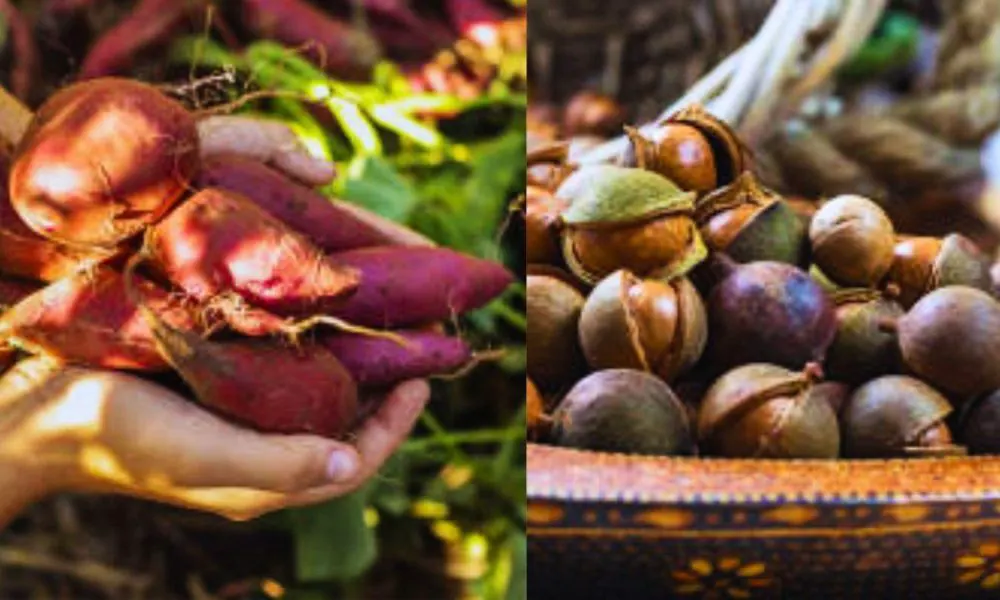
Agricultural group Agriterra has successfully harvested its first experimental crop of sweet potatoes in Mauritius, yielding between eight and ten tonnes across a 0.4-hectare trial plot in mid-September. This pilot project, conducted in collaboration with the Food and Agricultural Research and Extension Institute (FAREI), aims to diversify local agriculture and bolster food security in the region. The trial tests five different sweet potato varieties to analyze plant physiology, crop cycles, best practices, and the local market.
The sweet potato harvest was manually conducted with mechanical support tests, following previous diversification efforts into onions and potatoes. According to Loïc Koenig, General Manager of Agriterra, the group aims to identify crops tailored to local weather, soils, and consumer tastes. This initiative is part of Agriterra's ongoing mission to enhance food security and promote sustainable agricultural practices in Mauritius.
The harvested sweet potatoes have a glycemic index half that of rice, potatoes, and bread, making them a healthy dietary alternative, particularly beneficial for the significant diabetic population in Mauritius. Sweet potatoes are also a staple of local cuisine, used in traditional Divali sweets, curries, and as a substitute for potatoes. This highlights the potential for sweet potatoes to contribute to a balanced diet and improve food security in the region.
In addition to the sweet potato trials, Agriterra is scaling up its macadamia nut operations following years of experimentation and a first harvest across six hectares in 2025. The group organized overseas farm visits this year to refine team expertise and recently introduced a new packaging design to showcase the finished product. Macadamia nuts are seen as a stable, long-term source of revenue for Agriterra.
The macadamia sector holds strong potential due to the crop's adaptability to the Mauritian climate, low water requirements, and minimal insect infestation when planted at a respectful distance. Furthermore, macadamia plants boast a lifespan exceeding 50 years, supporting agroforestry, attracting bees for nectar and pollen, and returning nut residues to the soil to enhance structure and fertility.
Agriterra plans to expand production capacity further to valorise currently unexploited agricultural land, underscoring the group’s ongoing drive for innovation and local food security. This expansion aims to promote sustainable agricultural practices, improve food security, and contribute to the local economy. The company's efforts are seen as a positive step towards achieving these goals.
The successful harvest of sweet potatoes and the expansion of macadamia nut production demonstrate Agriterra's commitment to enhancing food security and promoting sustainable agriculture in Mauritius. With a focus on identifying crops tailored to local conditions and consumer tastes, Agriterra is poised to make a positive impact on the region's agricultural sector.
Key points
- Agriterra harvested 10 tonnes of sweet potatoes in a trial plot to test five different varieties and analyze their suitability for local agriculture.
- The company is scaling up its macadamia nut operations, citing the crop's adaptability and potential as a stable, long-term source of revenue.
- The sweet potatoes have a glycemic index half that of rice, potatoes, and bread, making them a healthy dietary alternative for the diabetic population in Mauritius.