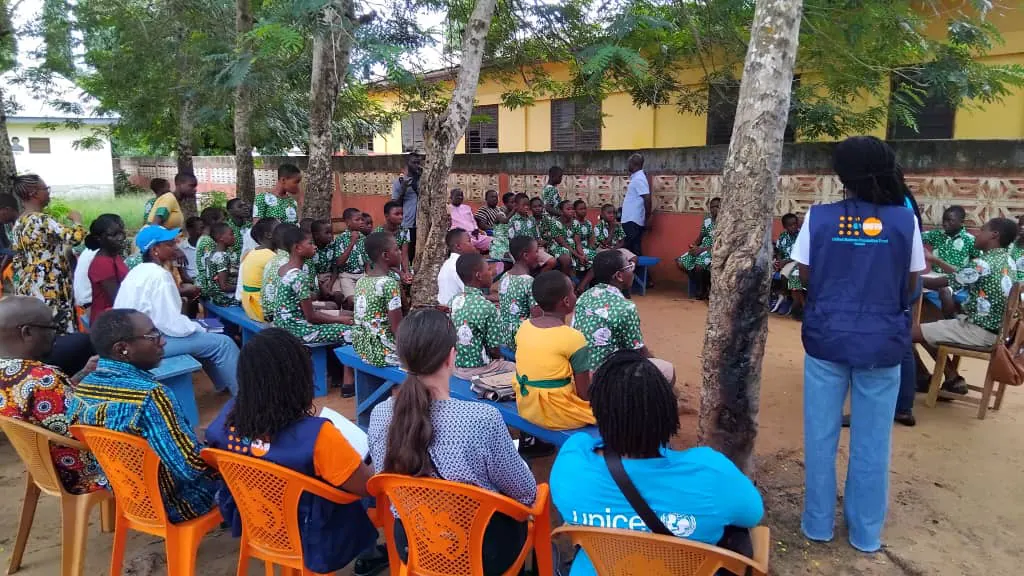
The Canada-funded Adolescent Girls Programme (AGP) has made a significant impact on adolescent sexual and reproductive health education at the Mafi-Kumasi RC Comboni Junior High School in Ghana's Central Tongu District. The programme has not only educated learners on reproductive health but also created a more supportive learning environment. This was made possible through the training of teachers and community members on adolescent sexual and reproductive health issues.
According to Madam Isabella Regina Ayimey, Central Tongu Education Director, the programme has had far-reaching effects, with the knowledge acquired being extended to learners in other schools. The programme has covered crucial topics such as personal care, sexually transmitted diseases (STDs), teenage pregnancy, and the risks associated with premarital sex. This comprehensive approach aims to equip young girls with the information needed to make informed choices about their health and wellbeing.
The programme's impact is evident in the school's improved regularity and punctuality among learners, particularly girls. The provision of sanitary pads has significantly reduced the challenges that could prevent girls from attending school. Madam Ayimey expressed her appreciation to the programme partners for their financial and technical support, especially the provision of sanitary pads to female learners, which has helped reduce reliance on others for money to purchase these essential items.
The school has also established clubs that focus on adolescent reproductive health issues, which have contributed to increased attention to these matters. Mr. Nat Adomah, Headmaster of the school, noted that before the establishment of these clubs, teenage pregnancy was a significant concern, with some students becoming pregnant before completing their education. However, the situation has improved, with only one teenage pregnancy case recorded in the previous year.
The Steering Committee of the Canada-funded AGP recently visited the school to assess the experiences and progress of beneficiary learners. During the visit, learners demonstrated their knowledge and skills acquired through adolescent sexual and reproductive health training, both through school club activities and classroom instruction. The committee observed the integration of reproductive health education into classroom teaching and interacted with learners on sexual and reproductive health and rights (SRHR) within the school environment.
Ms. Lianna Baur, Senior Development Officer at the Canadian High Commission, commended the learners for their participation and encouraged them to continue making informed choices and protecting themselves. She expressed her satisfaction with the progress made, noting that the learners have a bright future ahead of them. The programme's partners have been praised for their efforts in supporting the education and wellbeing of young girls in the community.
The programme's success can be attributed to the collaborative efforts of the school, parents, Parent-Teacher Association (PTA), School Management Committee (SMC), and other educational stakeholders. The school's commitment to addressing adolescent reproductive health issues, particularly teenage pregnancy, is evident in its efforts to educate learners and provide them with the necessary support to succeed. Key points include:
Key points
- The programme has improved adolescent reproductive health education and created a more supportive learning environment for girls.
- The provision of sanitary pads has reduced challenges that could prevent girls from attending school.
- The programme's interventions have contributed to improved regularity and punctuality among learners.