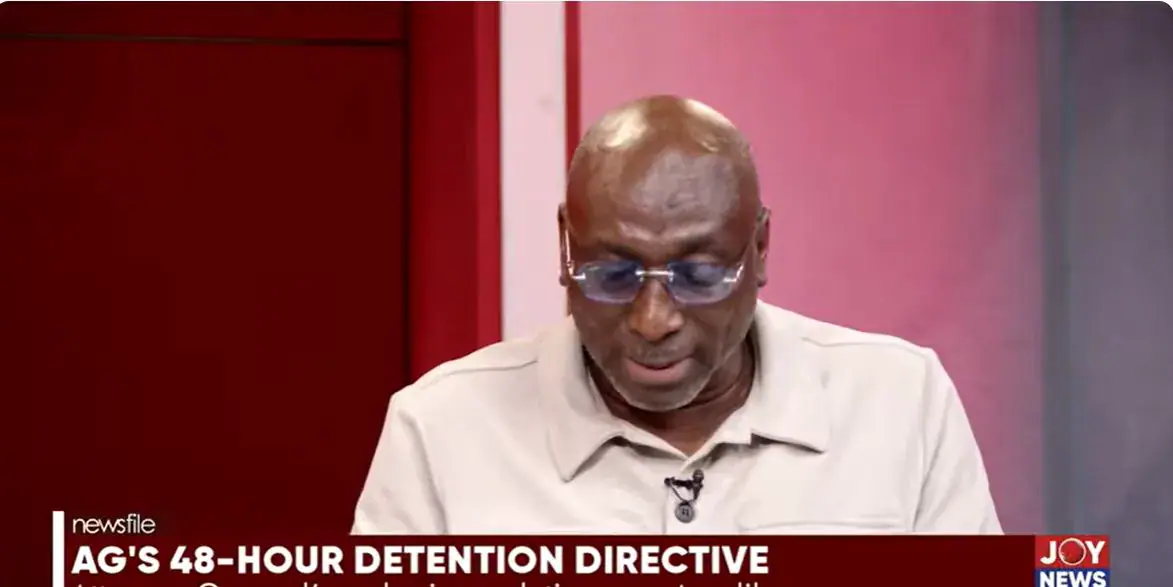
Director-General of the National Road Safety Authority (NRSA), Abraham Amaliba, has called on Ghana's Attorney General to establish a dedicated complaint unit. This unit would allow citizens to report misconduct by investigative bodies, such as unlawful arrests, detention, and other abuses of power. Speaking on JoyNews' Newsfile, Mr. Amaliba emphasized the need for an accessible channel for ordinary Ghanaians to report officers accused of misconduct.
Mr. Amaliba described the Attorney General's recent statement on police misconduct as "revolutionary," as it catalogues challenges confronting the system. However, he noted that the statement serves more as a reminder of existing legal obligations than a new directive. According to him, investigative bodies are already aware of the laws governing arrests, detention, and the treatment of suspects. The statement outlines measures to address alleged abuses in the arrest, detention, and prosecution of suspects.
The proposed complaint unit would enable citizens to report incidents of misconduct, such as police station B, Constable so and so, and provide details of the incident. Mr. Amaliba argued that without a formal reporting mechanism, officers involved in such practices could continue to act with the belief that they would not be held accountable. His comments follow concerns about public perception that money must be paid to secure police bail.
Mr. Amaliba raised concerns that some citizens have become accustomed to paying for bail, making it difficult for them to accept explanations from lawyers that the process should not attract payment. He suggested that authorities review the language used in communicating bail conditions to make the process clearer to the public. This would help address the issue and ensure that citizens understand their rights.
The NRSA Director-General also cautioned against blaming governments for police misconduct without evidence of direct political interference. He argued that the problem has persisted since the beginning of the Fourth Republic. According to him, it is essential to bring the fight to the doorstep of state institutions responsible for the misconduct.
Mr. Amaliba emphasized the importance of balancing the rights of suspects and accused persons with the state's responsibility to gather credible evidence for prosecution. He noted that the intervention was crucial in ensuring that the rights of citizens are protected while also allowing for effective law enforcement.
The Attorney General's directive on suspects' rights is part of broader criminal justice reforms. The AG has directed investigative agencies to respect suspects' rights or face sanctions. Key points include: establishing a complaint unit to address police misconduct; reviewing language used in communicating bail conditions; and ensuring a balance between suspects' rights and the state's responsibility to gather evidence.
Key points
- Establishment of a complaint unit to report police misconduct
- Review of language used in communicating bail conditions
- Balancing suspects' rights with the state's responsibility to gather evidence