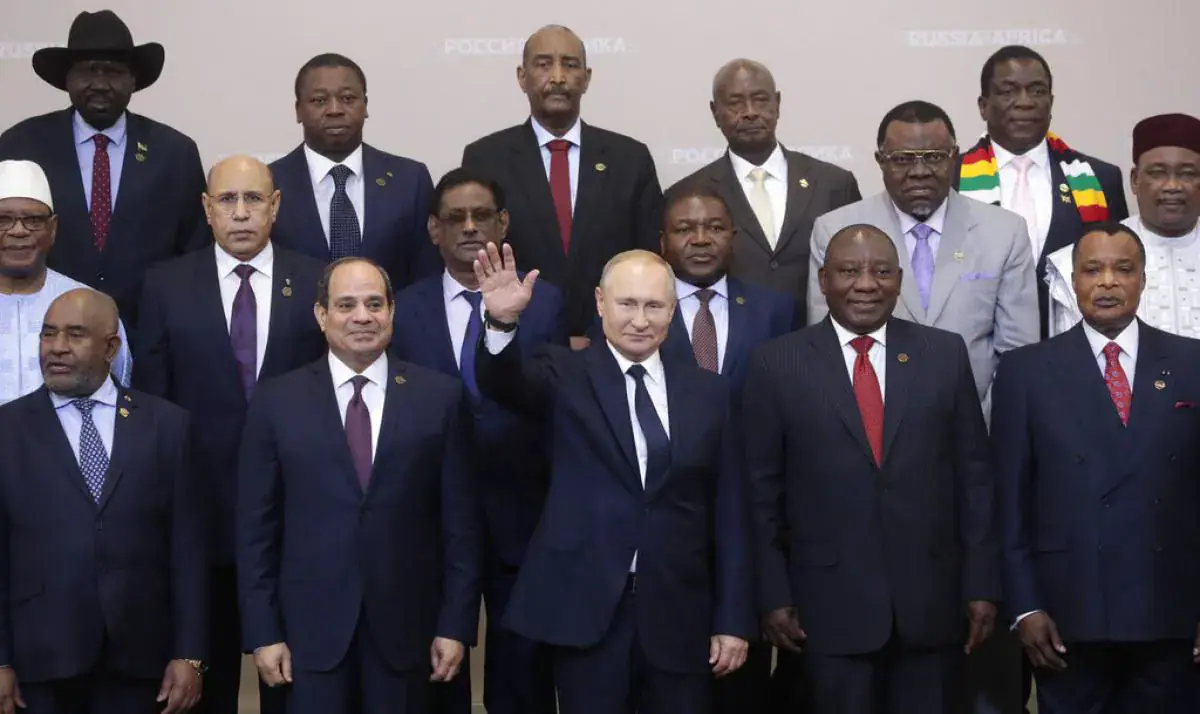
The recent Russia-Africa summit on October 28-29 has sparked optimism among many French-speaking Africans. They view Russia as a potential game-changer, offering a chance to break free from the disappointment and humiliation they feel they have endured at the hands of Western partners. For years, Africa has sought recognition, respect, and tangible support from France and the West, but instead, they claim to have received condescension and disdain.
A 2007 statement by former French President Nicolas Sarkozy encapsulates the sentiment of many Africans. He said that the "drama of the African man is that he has not entered history enough." Such comments have contributed to the growing desire among Africans to explore alternative partnerships. Russia's overtures, including offers of technological cooperation and even nuclear energy transfers, have been met with enthusiasm. Many Africans see this as an opportunity to be treated as equals, capable of understanding and progress.
Critics argue that Africans are simply swapping one patronizing partner for another, rather than striving for sovereignty and self-determination. It is true that uncritically embracing a new partner may not be the most prudent approach. However, for a people who have endured centuries of humiliation, the temptation to take a chance on an unknown partner with the hope of finding a better future may be too great to resist.
The Russia-Africa summit has highlighted the complexities of Africa's relationships with global powers. While some see Russia as a beacon of hope, others are more cautious. The continent's history with Western powers has been marked by disappointment and disillusionment, leading some to question whether Russia's promises are any different.
Russia's engagement with Africa is not merely about economic or strategic interests; it also has a symbolic dimension. For many Africans, the fact that Russia is willing to engage with them on equal terms, rather than lecturing or condescending, is a welcome change. This new dynamic has sparked debate and reflection across the continent.
As Africa navigates its relationships with global powers, it must balance hope and pragmatism. While Russia's overtures are certainly attractive, Africans must also consider the risks and uncertainties involved. The continent's future depends on its ability to navigate these complex relationships and make informed choices about its partnerships.
Ultimately, Africa's relationships with Russia and other global powers will depend on the actions and outcomes that follow. Africans will be watching closely to see whether Russia's promises translate into tangible benefits and improved cooperation. The continent's engagement with Russia will be shaped by its experiences and the lessons it has learned from its past partnerships.
Key points
- Many Africans view Russia as a hopeful alternative to disappointing Western partners.
- Critics argue that Africans should prioritize sovereignty and self-determination over new partnerships.
- The Russia-Africa summit has highlighted the complexities of Africa's relationships with global powers.