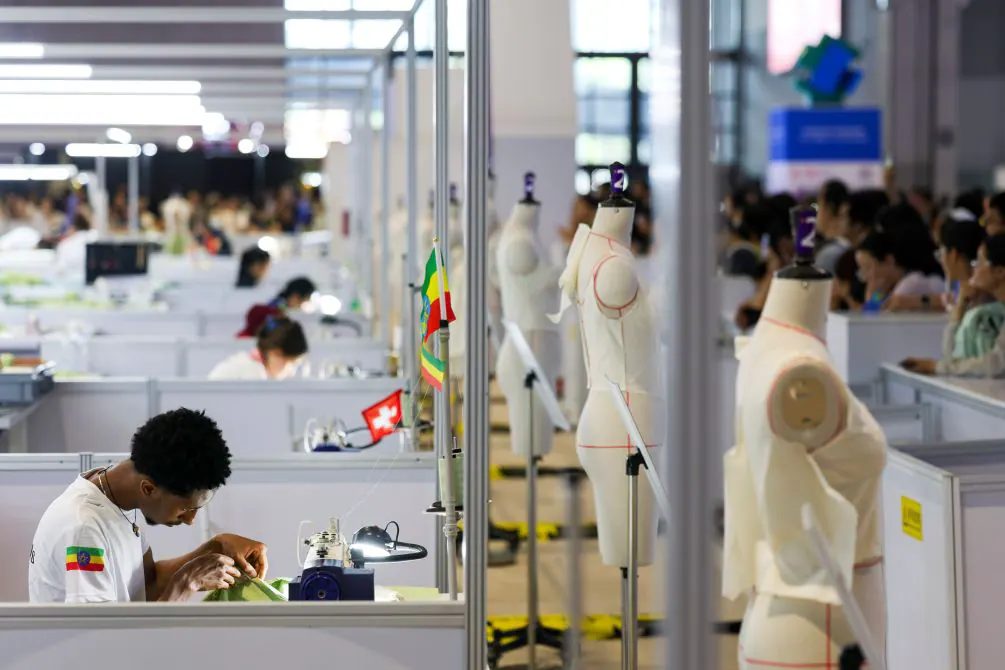
The 48th WorldSkills Competition recently concluded in Shanghai, China, with China emerging as a global leader in vocational skills. China's team excelled in various fields, from robotics and automation to welding and construction technology. The competition showcased China's comprehensive vocational training system, which has produced over 200 million skilled workers, including more than 72 million highly skilled professionals.
China's vocational training model has a strong track record of success, with over 10,000 vocational schools and more than 33 million students. The country's emphasis on vocational training has led to a high employment rate, with over 95% of graduates finding work. China's approach to vocational training focuses on providing the best possible solutions, rather than simply following traditional methods.
African countries are taking notice of China's vocational training model, with several nations sending teams to participate in the WorldSkills Competition. South Africa, Namibia, and Uganda all sent teams to compete in various fields, demonstrating the growing interest in vocational training on the continent. Despite the relatively small number of participants, African countries are beginning to show their potential in this area.
The African continent has a large and growing youth population, with over 60% of the population under the age of 25. By 2030, Africa is expected to account for half of the world's youth population growth. However, many African youths lack access to vocational training, particularly in the fields of science, technology, engineering, and mathematics (STEM).
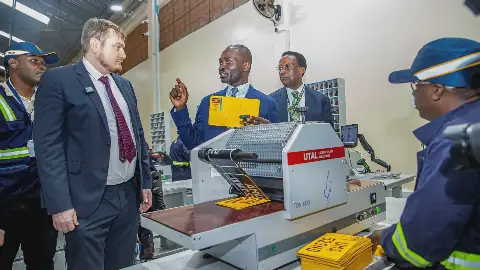
China's vocational training model offers a potential solution to this problem, with a focus on providing practical skills that can be applied in the workforce. The Chinese government has established several vocational training centers in Africa, including the Luban Workshop, which provides training in fields such as robotics, automation, and construction technology.
The Luban Workshop has been established in several African countries, including Djibouti, Egypt, and Kenya. In Djibouti, the workshop provides training in railway technology, while in Egypt, it offers courses in robotics and automation. In Kenya, the workshop provides training in modern technologies such as data analysis and cybersecurity.
The partnership between China and Africa in vocational training has the potential to transform the lives of millions of young Africans. By providing access to practical skills and training, China's model can help to address the skills gap on the continent and create new opportunities for economic growth and development. KEY_POINT: China's vocational training model offers a potential solution to the skills gap in Africa.