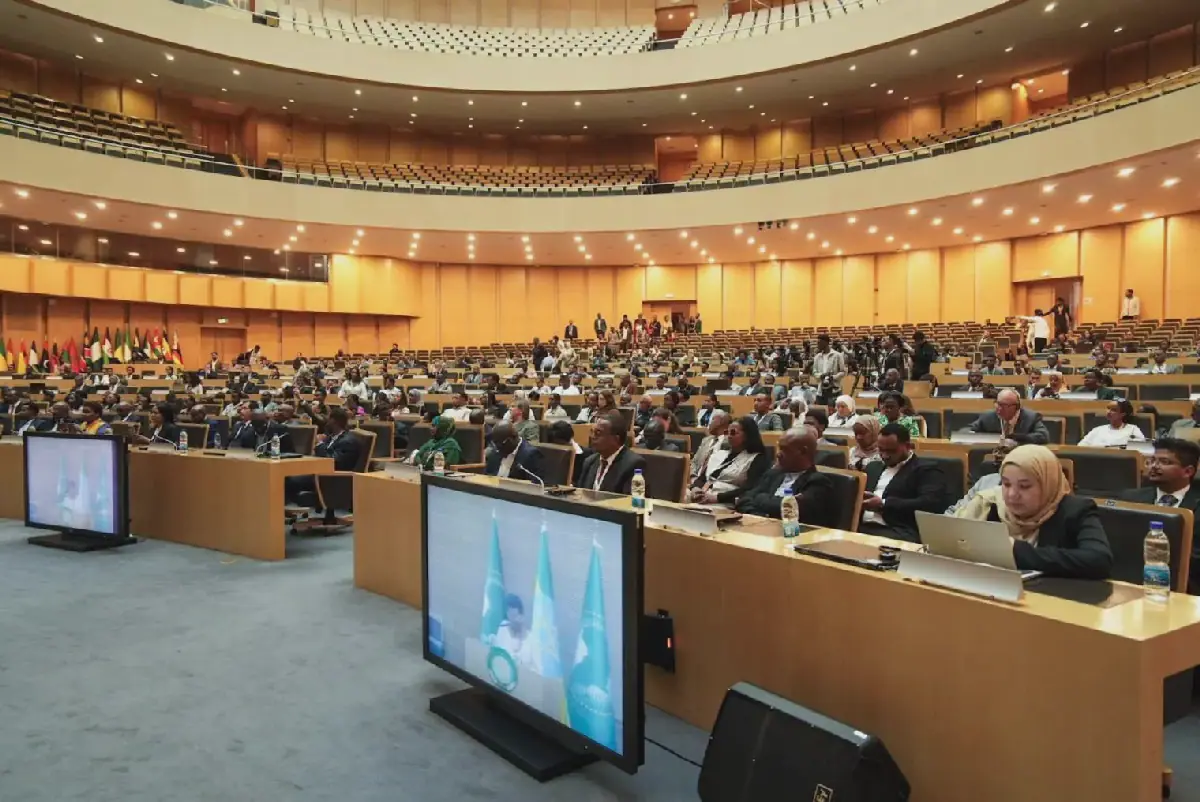
The African Union is hosting its Sixth Ordinary Session of the Specialised Technical Committee on Education, Science and Technology in Addis Ababa, Ethiopia, from 2 to 6 November 2026. The meeting, themed “Accelerating Africa’s Human Capital and Innovation: Resilient Education, Science, and Technology Systems for the AU Decade of Action (2025–2034)”, brings together ministers, senior government officials, technical experts, and development partners. The goal is to strengthen the continent’s education and innovation priorities.
The experts’ session runs from 2 to 4 November, while the ministerial session is scheduled for 6 November. Discussions will focus on building more inclusive, resilient, and future-ready systems that connect education with research, technological advancement, and employment opportunities. African countries face challenges such as rapid technological change, fiscal pressures, climate-related disruptions, and persistent inequalities, which are reshaping the skills required for economic participation.
The committee will consider priorities including foundational learning, teacher development, technical and vocational education, lifelong learning, and accessible digital education. It will also examine ways to strengthen research partnerships, responsible artificial intelligence, digital public goods, and African-led innovation. A key objective is to improve alignment between national education and innovation policies and the African Union’s Agenda 2063, the Continental Education Strategy for Africa 2026–2035, and the Science, Technology and Innovation Strategy for Africa 2034.
The discussions will address financing challenges confronting education and research institutions. While policy commitments are important, sustainable funding, stronger institutional coordination, and effective implementation will determine whether these priorities translate into measurable improvements. The session is expected to produce policy recommendations, proposed ministerial guidance, and implementation priorities for consideration through the African Union’s policy structures.
The outcomes of the session aim to strengthen cooperation among member states and improve monitoring and accountability. A stronger skills base can support various productive sectors, including manufacturing, agriculture, healthcare, and digital services. Research institutions working closely with industry can help convert local knowledge into commercially viable solutions.
The African Union’s deliberations place an important question before member states: how quickly can commitments to human capital and innovation become practical development outcomes? Africa’s demographic strength can become a major economic advantage, but only when its people are equipped to participate in and shape the industries of the future.
The significance of the meeting extends beyond education ministries, with implications for the continent’s progress in various sectors. The African Union’s emphasis on education, science, and technology highlights the importance of knowledge, skills, and innovations in determining Africa’s competitiveness in the decades ahead.
Key points
- The African Union convenes its Sixth Ordinary Session of the Specialised Technical Committee on Education, Science and Technology to strengthen the continent’s education and innovation priorities.
- The meeting aims to improve alignment between national education and innovation policies and the African Union’s Agenda 2063 and other strategic frameworks.
- A stronger skills base can support various productive sectors, including manufacturing, agriculture, healthcare, and digital services.