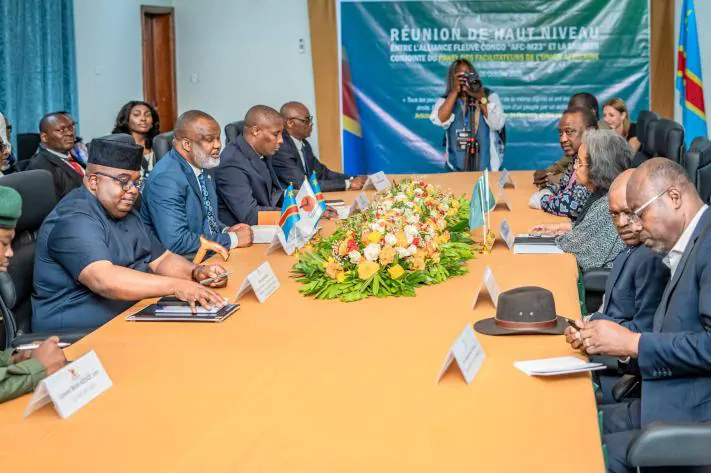
The African Union has taken a proactive approach to resolving the crisis in the eastern Democratic Republic of Congo (DRC). On October 5, the union's facilitators, including former heads of state Uhuru Kenyatta, Mokgweetsi Masisi, Sahle-Work Zewde, and Togo's minister delegate for foreign affairs, met with high-ranking officials from the M23 rebel group in Goma. The M23 is a politico-military group that has been involved in the conflict in the DRC.
The conflict in the eastern DRC has resulted in hundreds of deaths and thousands of displaced people. The African Union's efforts aim to bring together the Congolese government and the M23 rebel group to negotiate a peaceful resolution. This move is significant, as the AU has often been criticized for its limited involvement in conflict resolution in the region. The AU's panel had previously met with Congolese President Félix Tshisekedi and Rwandan President Paul Kagame, who have been accusing each other of destabilization.
The meeting between the AU facilitators and the M23 rebels is a crucial step towards finding a peaceful solution to the conflict. However, it remains to be seen whether this initiative will be successful, given that previous mediation efforts by other international actors, such as the United States and Qatar, have not yielded tangible results. The conflict has continued to escalate, despite agreements signed between Kinshasa and Kigali, and between Kinshasa and the M23.
One of the key challenges in resolving the conflict is the lack of trust between the parties involved. Congolese President Félix Tshisekedi and M23 leader Corneille Nangaa have a particularly strained relationship, with Tshisekedi having condemned Nangaa to death and excluded him from national dialogue. The two leaders have fundamentally different agendas, with Tshisekedi seeking to consolidate power and Nangaa aiming to conquer key cities.
The humanitarian situation in the eastern DRC is dire, with thousands of people affected by the conflict. The African Union's efforts to mediate a peaceful resolution are therefore critical. However, it is unclear whether the parties involved are willing to compromise. The conflict has been marked by a lack of sincerity from the parties, with each side appearing to make concessions while secretly pursuing their own interests.
To achieve a lasting resolution, it is essential that the parties involved are willing to make concessions. The African Union's facilitators will need to work tirelessly to bring the parties together and find common ground. The international community is watching closely, hoping that this initiative will be successful where others have failed.
Ultimately, the success of the African Union's mediation efforts will depend on the willingness of the parties involved to work towards a peaceful resolution. If successful, this initiative could help bring stability to the region and alleviate the suffering of thousands of people affected by the conflict.
Key points
- The African Union has sent facilitators to Goma in an effort to bring peace to the conflict-torn eastern Democratic Republic of Congo.
- The conflict has resulted in hundreds of deaths and thousands of displaced people.
- The success of the mediation efforts will depend on the willingness of the parties involved to work towards a peaceful resolution.