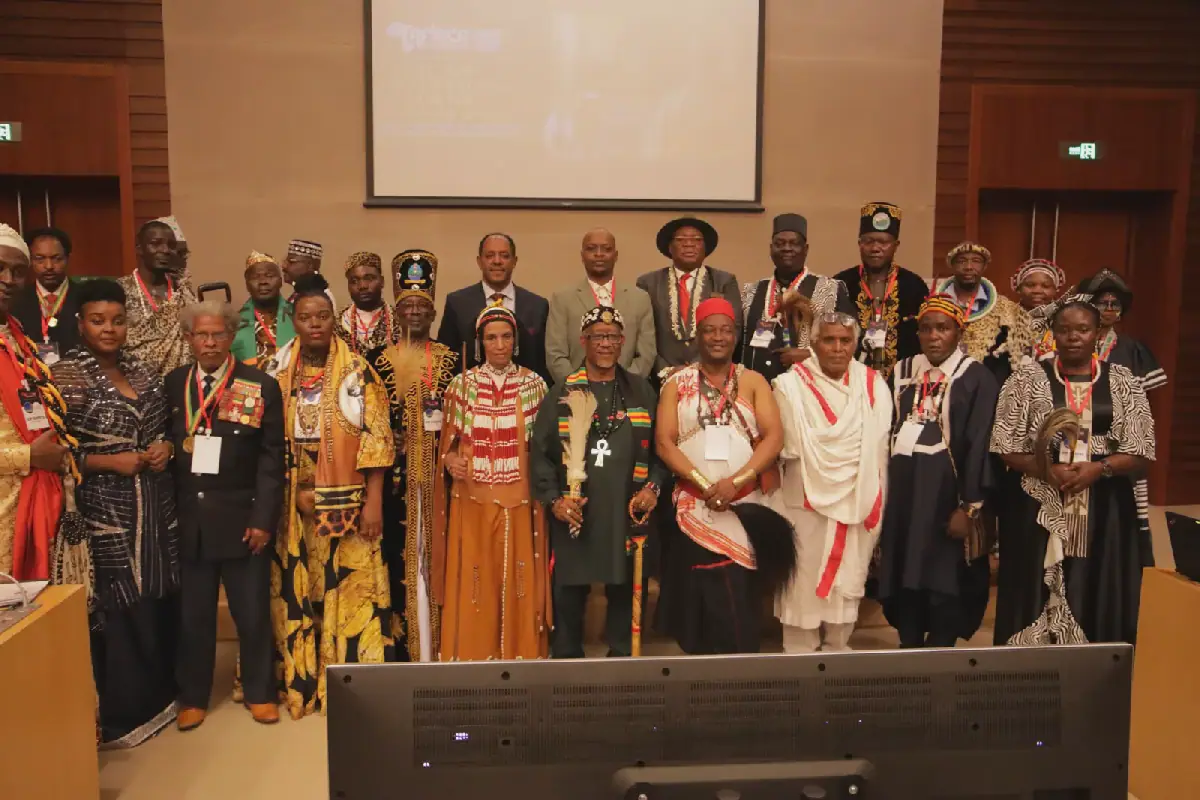
Traditional rulers from over 46 African countries and the African diaspora have taken a significant step towards institutionalizing indigenous leadership across the continent. At the African Union Headquarters, during the African Traditional Leaders Forum 2026, kings, chiefs, and other traditional leaders unanimously adopted the Addis Ababa Declaration. This declaration establishes the African Traditional Leaders Council, a continent-wide platform aimed at promoting indigenous governance, peacebuilding, cultural preservation, and sustainable development.
The declaration was adopted by acclamation after deliberations under Thematic Area Four: Traditional Governance, Indigenous Economies and Sustainable Development. His Eminence Dr Eberechukwu Oji, Eze Aro IX of Nigeria, presented the proposed declaration before delegates debated and endorsed it. The discussions were moderated by His Royal Highness Chief Kyalo Muli I, leader of the Anzauni Clan of Kenya’s Akamba community.
The African Traditional Leaders Council is an independent, voluntary, and non-partisan continental platform. It brings together natural and traditional rulers and representatives of indigenous institutions across Africa. According to the declaration, the Council will complement, rather than replace, constitutionally established governments. It will respect the sovereignty of African states, constitutional order, the rule of law, human rights, democratic governance, gender equality, and the equal dignity of all people.
The Council will focus on promoting peacebuilding, conflict prevention, mediation, reconciliation, cultural heritage, indigenous economic development, reparatory justice, and the implementation of the African Union’s Agenda 2063. One of its first resolutions is the establishment of an African Traditional Leaders Working Group on Reparatory Justice. This working group will engage the African Union Commission and its relevant institutions on the continent’s reparations agenda.
Delegates also approved the formation of a 15-member Charter Drafting Committee. This committee is tasked with preparing the Council’s Constitution or Charter within 90 days. The committee will consist of five members drawn from the Thematic Area Four panel and ten additional representatives from different regions of Africa.
Chief Kyalo Muli challenged African traditional leaders to move beyond preserving history and become active participants in shaping the continent’s future. He emphasized that despite the challenges posed by colonialism, traditional leaders are still serving their people and need to do more than survive. The declaration was subsequently signed by the traditional rulers and representatives attending the forum, formally marking the birth of the African Traditional Leaders Council.
The African Traditional Leaders Council is set to play a significant role in promoting indigenous governance and sustainable development across the continent. With its establishment, traditional leaders can now work together to address common challenges and promote peacebuilding and cultural preservation. The Council’s formation is a historic step towards recognizing the importance of traditional leadership in Africa.
Key points
- The African Traditional Leaders Council is an independent and non-partisan continental platform that aims to promote indigenous governance, peacebuilding, and sustainable development across Africa.
Reporting sources
- African traditional leaders establish continental council at AU Summit · Kenya Broadcasting Corporation