The African textile industry is gaining structural momentum as regional plans aim to connect raw fibre with spinning, weaving and apparel production across the continent. This initiative seeks to move beyond the current cut, make and trim work and manage the full chain from raw-fibre processing to finished clothing. Founder and managing director of Afri-Expo Textiles, Teboho Kobeli, emphasises the need for African producers to control the entire production process.
Lesotho's textile sector provides a substantial industrial base, with manufacturing, led by textiles and footwear, being the country's second-largest employer after the state. In 2024, Lesotho's apparel exports to the United States reached $237.3 million, making it one of sub-Saharan Africa's leading garment exporters to the American market. However, dependence on a single export destination exposes manufacturers to sudden policy shifts, as seen in the US tariff changes in 2025.
The US initially applied a 50% tariff to Lesotho exports during its 2025 tariff changes, later reducing the rate to 15%. These moves reinforced Kobeli's case for deeper local ownership and broader regional demand. Lesotho's lesson is sharp: jobs matter, but retained value matters more. Design, merchandising, fabric development and raw-material processing remain outside much of the country's manufacturing base.
Foreign-owned factories can exit when costs or trade rules shift; locally owned producers have stronger incentives to build lasting capacity. Kobeli says African-owned firms need trade finance and structured incentives, alongside support for machinery and raw-material purchases. Regional markets should absorb supply before manufacturers chase distant export volumes.
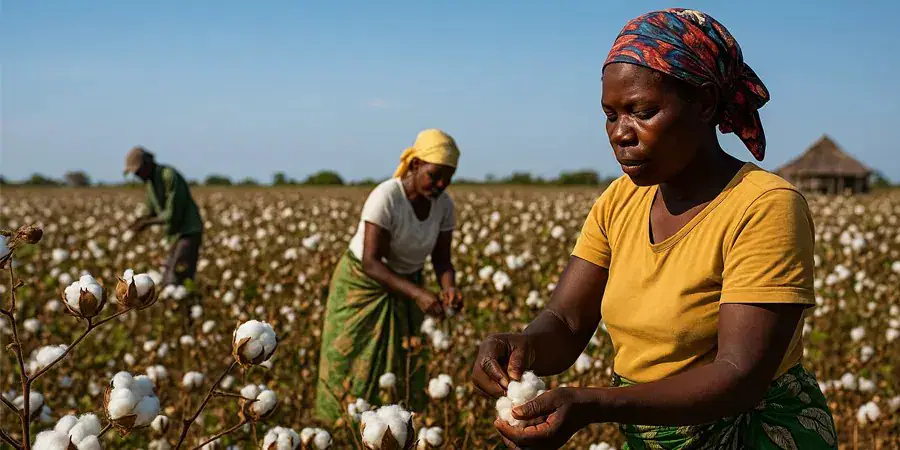
A proposed textile corridor offers a wider test of this model, linking Mali, Benin, Cameroon, Burkina Faso, Chad and Côte d'Ivoire through a plan to expand regional processing capacity. The initiative targets $5 billion in investment, 500,000 jobs and $6 billion in value-added textile products. Currently, only 2% of cotton produced in the participating countries is processed locally.
The programme targets 25% local processing by 2035. To achieve this, the textile corridor will focus on developing the entire production chain, from raw-fibre processing to finished clothing. This will require coordination among producers, mills, factories and markets, which currently operate in isolation.
The African textile industry's growth will depend on its ability to secure reliable inputs, build scale and attract long-term capital. With the right support, African-owned firms can drive industrialisation and create lasting capacity. The proposed textile corridor offers a promising opportunity for investors, with a potential $5 billion investment and 500,000 jobs to be created.
Key points
- The African textile industry targets $5 billion in investment and 500,000 jobs through a proposed textile corridor.
- Lesotho's textile sector provides a substantial industrial base, with $237.3 million in apparel exports to the US in 2024.
- The programme targets 25% local processing of cotton by 2035, up from 2% currently.